Funny what it takes for some people to get perspective. To see themselves.
Funny how hard we can resist seeing ourselves in a clearer light, sometimes.
It's often been posited that we know who we are in large part by our reflection in the world. That is, by how we see our effect on the world - and in a world increasingly defined economically, by who wields how much of that 'power', there's a great tendency to define ourselves by what we own. Or don't.
Right now I'm watching yet another world-record natural disaster unfold, one f a seemingly endless series of record weather events. I've just been through a little one myself, the strongest summer storm winds in my area in living memory, made worse by a century's so-called agriculture and the massive dust cloud that ensued. As I keep half an eye on the evacuations in North Queensland ahead of Cyclone Yasi, and hear stories of people's different reactions, I am struck again by how powerful the urge is to defend property in some people - to BE at one with their homes, cars, whatever......to deny the brutal reality that anyone who gets caught in the eye of this beast in any structure less than a Category 5-rated building will very possibly die. Category 5 means 'no buildings left standing'.
Then at the last minute - actually after the last minute, because it's too late to outrun her now - people can have a little Moment Of Perfect Clarity. Like the young family in Mission Beach who were determined to 'ride it out' but then thought better of it, and posted on a weather forum that they were now resigned to losing their house and were taking refuge in an underground carpark. Like, the worst place to be with a 10 metre storm surge. Fortunately, the weather nerds on the forum contacted local emergency services who went and found them, and got them out.
Or we want to own people, or groups of people, to feel a sense of identity through a position of power over others, however benevolent our intentions are. Families are a good example. Parents who live through the trials of seeing children grow and develop into their own people, and confuse protectiveness and love with ownership. At extremes it can be outright slavery or high-pressure hot-housing to 'create' high-achievers which will reflect supposedly well upon the parents' skills, or genes, or something. Those patriarchs and matriarchs acting out dictatorial fantasies.
Or we want to own information. Everyone knows an office/playgroup/church/wherever gossip, the faux-confidant for whom the phrase "remember those who gossip with you will also gossip of you" was coined. We want to own correctness, which is why we are so attached to our opinions.
This list could go on and on, casting every vestige and semblance of identity-creating behaviour and thought into the frame of ownership. Because that's exactly the relationship we have to the world, all too often.
Yet all it takes is the right magic moment; a few words, a single clear thought, but most often some tragic and sudden loss or pain, to wake us up from this fantasy of separation. Even if we only awake for an instant.
The patriarch is confronted by the son who disobeys, threats ensue, "you will be no more my son!!" a bluff is called, and the world falls in. Your house is blown to matchwood around you. Your gossip undoes you. Or maybe, just maybe, someone with good intentions manages a way not to just call you on your bullshit, but to get through that armour of need, of desperate defense of normalcy and your identity status quo....to remind you that in fact, you are not you because of your money, your house, your claim to righteousness, or your adoration by some masses. You are you despite all that crap, and that crap more often than not gets exactly in the way of being more you.
It's no coincidence that the phraseology often goes "to hold an opinion", or to "have" a point of view, and so on. The possessive is used, as it is sneakily by inference when we "express" an opinion or more forcefully when we "profess" a faith. Which is, after all, a claim to rightness, and another form of opinion.
Sadly, though, it seems that most of us still need most of the time to learn the ancient way. By repeated painful choices.
Then thing is, once I started to feel like I had some sort of ongoing readership here, I feared wanting to own it. Because, people, (and this in an opinion of mine, don't forget) the more you own *anything*, the more it owns you back.
I might have learned some lessons about this lately. Through error, certainly, but also because when I look closely enough, or in a detached enough way, I see those about me act out the play and drama that could be, or used to be, my life and way of identity. Thanks to those folks sharing their frailties with me, knowingly or otherwise. There but for grace go I, and all of that.
I'm trying not to own so much, you see. I would like to learn those lessons of losing oneself that death must inevitably bring, before being pushed to do so. Why? Because my life is all the sweeter for it.
Try some, yes? It's home grown.
Wednesday, February 2, 2011
Friday, December 31, 2010
2011 - a challenge to Integrity?
So, here we are, digesting the knowledge that the information really does seem to want to be free.
2010 might prove to be the year of Trust No-One, as the whole time it seemed one revelation after another about the state of what we used to think of as our 'privacy'; and the secrecies and abuses of privacy practiced by governments and corporations were brought to light. Maybe we found some new black and white for a moment or two there, before the inevitable greying of entropy and the chaos of life set in. The contrasts we saw remained stark right to the end.
Perhaps unsurprisingly, I shall quote Julian Assange to illustrate:
"What are the differences between Mark Zuckerberg and me? I give private information on corporations to you for free, and I'm a villian.
Zuckerberg gives your private information to corporations for money and he's Man of the Year."
So at the end, we all got a nice fat dose of what we knew all along: those who control the mechanisms of society (to the extent that they are controlled) lie, hide, and don't play fair and they do it for their own gains.
"We now know what happens when we build institutions that are not transparent to our eyes even though they demand transparency from us. We now know that the net we depend upon can be yanked away from us if we anger those who control it. We now know there are those in control. We believed the net to be mere anarchy loosed upon the world - turns out it’s just another shopping mall." - Mark Pesce.
Many are now awake to just how much of what we once thought of as 'our' information is simply now let loose. There are many who have risen in anger about all this. Many will change the way they operate online at the very least to try and re-protect their personal life from scrutiny. And there are those who will simply accept that this is a new reality and enjoy the good parts, adapt to the more irksome ones. I think this year will see a massive rise in the use of all sorts of online tools and methods to re-privatise not just personal spaces, but protected group spaces too.
Still, the cat's out of the bag. Someone can upload a picture of you and without even tagging your name to it The Machine may recognise you and tag the picture for you. Another little data blip attached to your datalife doppelganger. We've been feeding this shadow-self for a generation now, allowing ourselves to be tracked with our credit card purchases, our net surfing, our social networking and even our physical locations through our ever-present mobile devices. And since these datasets are valuable to someone, because they tell a pretty good story about us all added up, there has been an ironic twist added to the struggle of your information to free itself; the corporations to whom it has dollar meaning, and the governments to whom it has political purpose wish to liberate the data for their own use, and now those very institutions have lost control of it through the mechanisms and agents of we (the people) wishing to wrest the power back from them.
I started writing a post about privacy quite some time ago, and restarted again when US student Tyler Clementi killed himself. You might remember, he briefly became a posthumous cause celebre for those railing against our new information tools' ability to facilitate the rapid spread of personal information. In his case, this information was a webcam recording made (without his knowledge or consent) by a roommate of him having sex with another man in his dorm room, and posted on Facebook. Tyler was not exactly openly gay, it seems, and in a sad irony he posted his last words on Facebook. "Jumping off GW bridge. Sorry."
We have never been able to legislate or dominate our citizenry sufficiently to ensure nice and proper behaviour. Never been done, ever. Yet now anyone with a net connection can say anything about anyone, reveal any information and imagery, and there's nothing we can do about it except hope no-one does OR- to not care.
Imagine if Tyler lived in a reality where coming out was OK, because obviously he didn't. A reality even where 'coming out' was not a term we had a use for any more, because sexual preference was just not an issue for anyone. Expand that thinking out, to a place where people just naturally 'did right' by one another, where there was no argument over creeds or rights, and you've entered the heart one of John Lennon's greatest pieces - Imagine.
That might be a little way off yet, I think. In the meantime, how to adapt?
There was much hue and cry in the UK when they started getting full-on with the whole CCTV thing, but then the powers-that-be and Have Your Say Champions Of Justice rallied around the tired old cry of "if you've got nothing to hide then what is the problem?"
Well, um, exactly. What if, right, we just behaved with integrity? You know, told the truth? Sure, I've been as guilty as anyone of selectivity and creativity with what is real for me throughout my life, but eventually properly worked out that it was a shitty way to live. The explosion of online media has made it so easy to show only a part of yourself (or none, to be seemingly anonymous) or to present only a carefully-crafted version of who you are, and it's so tempting to do that. As we used to say in NLP class "why be yourself when you could be someone really useful?" I've tried to stay faithful to my stated aim of honesty here in this blog and otherwise in my life these last years. It doesn't have to be full disclosure (after all, I have my honest commitments to care for others and protect their confidentialities and privacies) but it does require a certain willingness to be open about one's failings and weaknesses.
Of course, it's a rare person who sees themselves very clearly much of the time anyway, so we can only be honest about what we believe to be our truth at the time - and be honest when that changes.
Had Tyler Clementi had maybe just a bit more support from a friend, or a family member, he may have made some different choices. Had his roommate been behaving with a little more empathy and compassion - which I believe we all feel but are not always honest with ourselves about - then things might have been different too. I'm not here to judge in that way, but what seems clear to me is this:
- Your information can be gotten out, and very likely will be.
- Hiding is a choice, but requires virtual hermitage, and even then.....you have a past.
- If you spend the time to get comfortable with being who you really are, publicly, and choose to try and behave well toward your fellow man, then when it all comes out - who cares?
It can probably only go one of two main ways, I reckon - a hive mind with massive homogeneity where new ideas flare up as storms in the zeitgeist and are quickly either subsumed or discarded - the Borg. Or a consensus to agree to respect boundaries that others erect around themselves, should they choose to do so, for no-one will be able to enforce such a respect. The first way to me has dangers of totalitarianism and too great a loss of individual liberty and creativity. But might well work anyway. The second way seems far more fulfilling, and more in line with how I see our spiritual and social evolution. But without honesty, no-one wll be able to be a part of it.
Can you see a different way that has a good ending?
Happy New Year all.
Wednesday, December 22, 2010
Someone died yesterday, and it was.....good.
For the last year or so, I've been following the story of a young woman, Andrea Clegg, from a distant country, as she's been waiting for a heart transplant. Her blog site makes for great reading if you treat it as a story and start at the beginning, you can find it here:
http://stayingtruetomyheart.blogspot.com/
There's a certain kinship in us folks who have dangerous or life-limiting conditions going on, and with the whole Rise Of The Internet has come a greater ability for people to share and support one another. I came across Andrea's story through my association on the Blenderized Diet forum, a place of great community knowledge and support for tube-fed people and their carers who want to use real food, because Andrea's sister-in-law Shannon is a member there, and has a tube-fed son Ashton (who, as an aside, has one of the mad-craziest smiles ever seen on the interwebs). Shannon just popped a little post up one day about Andrea's story and new blog, and I started following.
I'll admit that there is a subtle and subterranean sense of ghoulishness involving yourself - even just as a witness - to someone in this boat. You're watching a life-and-death thing here after all and by saying hello and giving your heartfelt wishes you're now invested somehow in the outcome. There is a little of the car-wreck-watcher syndrome. But that's not really what draws one in.
Andrea's suffered from such bad heart problems that for a long time now as well as an implanted defibrillator she's been tubed up to an LVAD, essentially a battery-in-a-backpack powered artificial heart, and came pretty close to death on multiple occasions along the journey. It's trite to say, and these days it's almost completely expected to say, but Andrea is a rather special person, and so are the people around her. That's why it's been a privilege to watch and why last night was so terrifying and elating all at once for me - just some guy in at the other end of a computer in a faraway land.
Andrea's a pretty small lady, meaning that many donor hearts simply wouldn't fit. She knew that chances were she'd be waiting for a child's heart, just to add extra poignancy to the whole organ donor thing. It's not like a heart is coming from a live donor now, is it. This, some other factors, but mainly the woeful rate of organ donation in the US have all combined to make a lengthy wait. She celebrated her first anniversary on the list not long ago.
There was a false alarm a few months ago, with a possible donor situation......oh well. Never mind.
Last night (my time) she got the call, and the drill began. Status updates were made on Facebook, posts were made on the BD list, the blog was updated, and all the many, many people that have been sharing this journey - family, friends and strangers alike - lobbed in their blessings, wishes, prayers and tears that all would go well, that the heart would be a match, that all would go well.....
To say Andrea is a brave woman is also trite. Of course she is. She carries on living as normally as possible despite having this amazing burden of uncertainty, advocating for organ donation, sharing her story with all who will listen to aid that cause, and never complains of her own ills publicly. She has faced down unkind comments (can you believe it??) on news stories about her with grace and compassion, and has been it would seem in some ways a core of strength for all of her carers to draw from. So saying Andrea's brave or courageous or gracious or simply awesome is redundant. Because it's obvious.
What is less obvious at first glance though is the fortitude and sheer love of those around her, and this has been some of the greatest stuff to watch. I mean, just imagine for a moment being her husband. No really, just imagine it for a second. Shaun; kudos to you. That is all I have to say. The sort of man that can make you quietly proud to be a man. Props, fella. Shannon, a tireless campaigner and fierce sort-of protector, an unexpected gift when you get yourself a new sister-in-law. And all the innumerate family and close friends doing all their bits, pulling their little bits of weight, all in the same direction, towards a new heart for their loved one.
Maybe you had to be there, I dunno.
So anyway, yes, someone died yesterday. And it turns out they were an organ donor, and all the right boxes were ticked. It was late and I had yo go to bed still wondering if the heart was a match but when I got up and got online, well, there it was. As I write Andrea has a new heart, beating inside her, doing its thing, and the doctors are completely happy with the way it all went - even the operation was shorter than usual. It's early days of course, and I'm tipping she's going to be one SORE lady when she wakes up and for a while, but for now she's no longer dependent on wires and batteries and pumps and electric shock devices and what-have-you.
All because someone had the heart - pun fully intended - and created or was lucky enough to have the family support to be an organ donor. Their life has given not new life, but rather renewed life. To Andrea, and to all the souls around her now weeping and throbbing with happiness and joy. This amazing woman and all the people who have grown in ways the planet just needs more of have been given a stay, a prolonging of life on earth; and for this we all would best be grateful.
Who knows? Yes, the thing that is almost never said is that of course this might not work, and Andrea may not make it through the recovery phase. And if that happens, OK, life has its sadnesses too. But even just taking all the time up until now, this moment, and all the good that has come from this journey for everyone involved and even those of us just able to barrack from the sidelines - hasn't it all been worth it?
So the question now remains: if you are not a registered organ donor, why not?
And lastly Andrea? Good luck.
http://stayingtruetomyheart.blogspot.com/
There's a certain kinship in us folks who have dangerous or life-limiting conditions going on, and with the whole Rise Of The Internet has come a greater ability for people to share and support one another. I came across Andrea's story through my association on the Blenderized Diet forum, a place of great community knowledge and support for tube-fed people and their carers who want to use real food, because Andrea's sister-in-law Shannon is a member there, and has a tube-fed son Ashton (who, as an aside, has one of the mad-craziest smiles ever seen on the interwebs). Shannon just popped a little post up one day about Andrea's story and new blog, and I started following.
I'll admit that there is a subtle and subterranean sense of ghoulishness involving yourself - even just as a witness - to someone in this boat. You're watching a life-and-death thing here after all and by saying hello and giving your heartfelt wishes you're now invested somehow in the outcome. There is a little of the car-wreck-watcher syndrome. But that's not really what draws one in.
Andrea's suffered from such bad heart problems that for a long time now as well as an implanted defibrillator she's been tubed up to an LVAD, essentially a battery-in-a-backpack powered artificial heart, and came pretty close to death on multiple occasions along the journey. It's trite to say, and these days it's almost completely expected to say, but Andrea is a rather special person, and so are the people around her. That's why it's been a privilege to watch and why last night was so terrifying and elating all at once for me - just some guy in at the other end of a computer in a faraway land.
Andrea's a pretty small lady, meaning that many donor hearts simply wouldn't fit. She knew that chances were she'd be waiting for a child's heart, just to add extra poignancy to the whole organ donor thing. It's not like a heart is coming from a live donor now, is it. This, some other factors, but mainly the woeful rate of organ donation in the US have all combined to make a lengthy wait. She celebrated her first anniversary on the list not long ago.
There was a false alarm a few months ago, with a possible donor situation......oh well. Never mind.
Last night (my time) she got the call, and the drill began. Status updates were made on Facebook, posts were made on the BD list, the blog was updated, and all the many, many people that have been sharing this journey - family, friends and strangers alike - lobbed in their blessings, wishes, prayers and tears that all would go well, that the heart would be a match, that all would go well.....
To say Andrea is a brave woman is also trite. Of course she is. She carries on living as normally as possible despite having this amazing burden of uncertainty, advocating for organ donation, sharing her story with all who will listen to aid that cause, and never complains of her own ills publicly. She has faced down unkind comments (can you believe it??) on news stories about her with grace and compassion, and has been it would seem in some ways a core of strength for all of her carers to draw from. So saying Andrea's brave or courageous or gracious or simply awesome is redundant. Because it's obvious.
What is less obvious at first glance though is the fortitude and sheer love of those around her, and this has been some of the greatest stuff to watch. I mean, just imagine for a moment being her husband. No really, just imagine it for a second. Shaun; kudos to you. That is all I have to say. The sort of man that can make you quietly proud to be a man. Props, fella. Shannon, a tireless campaigner and fierce sort-of protector, an unexpected gift when you get yourself a new sister-in-law. And all the innumerate family and close friends doing all their bits, pulling their little bits of weight, all in the same direction, towards a new heart for their loved one.
Maybe you had to be there, I dunno.
So anyway, yes, someone died yesterday. And it turns out they were an organ donor, and all the right boxes were ticked. It was late and I had yo go to bed still wondering if the heart was a match but when I got up and got online, well, there it was. As I write Andrea has a new heart, beating inside her, doing its thing, and the doctors are completely happy with the way it all went - even the operation was shorter than usual. It's early days of course, and I'm tipping she's going to be one SORE lady when she wakes up and for a while, but for now she's no longer dependent on wires and batteries and pumps and electric shock devices and what-have-you.
Look - a heartbeat.
All because someone had the heart - pun fully intended - and created or was lucky enough to have the family support to be an organ donor. Their life has given not new life, but rather renewed life. To Andrea, and to all the souls around her now weeping and throbbing with happiness and joy. This amazing woman and all the people who have grown in ways the planet just needs more of have been given a stay, a prolonging of life on earth; and for this we all would best be grateful.
Who knows? Yes, the thing that is almost never said is that of course this might not work, and Andrea may not make it through the recovery phase. And if that happens, OK, life has its sadnesses too. But even just taking all the time up until now, this moment, and all the good that has come from this journey for everyone involved and even those of us just able to barrack from the sidelines - hasn't it all been worth it?
So the question now remains: if you are not a registered organ donor, why not?
And lastly Andrea? Good luck.
Tuesday, December 14, 2010
Lunch at my place - check it out
OK, so I've posted it on the other blog because it's fairly topical for that audience, but I think you'll find it intriguing and enlightening also. Plus, there's good music, and a cute ending.
Go HERE to see.
Go HERE to see.
Sunday, November 21, 2010
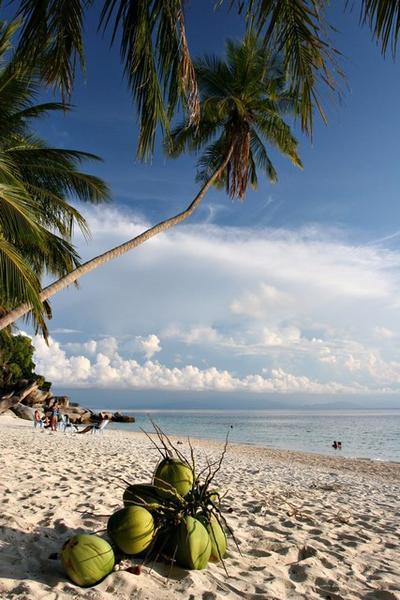
Giraffe vs Coconut. You know it makes sense.
I'm covering all outlets on this one folks, because WE NEED YOU to spend a whole 5 minutes or less of your life completing a tiny survey so I can produce for the universe a hilarious tally of your responses about giraffe and coconut farming (amongst other things). Also so as I can have a good evaluation of the back-end of the survey tool itself before I get all deadly serious with it (assuming it's as good as they say) and doing some major scientific data-collection and collation. For a very good cause.
Here is a link:
Click here to take survey
Thank you.
Here is a link:
Click here to take survey
Thank you.
Friday, November 19, 2010
Dr Weaselword will speak with you now.
The weasels deserve better. These sleek and wondrous mustelidae have been unfairly tarred with the brush of what is sadly an increasingly common term (sad because it's needed more and more often): 'weasel words.'
They're everywhere, those words that purport to mean something that they don't exactly mean, like "Up to 50% off!" also means that there may be no discount at all, whereas the implication is that things will be half price. Politics is especially fertile ground. But the arena that sorely gives me the crunchy irrits the most is where people's health and wellbeing are directly affected. The issues of dishonesty and disingenuity in medical speak.
Anyone familiar with my recent history knows I've had ample opportunity and motivation to learn lots and lots on a wide range of medically-related subjects. This is not just on my own selfish behalf, as my journey has found me also somewhat engaged with a whole teeming subgroup of humanity who share my experience of feeding through a tube, or who care for someone who does. And you get a tube placed for an enormous variety of reasons. Through these folks I have learned much, and deeply. And, you know, I care.
Even the definition of diagnosis has come in for some weaselling recently. It used to run:
Diagnosis (n, medical): The identification of the nature and cause of an illness; The identification of the nature and cause of something (of any nature)
but now it's been expanded in what I see as a butt-covering sort of way to:
Diagnosis (n, medical): A label given for a medical condition or disease identified by its signs, symptoms, and from the results of various diagnostic procedures.
See what's happened there? It used to be that for a medical professional to make a pronouncement that usefully encompassed a medical condition, thereby leading directly to a body of knowledge and experience able to be employed in the treatment of said condition, both the nature and the cause of an illness had to be clear, unquestionable, explicable. Otherwise it was just a description, not a diagnosis. Now, just fitting some set of symptoms or descriptions agreed upon by who-knows-what process and who-knows-what panel of arbiters is enough to pronounce a diagnosis. Which would be fine, except for one very large thing: We, the plebs, still tend to believe - and in the throes of fear and uncertainty about our health or that of our loved ones want to believe - that a diagnosis is still somehow indicative of a cause, and thus a vital foundation of treatment and a hopeful cure.
Just found this pic - anyone know what on earth it's all about???
So let's talk about things like FTT and GERD (or if you're in the non-American anglophone world, GORD).
There's a certain certainty to an acronym, as there is to a scientific-sounding long word. Whenever I read on a forum somewhere some mother saying how her child has been 'diagnosed with FTT (Failure To Thrive)' my heart sinks a little and I do a conscious double-check of what has been written. My heart sinks not from sadness - compassion does not make my heart sink, it more just sort of swells a bit - but from the possibility that this person has been on the receiving end of a sale by some doctor somewhere. Hence the double-check, I read very carefully to try and gauge the belief and feeling of the author to see if they bought the line or not. Because FTT is not a diagnosis, it's a description. And doctors are increasingly buying the BS of their own profession too. (BS may be a diagnosis, I'm not sure :-).
This isn't just rogue pedantry here, because there's a serious danger to this phenomenon. FTT is a very, very confronting thing to be presented with as a parent especially, as it all too often carries with it some direct implication that you are somehow at fault. It also holds out a false sense of control, and thus perhaps misplaced hope. Going back to the need for a 'probable cause' component to a diagnosis, FTT could have a whole plethora of possible contributing causes. It's used pretty loosely too, in that it can be applied to any person who is an outlier on the 'normal' weight/age charts, and it has anecdotally been abused too - I have heard more than one story where a parent has been threatened with a "diagnosis of FTT and having child services called in" for daring to question a doctor's directions. I should clarify that the usual first-recourse response of the medical profession with FTT is to simply 'insert more calories' and that typically means forcing in more canned formula. Sometimes it works for a while. Sometimes. But it doesn't address the root cause usually, does it?
Just giving something a diagnostic name gives the impression of some power over the condition, and the cultural hangover of diagnosis=knowledge of cause too often means both medicos and caregivers backpedal or even entirely cease in their efforts to find cause - to heal, rather than treat. The emphasis shifts not surprisingly onto getting some measurable outcomes using the 'scientific' tools available: get that child back in the middle percentile on the weight charts, even if it's all fat and too much weight for their fragile small bones to safely bear. Even if it means living in a world of vomit, retching and pain. Even if it means otherwise clinical malnutrition. At least then we've got the FTT licked, eh?
A bogus diagnosis like this too often means real healing is pushed right out of the frame, as cause is not sought, and the 'whole person' approach withers in the face of a potent-sounding acronymic lump of weasel droppings.
But wait, there's more.
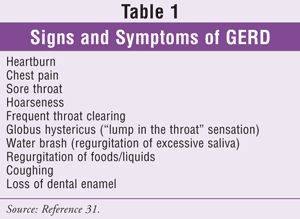
GERD (GORD) stands for Gastro-Esophageal (Oesophageal) Reflux Disease. And it's not even a disease, let alone a diagnosis. It's been going on in humans since the dawn of time - certainly much more prevalent these days due to the whole modern diet and lifestyle catastrophe but it's only recently been given it's shiny new name. By the pharmaceutical companies.
The described set of symptoms encompassed by the acronym GERD can be caused by any number of wildly varying factors and effects. Including, say, standing on your head too often.
Just like with FTT, all too often seeking a root cause or addressing the real reasons for ill health get ignored when so succinctly wrapped up in four capital letters. It gets all normalised - it's just a thing that sooooo many people have and isn't it great we have these marvellous drugs to so effectively treat it? Except that the drugs don't. Treat it, that is. The main drug prescribed and marketed throughout the world is esomeprazole (Nexium, Prevacid, a hundred other commercial names) and even some doctors seem to believe it successfully treats acid reflux. No. It de-acidifies whatever does reflux and true, in some cases the less-acid stomach contents mean reflux happens less often or less severely but in the main it just stops it hurting and damaging the esophagus when reflux does occur. Oh, and over time it can rather tend to destroy your stomach lining. And other stuff.
(Disclosure: I take Nexium. I have yet to find an alternative that works effectively.)
So whenever I hear someone talking about GERD my first instinct is to urge further questioning. Yes, but why? Again, too many will stop at the controllable-seeming catch-all that is a 'diagnosis' and currently-preferred treatment.
But is it any wonder? Viewing the news media with any scope or objectivity we can quickly come to realise that we are simply being fed what it is we are most willing to believe, at least when it comes to opinion if not selection of what is 'newsworthy'. In a scary health situation we even more want our alpha figures, our parent-types who will tell us what is wrong and what to do. We want the comfort of a century's scientific experimentation and experience behind it, and we want most of all to believe there is a straightforward answer. Some say this is precisely why we invented religion. But in the end, we do ourselves a grave disservice by disempowering ourselves in the face of a profession as commercially-driven as it is driven by the best of intentions. We must always be the final decision makers in our own health, and that of those who rely on us.
My beef is that it's just downright dishonest, and I suppose in the case of GERD (and just too many other 'diseases' to name) to big money. Pardon the pun, but I don't buy it.
And lastly, of course I'd like a proper diagnosis for myself, not just a great antiqued funky steampunk-sounding name for a disease. But then I know that the cause is elusive to modern science, and by now, essentially irrelevant. Can't help a curious mind though eh?
Sunday, November 14, 2010
Things I want right now #7
In truth I've been a little remiss in not popping these up here lately - but then again, they seem to be getting fewer over time. That said, not 2 minutes ago I read elsewhere on the webs a mention of...
A peanut butter sandwich.
Yep, that's all. No need to go messing about with its simplicity by adding jam (that's 'jelly' in US English).
I flashed instantly to plain old soft white bread, slightly chewy crust, and smooth peanut butter. You know I honestly can't recall how long ago it might have been since I had such a thing, because back when I was eating I'd been a multi-grain type guy for years and years, and of course for the last few years PB was just too sticky for my oral functions to handle properly. Even all melty and oily on toast. Oh well.
There's that weird feeling again. I wasn't really hungry just before either but now, well.....
Honour thy peanut butter sandwiches people; one of the true culinary classics of Modern Western Civilisation. Which, when you think about it, says quite a lot about us, doesn't it?
A peanut butter sandwich.
Yep, that's all. No need to go messing about with its simplicity by adding jam (that's 'jelly' in US English).
I flashed instantly to plain old soft white bread, slightly chewy crust, and smooth peanut butter. You know I honestly can't recall how long ago it might have been since I had such a thing, because back when I was eating I'd been a multi-grain type guy for years and years, and of course for the last few years PB was just too sticky for my oral functions to handle properly. Even all melty and oily on toast. Oh well.
There's that weird feeling again. I wasn't really hungry just before either but now, well.....
Honour thy peanut butter sandwiches people; one of the true culinary classics of Modern Western Civilisation. Which, when you think about it, says quite a lot about us, doesn't it?
Friday, November 12, 2010
Hearing the dog whistle.
It's a term that seems to have made itself a regular entrant in the Australian political speech competition these days. Most often used perjoratively, 'dog whistle politics' is a term for a type of political campaigning or speechmaking which employs coded language that appears to mean one thing to the general population but has a different or more specific meaning for a targeted subgroup of the audience. The analogy is that the code is outside the range of the 'normal' listener's awareness, as a dog whistle is above our range of hearing.
It's intention is typically that of plausible deniability. As an example, and it's where I suspect the term originated, the Howard government's statements surrounding 'illegal immigration' in the mid-1990s were said by many to be designed to appeal to the racist elements of society, yet none of the language used was technically or overtly racist. The racism could plausibly be denied, and thus those who were not racist but would otherwise support the Howard government could vote for them with clear(er) consciences, alongside the supposedly racist folks who heard that dog whistle. Anyway, Australians voted for him in droves.
I'm not exactly changing the subject now, people of Australia and fellow citizens of Northam in particular, but I'd like to ask you a simple question and have your first, viscerally-determined response before your wily self-image-protective mind gets hold of it please:
Would it make a difference to you if the announced Immigration Detention Centre in Northam for up to 1500 single men was instead to be replaced by a medium security (male) prison of the same capacity for Australian criminals?
If you felt a little discomfort for a second there, or just answered a simple resounding "yes" then you might want to run a bit of internal systems check.
To do this, we need to separate the issues out; primarily we need to separate our debate around how we manage the fact that there are asylum seekers arriving, what we do with them when they do, and how we reconcile everyone's fears and thoughts about the effects on our culture and wellbeing in the long run; from the simple issue of where we place a detention centre - as it's a given that we currently put them all (the men at least) in detention.
Northam had one of those 'town hall meetings' very recently that was supposed to be an information evening for concerned residents but which was predictably hijacked by a relative minority of louder, angrier folk (many of whom were not residents, arriving with their One Nation placards etc from Perth) whom the media naturally turned towards for good sound-bite footage as a frog naturally snaps its tongue at the tastiest-looking grasshopper it can reach. Commercial news reality there. So what ended up happening was that the many people who attended seeking some actual fact and information were unable to get it (what little there was to be had, that is) and just saw more piss and vinegar than they wanted to have in their lives. And the land as a whole by and large saw another NIMBY population to feed their fears and enjoy a tiny unspoken guilty moment of "thank goodness it isn't coming HERE".
I'll just put two words in here to encapsulate where we could head if we're not careful:
Tea Party.
There. I said it.
Just recognising the dog whistle doesn't make it unaffecting, you see. Because once you identify it you have the responsibility to respond to the ugly fact of deceit - whether it was intentionally done, or just an artefact of the new reality that news must sell so what sells makes news. Even public broadcasters feel the need to compete for audience share if not market share to retain relevance so they fall increasingly under the same rules of engagement as the rest. In a way, the increasing partisanisation (is that a word?) we see in the US where you can just choose a news channel that whistles directly to your hearing range of opinion and/or prejudice is so much more honest. I mean, not everyone in Australia actually realises that The Australian is an anti-Labor propaganda screed as much as it is a valid news service. And not everyone appreciates that SBS does in fact have political agendas going on intentionally or otherwise simply by selling to a particular demographic and choosing the stories and angles to support that audience's set of self-images.
So what do you do when you see the whistle being blown?
My plan is to ask my fellow townsfolk which they'd rather - immigration detention centre or prison?
(Oh, and pardon my dog whistling. I do mean it to call out those who need to look at their issues with race and nationalism, as a priority over making decisions about the placement of detention centres. Apparently, dog whistles can hurt dogs' ears.)
It's intention is typically that of plausible deniability. As an example, and it's where I suspect the term originated, the Howard government's statements surrounding 'illegal immigration' in the mid-1990s were said by many to be designed to appeal to the racist elements of society, yet none of the language used was technically or overtly racist. The racism could plausibly be denied, and thus those who were not racist but would otherwise support the Howard government could vote for them with clear(er) consciences, alongside the supposedly racist folks who heard that dog whistle. Anyway, Australians voted for him in droves.
I'm not exactly changing the subject now, people of Australia and fellow citizens of Northam in particular, but I'd like to ask you a simple question and have your first, viscerally-determined response before your wily self-image-protective mind gets hold of it please:
Would it make a difference to you if the announced Immigration Detention Centre in Northam for up to 1500 single men was instead to be replaced by a medium security (male) prison of the same capacity for Australian criminals?
If you felt a little discomfort for a second there, or just answered a simple resounding "yes" then you might want to run a bit of internal systems check.
To do this, we need to separate the issues out; primarily we need to separate our debate around how we manage the fact that there are asylum seekers arriving, what we do with them when they do, and how we reconcile everyone's fears and thoughts about the effects on our culture and wellbeing in the long run; from the simple issue of where we place a detention centre - as it's a given that we currently put them all (the men at least) in detention.
Northam had one of those 'town hall meetings' very recently that was supposed to be an information evening for concerned residents but which was predictably hijacked by a relative minority of louder, angrier folk (many of whom were not residents, arriving with their One Nation placards etc from Perth) whom the media naturally turned towards for good sound-bite footage as a frog naturally snaps its tongue at the tastiest-looking grasshopper it can reach. Commercial news reality there. So what ended up happening was that the many people who attended seeking some actual fact and information were unable to get it (what little there was to be had, that is) and just saw more piss and vinegar than they wanted to have in their lives. And the land as a whole by and large saw another NIMBY population to feed their fears and enjoy a tiny unspoken guilty moment of "thank goodness it isn't coming HERE".
I'll just put two words in here to encapsulate where we could head if we're not careful:
Tea Party.
There. I said it.
Just recognising the dog whistle doesn't make it unaffecting, you see. Because once you identify it you have the responsibility to respond to the ugly fact of deceit - whether it was intentionally done, or just an artefact of the new reality that news must sell so what sells makes news. Even public broadcasters feel the need to compete for audience share if not market share to retain relevance so they fall increasingly under the same rules of engagement as the rest. In a way, the increasing partisanisation (is that a word?) we see in the US where you can just choose a news channel that whistles directly to your hearing range of opinion and/or prejudice is so much more honest. I mean, not everyone in Australia actually realises that The Australian is an anti-Labor propaganda screed as much as it is a valid news service. And not everyone appreciates that SBS does in fact have political agendas going on intentionally or otherwise simply by selling to a particular demographic and choosing the stories and angles to support that audience's set of self-images.
So what do you do when you see the whistle being blown?
My plan is to ask my fellow townsfolk which they'd rather - immigration detention centre or prison?
(Oh, and pardon my dog whistling. I do mean it to call out those who need to look at their issues with race and nationalism, as a priority over making decisions about the placement of detention centres. Apparently, dog whistles can hurt dogs' ears.)
Sunday, November 7, 2010
Let's just be clear, it's not that I love the banks......
The first Tuesday in November has been famous in Australia for 150 years as the date the Melbourne Cup, that Race That Stops A Nation is run, and in recent years it's been just as in the news in Australia because First Tuesdays are when the Reserve Bank of Australia releases it's monthly pronouncement on official interest rates.
Then, as happened last Tuesday, the Big Four major banks respond publicly, typically changing or not changing their lending rates accordingly. It's become a weird ritual.
Last Tuesday the Commonwealth Bank did something that sparked no small measure of piss and vinegar in our reportage by raising their rates well beyond the increase made by the RBA - 0.4%, as compared to 0.25%. And yea, there was much wailing and gnashing of teeth across the land, and mortgagees were seen to lament and rend their credit card statements. The whingefest commenced and the cries of the people for the government to "DO SOMETHING!" resounded from every second soundbite over the airwaves.
It's a business, people. The banks are not here for you, unless you are a shareholder. It looks to me like a sensational triumph of branding.
Where I grew up on the lovely Northern Beaches area of Sydney, there was (and probably still is) a real beach culture. We kids were at the beach every chance we got, and being able to surf was nearly as compulsory (for a boy) as being able to swim was for everyone. we were really used to the shark alarm going off, and having to all get out of the water until the Surf Lifesavers could confirm that Jaws was no longer lurking about. Shark attacks happened just as regularly as they do now, but these days the consensus attitude has changed.
Back then, when a large shark attacked someone in the area, or any other popular swimming areas about the coast, there was a hue and cry and a hunting party was raised to rid ourselves of the brute. The voices against this knee-jerk ridiculousness were there, but small, and drowned out by those who preferred to see us as masters of our domain, who sought perhaps some vengeance and balm for their fearful souls. Over time though, we know this has completely turned around.
Now when someone is taken, we keep a better eye out for a while, but what we mainly hear in response are things like how the person involved always respected that this is the shark's home, and we are the visitors. That sharks are carnivorous hunters, and that we might just be tasty. That this is the natural order and we are rightly humbled in our place in it. This is a good thing, that we have come to respect the shark's right to behave like a shark and do what we can to protect ourselves - we've grown out of our childish anger and punitive tantrum-throwing destructiveness.
Why is it then that we expect a business, whose reason for existing is by definition to make profits for its stakeholders - in the banks' cases their shareholders - to behave in any other fashion than that which it is designed or born to do?
It's 'reporting season' now too, and yep, the Big Four are all showing us their record profits. They are also telling us that they have done a poor job getting their customers to understand that their 'cost of funding' has risen due to other factors. We dummies out here just see more bank profit + higher interest rates = cause and effect.
OK, sure, there are all sorts of ameliorating arguments; for example it's an unfortunately perpetuated myth that the RBA cash rate is the main determinant of the banks' lending rates. It's a major factor of course, and the banks' habit of using the RBA rate rises as cover for raising their own rates has not helped the public decouple a cause-and-effect theme in their minds. Lots of thing affect a bank's ability to make a profit. they are very complex businesses. Well, it's true that most of us shall never understand fully the labyrinthine machinations of the globalised finance sector and precisely how it impacts our home loans but it doesn't have to be that hard. They make more money, and we are paying more. Looks simple enough from out here, yes?
Yet here in the modern commercial world we have chosen to accept a bizarre situation - that corporations are somehow a part of society; that they are essentially citizens like us with social responsibilities. The banks do a super job of telling us in their marketing that this is *exactly* who they are, because the choices we make (or at least, the choices many of us make, to date) about who we do our banking business with - who we trust with that most crucial element of our self-value, our money - are not based solely or even mainly on hard-headed maths or pecuniary self-interest, but on *feel*. We want our financial affairs to feel, above all, safe.
Banks are NOT people. The profit motive will only be subservient to other social motivations insofar as it can be seen to support profit. It's a circle. Money spent on environmental programs, charity, all that - recouped in the power of their image and the continued success of their branding - their branding that makes us think that they do in fact support us. Banks support business, of course they do - like bison support the great plains. They must have a rich environment in which to feed, yes?
So there's a mighty disconnect here. The larger and more successful a bank is the more likely we are to see it as a worthy entity to do our business with, but of course they got there by making more profits than their competition. And apparently we don't like that. Because we think they've done it by taking money from us.
And oddly, there are so many better options than the big players out there for home lending (just as an example) yet very few take up these different opportunities. Doing so is not only the best, it is perhaps the *only* way to change the ways the banks operate in their treatment of customers. We all know that in the Australian environment that the small-pond syndrome of having only four major players leads to price collusion (go ahead, sue me) as surely as we know we're being ripped off mercilessly by encouraging the situation where 75% of our grocery market is owned by just two players.
Democracy has been just a little bit crippled here, but we've let it happen. We've bought the fallacies we're sold ($10 Coles meal anyone?) and dimly lie down to let them have their way. We can't see a way to smash the status quo so we have our whinge, blame the government if at all possible, and bend over for some more.
What if, instead, we just used the system as it is? Bank with an institution that behaved a little better, or at least gave us a better deal? Grew a few more veges rather than buying lemons imported from the USA? Used the local shop - paid a little more for the local milk from the corner store to support local jobs and the industry outside of the monopolistic players? And on the larger scale, engaged with politics is a way that made our concerns about the government's useful roles in changing all this actually heard by both those who represent us, and by our wider community?
If we pressure the system to make it more competitive - to act 'rationally' as the free marketeers say we apparently do - and the institutions thus drive their rates down to win or win back our borrowing business, then that is where we are successfully engaged in the ecosystem of finance, as symbionts. Right now most of us are just behaving like prey or worse; like a domesticated herd.
No use railing against the banks, really. They're just doing what they're designed to do, and they're doing it very, very well. Let's look more closely at this cause and effect stuff before we waste all that energy we could use for useful change on railing against something that is how we made it in the first place. Let's not be those folks who buy a house at the end of the airport runway and then complain about the noise.
Then, as happened last Tuesday, the Big Four major banks respond publicly, typically changing or not changing their lending rates accordingly. It's become a weird ritual.
Last Tuesday the Commonwealth Bank did something that sparked no small measure of piss and vinegar in our reportage by raising their rates well beyond the increase made by the RBA - 0.4%, as compared to 0.25%. And yea, there was much wailing and gnashing of teeth across the land, and mortgagees were seen to lament and rend their credit card statements. The whingefest commenced and the cries of the people for the government to "DO SOMETHING!" resounded from every second soundbite over the airwaves.
It's a business, people. The banks are not here for you, unless you are a shareholder. It looks to me like a sensational triumph of branding.
Where I grew up on the lovely Northern Beaches area of Sydney, there was (and probably still is) a real beach culture. We kids were at the beach every chance we got, and being able to surf was nearly as compulsory (for a boy) as being able to swim was for everyone. we were really used to the shark alarm going off, and having to all get out of the water until the Surf Lifesavers could confirm that Jaws was no longer lurking about. Shark attacks happened just as regularly as they do now, but these days the consensus attitude has changed.
Back then, when a large shark attacked someone in the area, or any other popular swimming areas about the coast, there was a hue and cry and a hunting party was raised to rid ourselves of the brute. The voices against this knee-jerk ridiculousness were there, but small, and drowned out by those who preferred to see us as masters of our domain, who sought perhaps some vengeance and balm for their fearful souls. Over time though, we know this has completely turned around.
Now when someone is taken, we keep a better eye out for a while, but what we mainly hear in response are things like how the person involved always respected that this is the shark's home, and we are the visitors. That sharks are carnivorous hunters, and that we might just be tasty. That this is the natural order and we are rightly humbled in our place in it. This is a good thing, that we have come to respect the shark's right to behave like a shark and do what we can to protect ourselves - we've grown out of our childish anger and punitive tantrum-throwing destructiveness.
Why is it then that we expect a business, whose reason for existing is by definition to make profits for its stakeholders - in the banks' cases their shareholders - to behave in any other fashion than that which it is designed or born to do?
It's 'reporting season' now too, and yep, the Big Four are all showing us their record profits. They are also telling us that they have done a poor job getting their customers to understand that their 'cost of funding' has risen due to other factors. We dummies out here just see more bank profit + higher interest rates = cause and effect.
OK, sure, there are all sorts of ameliorating arguments; for example it's an unfortunately perpetuated myth that the RBA cash rate is the main determinant of the banks' lending rates. It's a major factor of course, and the banks' habit of using the RBA rate rises as cover for raising their own rates has not helped the public decouple a cause-and-effect theme in their minds. Lots of thing affect a bank's ability to make a profit. they are very complex businesses. Well, it's true that most of us shall never understand fully the labyrinthine machinations of the globalised finance sector and precisely how it impacts our home loans but it doesn't have to be that hard. They make more money, and we are paying more. Looks simple enough from out here, yes?
Yet here in the modern commercial world we have chosen to accept a bizarre situation - that corporations are somehow a part of society; that they are essentially citizens like us with social responsibilities. The banks do a super job of telling us in their marketing that this is *exactly* who they are, because the choices we make (or at least, the choices many of us make, to date) about who we do our banking business with - who we trust with that most crucial element of our self-value, our money - are not based solely or even mainly on hard-headed maths or pecuniary self-interest, but on *feel*. We want our financial affairs to feel, above all, safe.
Banks are NOT people. The profit motive will only be subservient to other social motivations insofar as it can be seen to support profit. It's a circle. Money spent on environmental programs, charity, all that - recouped in the power of their image and the continued success of their branding - their branding that makes us think that they do in fact support us. Banks support business, of course they do - like bison support the great plains. They must have a rich environment in which to feed, yes?
So there's a mighty disconnect here. The larger and more successful a bank is the more likely we are to see it as a worthy entity to do our business with, but of course they got there by making more profits than their competition. And apparently we don't like that. Because we think they've done it by taking money from us.
And oddly, there are so many better options than the big players out there for home lending (just as an example) yet very few take up these different opportunities. Doing so is not only the best, it is perhaps the *only* way to change the ways the banks operate in their treatment of customers. We all know that in the Australian environment that the small-pond syndrome of having only four major players leads to price collusion (go ahead, sue me) as surely as we know we're being ripped off mercilessly by encouraging the situation where 75% of our grocery market is owned by just two players.
Democracy has been just a little bit crippled here, but we've let it happen. We've bought the fallacies we're sold ($10 Coles meal anyone?) and dimly lie down to let them have their way. We can't see a way to smash the status quo so we have our whinge, blame the government if at all possible, and bend over for some more.
What if, instead, we just used the system as it is? Bank with an institution that behaved a little better, or at least gave us a better deal? Grew a few more veges rather than buying lemons imported from the USA? Used the local shop - paid a little more for the local milk from the corner store to support local jobs and the industry outside of the monopolistic players? And on the larger scale, engaged with politics is a way that made our concerns about the government's useful roles in changing all this actually heard by both those who represent us, and by our wider community?
If we pressure the system to make it more competitive - to act 'rationally' as the free marketeers say we apparently do - and the institutions thus drive their rates down to win or win back our borrowing business, then that is where we are successfully engaged in the ecosystem of finance, as symbionts. Right now most of us are just behaving like prey or worse; like a domesticated herd.
No use railing against the banks, really. They're just doing what they're designed to do, and they're doing it very, very well. Let's look more closely at this cause and effect stuff before we waste all that energy we could use for useful change on railing against something that is how we made it in the first place. Let's not be those folks who buy a house at the end of the airport runway and then complain about the noise.
Tuesday, October 26, 2010
Postcard from an edge of darkness
Me: "Definitely the left."
Male Voice: "Better than the right, or just because I'm on the left?"
Me: "The right's a bit busted up, the inside's deviated and stuff."
Female Voice: "I'll do the right then."
Time seems to pass. It's still dark.
Me: "No, that's not working. Try again."
MV: "How's that?"
Me: (thinking) "I think it's too big"
MV: "But the right's no bigger..."
Me: "Right...haha...the left is better. Try twisting to the left..." Humour? Really?
And the picture came clear for me. A moment of apparently perfect synaesthesia, where I could see what I was feeling as if from a point within my own body, so I could act as a better guide.
Me: "OK, that really hurts; you might have to go smaller" And interestingly, I knew it hurt, but was not in the least bit troubled by the pain.
MV: "Does the pain trouble you? Sorry about that"
Me: "No, it's fine, we'll just try again. Just thought you'd want to know if it hurt."
FV: "I'll have a look and make sure it's OK, .......how's that?"
Me: (flooded with this wonderful sensation of coolness and ticklishness) "That's great" I may have purred. The glidescope felt like a feather after the rough plumbing appliance of a moment earlier.
FV: "Looks fine enough, but yes, you'll have to twist to the outside."
MV: "His left?"
FV/Me: (in unison) "Yes."
MV: "OK, here we go....is that the spot?"
FV: "Not far enough for me to see yet"
Me: "Yes, now twist a bit to the left and push......unnnghh" As the painful pressure returned.
Me again: "Yes, OK, hurts, yes, left, push, hurts still, ow, no back right a bit, push, unghh....aaaaahhhh."
And the pain and pressure which had been like trying to pass a Rubik's Cube suddenly flooded away leaving in its wake a blissful cool slipperiness, sweet air and solace. It was really almost sexual.
Time seemed to pass.
MV: "OK, head back a bit, quickly now!" A bit agitated and urgent, with noises from the female voice too, and all of a sudden I realise there's this detached feeling of distress and utter panic within me, yet I'm not bothered by that at all. My airway is being blocked - some huge thing is being forced into it with only partial success, so the person on the end of it is sort of repeatedly working it in and out a bit. This time it is decidedly unsexual.
Me: "Unggh! Hnng un, trr nww....nu, unggh, nu....." Still doing my very best to be helpful.
FV: "Nearly there, have to breathe now, breathe IT in..."
Me: "Oh...."
Time definitely passed.
Funny how clearly I remembered having an anaesthetic intubation through my nose and into my lungs whilst mildly sedated. The very nice anaesthetist had reminded me they were doing it 'sort of awake' so I could help as he gave me a slightly worried, sorry look. surgeons never seem to show compassion IMO, but anaesthetists to date have been the very epitome of caring. Maybe it's the drugs, I don't know. The female voice (I never did see her) was an assistant with the fibre-optic scope going in through the other nostril. What really struck me in remembrance were two things - the clarity with which I could visualise the tube getting stuck in the couple of places it did (the reason I was 'there') and help with guidance, but even moreso the split in my personal experience. I was aware of things like pain, or that special airway-blocked drowning panic we're hardwired with, but also entirely detached from that, able to assist dispassionately. Given what I've heard from other patients under sedation, I must be fairly pleasant and helpful to work with, which is a nice feeling. Or maybe they're the only bits you remember.
Still, I'm fairly happy to have been fully under for the main show though. Somehow I feel that memories of each of ten teeth coming out would probably be a lot like World War One. A grinding sort of attrition. Kudos to the crew though, when I saw myself in the mirror 24 hours later I was shocked at the swelling (hey, look, it's Bert Newton with hair!) but also knew I'd gotten off very lightly. I've seen worse results just from the two wisdom teeth. Thanks guys.
Just thought you'd like to know what it's like being intubated - since you're not usually there :-).
Male Voice: "Better than the right, or just because I'm on the left?"
Me: "The right's a bit busted up, the inside's deviated and stuff."
Female Voice: "I'll do the right then."
Time seems to pass. It's still dark.
Me: "No, that's not working. Try again."
MV: "How's that?"
Me: (thinking) "I think it's too big"
MV: "But the right's no bigger..."
Me: "Right...haha...the left is better. Try twisting to the left..." Humour? Really?
And the picture came clear for me. A moment of apparently perfect synaesthesia, where I could see what I was feeling as if from a point within my own body, so I could act as a better guide.
Me: "OK, that really hurts; you might have to go smaller" And interestingly, I knew it hurt, but was not in the least bit troubled by the pain.
MV: "Does the pain trouble you? Sorry about that"
Me: "No, it's fine, we'll just try again. Just thought you'd want to know if it hurt."
FV: "I'll have a look and make sure it's OK, .......how's that?"
Me: (flooded with this wonderful sensation of coolness and ticklishness) "That's great" I may have purred. The glidescope felt like a feather after the rough plumbing appliance of a moment earlier.
FV: "Looks fine enough, but yes, you'll have to twist to the outside."
MV: "His left?"
FV/Me: (in unison) "Yes."
MV: "OK, here we go....is that the spot?"
FV: "Not far enough for me to see yet"
Me: "Yes, now twist a bit to the left and push......unnnghh" As the painful pressure returned.
Me again: "Yes, OK, hurts, yes, left, push, hurts still, ow, no back right a bit, push, unghh....aaaaahhhh."
And the pain and pressure which had been like trying to pass a Rubik's Cube suddenly flooded away leaving in its wake a blissful cool slipperiness, sweet air and solace. It was really almost sexual.
Time seemed to pass.
MV: "OK, head back a bit, quickly now!" A bit agitated and urgent, with noises from the female voice too, and all of a sudden I realise there's this detached feeling of distress and utter panic within me, yet I'm not bothered by that at all. My airway is being blocked - some huge thing is being forced into it with only partial success, so the person on the end of it is sort of repeatedly working it in and out a bit. This time it is decidedly unsexual.
Me: "Unggh! Hnng un, trr nww....nu, unggh, nu....." Still doing my very best to be helpful.
FV: "Nearly there, have to breathe now, breathe IT in..."
Me: "Oh...."
Time definitely passed.
Funny how clearly I remembered having an anaesthetic intubation through my nose and into my lungs whilst mildly sedated. The very nice anaesthetist had reminded me they were doing it 'sort of awake' so I could help as he gave me a slightly worried, sorry look. surgeons never seem to show compassion IMO, but anaesthetists to date have been the very epitome of caring. Maybe it's the drugs, I don't know. The female voice (I never did see her) was an assistant with the fibre-optic scope going in through the other nostril. What really struck me in remembrance were two things - the clarity with which I could visualise the tube getting stuck in the couple of places it did (the reason I was 'there') and help with guidance, but even moreso the split in my personal experience. I was aware of things like pain, or that special airway-blocked drowning panic we're hardwired with, but also entirely detached from that, able to assist dispassionately. Given what I've heard from other patients under sedation, I must be fairly pleasant and helpful to work with, which is a nice feeling. Or maybe they're the only bits you remember.
Still, I'm fairly happy to have been fully under for the main show though. Somehow I feel that memories of each of ten teeth coming out would probably be a lot like World War One. A grinding sort of attrition. Kudos to the crew though, when I saw myself in the mirror 24 hours later I was shocked at the swelling (hey, look, it's Bert Newton with hair!) but also knew I'd gotten off very lightly. I've seen worse results just from the two wisdom teeth. Thanks guys.
Just thought you'd like to know what it's like being intubated - since you're not usually there :-).
Subscribe to:
Posts (Atom)