My first impression, I admit, was negative.
There's a communal kitchen/dining room down in this wing, with glass on two sides looking out into a pleasant walled courtyard. There is a fishtank hosting a trio of fat and happy goldfish, and the obligatory notice not to feed them. Obligatory as well the "you're welcome to use the kitchen but we'd appreciate it if you cleaned up afterwards" sign. My negative impression was formed from none of this.
You see, I know this room really well. I keep some of my blended foods in the freezer there, and use the kettle and microwave. I often meet the hospice staff, nurses, volunteers and relatives of patients in there.
He was dictating, you see. Not as in speaking in order that someone else writes down his words but he was telling the woman sitting corner-wise from him at the large table how things were going to go. What he was doing, in what order, the list of things to be sorted out, pointing point-by-point down the list on his iPad screen, propped up in the twee little leatherette case-cum-stand. His manner spoke to her a great freight of now-redundant words from their shared past as siblings; all the known tropes of who's the coper, who's the awkward misfit, who's successful, who's in charge and who needs support. An unfeeling observer might describe a scene of gentle patience, of care, of a brother looking out for his younger sister in this fragile moment, as the details of what to do about Dad are made forensic; matters of necessity only. Someone with perhaps a more sensitized heart or who find themselves a little vulnerable might however describe it as a scene of withering pity, of grumpy resignation that these timeworn roles should persist even in this moment. That real feelings cannot be shared and shown, be made real - as real as the matter of the mortgage payments and bank accounts and insurances and all of that. He would as usual cope, and she would acquiesce to her superior in all things worldly. Please him by so doing.
I reflected on my reaction.
Later, more of the family had gathered. All middle-aged; five people, three laptops, the iPad and four mobile phones arrayed around the table now in that tidily rectangular mess of technology and foodstuffs as they held their cabinet. He was dictating again, it seemed. Looked at me as I waited for a kettle to boil, apologised for them "having taken over" ... "as we always do" quipped a new sister to the scene by way of self-deprecation. Offered me a sandwich. I shook my head no, smiled.
And reflected on my judgment of these people.
Wirelessly networked, the men now had their plans and to-do lists, contact files, dates and logs all synchronised in the Cloud, oh-so-patiently explaining how to manage the connection to sister number 3, keen to be involved but preferably not to take any action. To feel useful and relevant in decision making. Their father still lay fifteen feet away across the corridor, bed lowered and stand-up alarm activated lest he try to stand and then fall in his presumably terminal restlessness, aware or not of the council deciding for their mother what would be done I do not know. A draft obituary was commented upon by somebody. For when the time came, you understand. Crowdsourced.
Still, I am displeased with myself. I cannot shake this set of thoughts, and they are unkind.
In my room's ensuite, 3 doors down from the Man In Question I am washing out my soup cup, the one I use to warm and pour my tube feeds. My doors are open, and a Bach violin Partita issues softly from my own laptop, beneath the silent screen showing the cricket, you know, in case something happens. There is a soft knock.
He has come to my room, the Dictator, with that tray of sandwiches from the hospital kitchen he gestured towards earlier, half-gone and gently covered in plastic wrap. "Really", he says, bending humbly, unsure in the doorway whether to come in further or not, suddenly acutely uncomfortable in what he now senses is my space - he hadn't thought this through and there is a tinge of panic colouring his close-cropped balding crown and too-wide eyes. "Really, I'm sorry we take up so much room, and we can't eat all of these ourselves. Please have some".
My feelings break at around the same moment his do. I feel an enormous and profound stillness fill me up from spinal cord outwards, standing me up straighter and softening my face. My sadness and compassion well up together, beauteously balanced. Of course, I cannot speak. His eyes have not left mine this last deep second or two of precious connection, as he lets me see his utter vulnerability, his crashing fear of the emotions he feels as an almost external force overspilling the sea walls of his safe harbour and drowning his ability to Get The Necessary Things Right. I cannot know, but it seems to me that he sees in my eyes the understanding, the empathy of a fellow Competent Man who knows this chill - the fear of Suddenly and Publicly Not Coping. I too now lean forward, returning his supplicant bow, and lead his eyes down slowly at first. They flick over the font of my ironic t-shirt, the one with the red love heart circumscribed with a cartoonish feeding tube that reads Super Tubie, and he watches widely now as my emaciated claw of a hand hooks up the shirt, too slowly for comfort I am aware ("get it over with!!") and reveals my feeding tube. By way of explanation of the shaking of my head, and mouthing out my best effort at "no thanks, you see, I cannot eat."
Gravity overpowers him for just an instant; a wobble, a half-genuflection, a tipping and a saving of the tray. He bends some more, as if getting ready to sit, looking now aghast at the floor, at my face, the floor, my face. Stillness again and we lock eyes now. I help him hold the tray, and through the electric medium of the stainless steel we touch. He stands. He is about my height.
"OK," he says at last, nodding. "Thank you."
"Actually, thank you" I squeeze out and I know he understands me, literally and otherwise.
And I reflect again on my reactions as he walks back out, headed for the kitchen cabinet meeting again. This time happily, relieved that my compassion came back. Grateful that he held the mirror for me, contrite that it took me 3 hours to properly remember it was me all along, not him.
As I write, the father still breathes, sometimes over-loudly (I can hear from here even) which means it probably won't be too long now.
What a privilege to be in a place where such things happen.
Friday, February 10, 2012
Sunday, January 29, 2012
Abandon Hope for Happiness
Ambiguous title, I realise, but that works too. Is it an inducement to relinquish hopes of being happy, or am I suggesting that happiness may follow when hope as a 'thing' is abandoned?
I have abandoned all hope, or at least I am trying too. It's one of those things that crept up on me, it wasn't a conscious decision; more of a realisation that over time I had been letting go of all sorts of long-held hopes and wishes. That incrementally this letting-go had flooded the landscape of my once hope-filled world, and that there there is not much hope for survivors. Living the path of a degenerative and terminal disease is a fabulous opportunity to allow this to happen. If I were to have regretful moments however, I would regret that I hadn't learned this lesson sooner; I might resent that it has taken this dire disease to push me to grow this way. I could lament that I am one stubborn bastard. But there is nothing to be gained from such self-flagellation, except to be reminded that it can be worth sharing this stuff, that just maybe someone out there might have their own variety of learning from it. I hold no such hopes however. It will, or will not, happen.
The movie was cute, a good vehicle for all the usual John Cleese quirks and tics, but largely forgettable to me apart from this one line, which has stuck ever since. The plot is a farce where Cleese plays a school master obsessed with timeliness attempting to travel to another place to give an important address on the subject but becomes entangled in a series of snags and delays along the way, roping in student Laura along the way. At each setback there is a renewed and more frantic effort to make it there on time.
I really get what he's saying. Hope and despair are inseparable, like the two sides of a coin. Hope says "I am NOT despair, Despair is the Other Thing which you Do Not Want." You cannot have hope without a background nagging insistence that despair is the other possibility.
Hope is asking. Hope is a supplicant to chance, or God, it is a buffer against having to equally accept in the hopeful moment the likelihoods of that which is not hoped for. To hope is of course to risk disappointment.
Hope wants things. Hope, however vague, has designs on outcomes. Maybe we want something as broad as 'world peace' or you hope for your unhappy family member to 'find happiness' but how conceited does that make us? These well-meaning hopes tell us something about ourselves and just how egotistical we are. We are sure that what is right and good and best is for world peace or our brother's happiness, when Reality might have other, very good, plans. Imagine telling God directly what you wanted to have happen; just to dictate to them what is right. Hope pleads "please let this thing I want to believe in exist". As if, theists.
We talk about "not getting one's hopes up", we understand the pitfalls all too well, and yet we persist. We acknowledge our tendency towards hopefulness and assume it is natural. But what if we learned it, what if it were just some odd survival mechanism we developed to help us cope with an uncontrollable, unpredictable world?
Don't I sound like the sad sack, eh? No hope. Hopeless. Quite the contrary, dear reader. What I've discovered since losing my hope - not all hope, I'm far from perfect - is a far more subtle and soulful breed of Optimism. As my hopes for certain things sloughed off in the searing luminescence of my ever-increasing decay and tilted approach towards The End Days I found more and more exactly how positive my expectations of much of the world and all who sail in her are. I found I was also losing old cynicisms, old ingrained despairingnesses as well - the expectations that this person would more often tend to be an asshole than not or that the GOP would continue to remorselessly avoid the real issues of American needs, for example. It didn't matter when I was wrong either. It allowed the expectation of whatever happening back in. Yes, losing hopes increased the amount of doubt and uncertainty in my life, and my natural response in this vast and empty plain of possibilities was to assume that mostly good things happen. It seems that I am mostly right about that, happily, as well.
I do not hope that I'll get better. I might, but chances are pretty darn well against it. I don't hope for a 'space junk moment', but I allow for its possibility happily. I do not despair of the unlikelihood of such an awesome death happening either. I just recognize it as a cute manifestation of my general tendency to assume that good things mostly happen and despite well-worn patterns, things change all the time.
They say that prediction is faith in the past. Hope says, usually "please don't have the past repeat itself, I want something different". Or just as fearfully "please let it never change". It as a plea to have control, nothing more. Despair in a nice frock and sun hat. Hope has no faith. Hope does not trust. How sad is hope?
Abandon hope, all ye who enter here. For then, you may see that regardless of our petty desires, fears and foibles - perhaps even in spite of them - mostly good things happen, and if it doesn't seem that way now, just wait a while and it will when you look back.
I have abandoned all hope, or at least I am trying too. It's one of those things that crept up on me, it wasn't a conscious decision; more of a realisation that over time I had been letting go of all sorts of long-held hopes and wishes. That incrementally this letting-go had flooded the landscape of my once hope-filled world, and that there there is not much hope for survivors. Living the path of a degenerative and terminal disease is a fabulous opportunity to allow this to happen. If I were to have regretful moments however, I would regret that I hadn't learned this lesson sooner; I might resent that it has taken this dire disease to push me to grow this way. I could lament that I am one stubborn bastard. But there is nothing to be gained from such self-flagellation, except to be reminded that it can be worth sharing this stuff, that just maybe someone out there might have their own variety of learning from it. I hold no such hopes however. It will, or will not, happen.
“It's not the despair, Laura. I can take the despair. It's the hope I can't stand. "
~ Brian Stimpson (John Cleese), Clockwise (1986)
The movie was cute, a good vehicle for all the usual John Cleese quirks and tics, but largely forgettable to me apart from this one line, which has stuck ever since. The plot is a farce where Cleese plays a school master obsessed with timeliness attempting to travel to another place to give an important address on the subject but becomes entangled in a series of snags and delays along the way, roping in student Laura along the way. At each setback there is a renewed and more frantic effort to make it there on time.
I really get what he's saying. Hope and despair are inseparable, like the two sides of a coin. Hope says "I am NOT despair, Despair is the Other Thing which you Do Not Want." You cannot have hope without a background nagging insistence that despair is the other possibility.
Hope is asking. Hope is a supplicant to chance, or God, it is a buffer against having to equally accept in the hopeful moment the likelihoods of that which is not hoped for. To hope is of course to risk disappointment.
Hope wants things. Hope, however vague, has designs on outcomes. Maybe we want something as broad as 'world peace' or you hope for your unhappy family member to 'find happiness' but how conceited does that make us? These well-meaning hopes tell us something about ourselves and just how egotistical we are. We are sure that what is right and good and best is for world peace or our brother's happiness, when Reality might have other, very good, plans. Imagine telling God directly what you wanted to have happen; just to dictate to them what is right. Hope pleads "please let this thing I want to believe in exist". As if, theists.
We talk about "not getting one's hopes up", we understand the pitfalls all too well, and yet we persist. We acknowledge our tendency towards hopefulness and assume it is natural. But what if we learned it, what if it were just some odd survival mechanism we developed to help us cope with an uncontrollable, unpredictable world?
Don't I sound like the sad sack, eh? No hope. Hopeless. Quite the contrary, dear reader. What I've discovered since losing my hope - not all hope, I'm far from perfect - is a far more subtle and soulful breed of Optimism. As my hopes for certain things sloughed off in the searing luminescence of my ever-increasing decay and tilted approach towards The End Days I found more and more exactly how positive my expectations of much of the world and all who sail in her are. I found I was also losing old cynicisms, old ingrained despairingnesses as well - the expectations that this person would more often tend to be an asshole than not or that the GOP would continue to remorselessly avoid the real issues of American needs, for example. It didn't matter when I was wrong either. It allowed the expectation of whatever happening back in. Yes, losing hopes increased the amount of doubt and uncertainty in my life, and my natural response in this vast and empty plain of possibilities was to assume that mostly good things happen. It seems that I am mostly right about that, happily, as well.
I do not hope that I'll get better. I might, but chances are pretty darn well against it. I don't hope for a 'space junk moment', but I allow for its possibility happily. I do not despair of the unlikelihood of such an awesome death happening either. I just recognize it as a cute manifestation of my general tendency to assume that good things mostly happen and despite well-worn patterns, things change all the time.
They say that prediction is faith in the past. Hope says, usually "please don't have the past repeat itself, I want something different". Or just as fearfully "please let it never change". It as a plea to have control, nothing more. Despair in a nice frock and sun hat. Hope has no faith. Hope does not trust. How sad is hope?
Abandon hope, all ye who enter here. For then, you may see that regardless of our petty desires, fears and foibles - perhaps even in spite of them - mostly good things happen, and if it doesn't seem that way now, just wait a while and it will when you look back.
(I had no hopes when I started my natural burial fund, and look what's happening there!)
Thursday, January 19, 2012
Inside my head there is a garden. And a tank. Reflections on writing this book.
As you likely know, I'm scribing this reference-type tubie tome. It's going OK. Three days or so ago I saw the whole of it properly for the first time in my head. And just after that something happened.
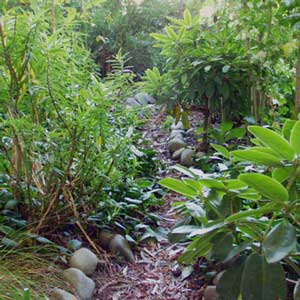
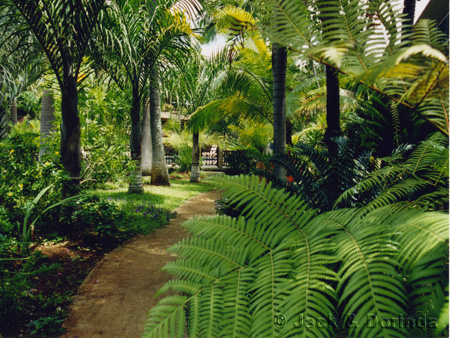
It's not easy, this writing thing, this commitment. A tweet I read recently said (and I forget who was quoted, I suspect it was Voltaire) "to write a book is to risk being shot at" and suddenly I re-thought the whole endeavour. My motivations, justifications and attitudes shifted and changed; I'm told by published authors this happens a lot in the writing stuff game. Not that I suddenly feared assassination, not at all, it's just that I realised that in some ways, in some parts, I was in conflict - was I aiming at laying down an open garden of inviting pathways for all who may wish to enter or was I building a Main Battle Tank? For in truth, both are required.
Inclusivity is vital to the success of the work, in that all who have a tube in the family must be able to draw benefit from it and yet for it to satisfy me fully it also needs to advocate the under-sold benefits of nutrition via real food - the ground on which the shots will surely be fired. I accept there will always be a number of loose cannons in the world regardless; you can't build them out entirely any more than a gardener can completely build out the weeds, these are not my concern. My concern is that I shall fail to sufficiently defend against the sort of prejudice and bigotry driven by the legacy of Western medicine's path and progress to this moment, and which sits like a minefield in the minds of those people whose education has heretofore been solely by formula-is-the-way-the-truth-and-the-life type professionals or simply just the status quo of doctors and modern medicine = authoritative scientific best practice. A minefield across which my book must roll to extend a pathway to the potentially skeptical reader's mind; into the heart of the garden I am writing.
This is a HeroRat, trained by APOPO to detect land mines. They are invaluable in clearing the millions of mines left behind after conflict all over the world. You can donate to these amazing people and adopt a life-saving rat by following this link.
The balance is key; the framing of the approach has to be - to my mind - just so. It needs to be an inoffensive tank; one that an observer will see as on their side too, not as a threat to their worldview. Just as the garden needs to be inviting, and not present a foreboding maze of dark hedges in which one might get oneself lost and confused. I've been hesitant in many parts with my phrasing and framing because I did not realise properly the dynamic tension between these competing priorities. Now I see it I find myself all of a sudden freer by an enormous degree. I was trying to plant flowerbeds where the solid armour of rigorous logic was required, and making a clearly reasoned case where speaking from the heart and offering the scent of a delicate rose was key, in places. Now I feel I can swing between them better, as is required.
I have spoken here before about Death's Beautiful Tools, and it is no surprise that the English language has never thrown up a phrase like "as beautiful as a tank". To my mind however, they can be, just as gardens can be undeniably ugly. Something which displays in its form, in the language of its lines, of its textures and silhouette the clear purposefulness with which it was conceived can be indeed an awe-inspiring and pleasant thing for the eye to behold. The Panzer V as compared to the ungainly Sherman was the example I used in that prior post, and indeed it was a far superior weapon as well, in no small part because the angles and planes of its armour were better designed to deflect shot. Its wheels more robust and easy to maintain, its gun larger and better balanced in the turret. A killing machine and something to strike fear into the hearts of men perhaps - but my tank is to have a magic flag on its side - a flag that is painted in the colours of the reader's own country of mind, and it is to be open, not clamped shut. It sits there quietly in the glade on a simple gravel path through the garden. A place of strength and certitude, made of curves and angles both, rendered in cold and logical scientifically-wrought alloys. Something to be relied upon. A big solid carved lump of logic and rationality, attuned to the real world's problems yet bluntly set against those problems that would harm us. All in the midst of a rambling open parkland of trees, shrubs and flowers, all useful and beautiful in their won right - a food forest and ecosystem always in a dynamic state, swinging between chaos and equilibrium (entropy and light) as nature and the seasons do.
I was being coy with myself I now see about the strength of attitude - the tankness - required. Peace-loving me, the self-image I prefer to project wants it all to be soft and hug everyone with the charm and grace of its delicate petals and perfumes but the brute reality is that some steeliness is simply necessary when met by the sorts of rusted-on ignorance and militant defence of "because that's just how it is"-ness one encounters in so many places. The medical fraternity is essentially a conservative creature and I'm glad of that cautious side of it but when it comes to a questioning of core principles, from a place NOT backed by massive research funds and corporate dollars, nor even a scrap of public health funding, it can be a very useful thing to point a steady gaze down the barrel of one's steely resolve and make the other guy stare back. To see your logic, and to question if their old thinking may, in fact, be worth a revisit.
It might have been the motto of the USS New Jersey where I first saw it - what some state is the conservative movement's take on world peace - "Peace Through Superior Firepower". I don't like it. But if we apply it to matters simply of logic and reason, where superiority is being able to demonstrate what makes sense (which is exactly the aim of the Scientific Method) then I'll sit comfortably enough with the clash of armour. Better must sometimes defeat once-was-better, such is the way of science and the world. So now I shall turn my mind back to building a beautiful tank, one that invites the gaze and pleases the eye with its proportions, set just so in the garden I have laid made out of all the seeds planted by those who have gone before. If you look very closely, you may see it through the foliage below - or not. For I am making a magic tank, one that is only sen by those who need to see a tank. Everyone else will see it for what it otherwise is - a garden sculpture to be subsumed ultimately by the dynamism and logic of life's progress through time. A moment waiting patiently to be just ancient history.
Funny way to see the writing of what is essentially a textbook, but there you have it. Inside my mind. Me properly owning my inner hard-ass. :-)
.
Sunday, January 15, 2012
La Macarena ... whoooAH!
There is probably some fancy name for it; when a certain tune always reminds you of a certain other tune. Every time I hear or hear of the now-legendary dance-pop abomination Macarena (Los del Rio, 1994) I am reminded instantly of a certain, extravagantly wrought arrangement of a piece of J S Bach - St. John's Passion, BWV 245 No.1 arr. H Courson. I'll play it for you later. But I'm also happily transported to two completely different places simultaneously, at other ends of the earth
I like to oscillate between these two memories only really linked by a single word association in my head. They're both such happy memories.
Once upon a time I was a member of a still little-known organisation called SERVAS. It's an Esperanto word meaning 'serve' as in 'to serve' and it was founded as a peace organisation in the late 1940's. Basically, it's a word-of-mouth 'open door' network linking international travelers with a peace-minded agenda. It was explained to me that the idea back when it was founded was that if everyone had friends in other countries then they wouldn't let their governments bomb them. The idea is you open your home to Servas travellers from around the world - two nights only, unless you invite them for longer, no money is allowed to change hands, and the guest contributes to their stay somehow - and you get to stay in people's homes around the world when you travel. It's not been shifted over from the old yearly-book-of-phone-numbers type production to the internet so it's still small. And you have to meet, know, and be OK'd by someone in the organisation. I came to it through a girlfriend's lefty academic mother. It was ace, and boy did we meet some interesting folks!
Many years after joining I found myself in Sevilla, having travelled nearly 3 months now with my friends Tim, Beatriz and Anna, and having had I think only 3 or 4 days of respite in all from being a part of their family unit. Requiring a break. We'd been sticking together for all sorts of reasons, not the least of which was for Tim's and my music partnership, and Servas is really a singles or couples-type arrangement so we'd been staying with friends, renting apartments or doing nights in hostels, hotels and the like. (Although Tim and I did break out for a night and stayed with a very cool couple in West Hollywood). But I needed a break and was low on funds and there were a couple of people in Sevilla in the Servas Spain book. The deal is, you need to ring a couple of days ahead at least and ask if it's convenient. As a host you're supposed to be accommodating wherever possible. One fellow was home, and happy enough for me to stay with him a night or so in his flat in La Macarena.
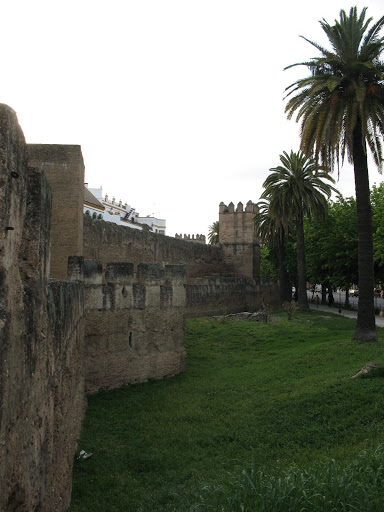
La Macarena is one of the neighbourhoods of Sevilla, around the old Almohad-dynasty city wall in the north of the city. The boundaries are not precise, but the area has long been known by this name. The most prominent landmark apart from the wall in the Basilica of Nuestra SeƱora de la Esperanza Macarena, (Our Lady Of Hope Macarena) in which resides a very famous statue of said Lady. She's usually just called Macarena, and as a result this is a fairly popular Spanish girl's name. It is the name of the girl in the Los del Rio song. But my guy told me that the area got its name from the remnant wall, the oldest section of the original Moorish-era city wall which the Almohad-dynasty conquerors had called something sounding a lot like 'macarena'. The locals call it la Macarena now anyway. We could see it from his little balcony. I wish I could remember his name now. Started with an E.
Anyway, he was also a musician but more than this, he was an amateur builder of harpsichords and showed me his current nearly-finished project. His English was better than my Spanish, and we managed a good conversation into the late afternoon of my arrival, during which we'd chatted a lot about music in general. Suddenly, he wheeled up from his perch at the harpsichord and following some mercurial inner impulse dived for the CD player and just said "you HAVE to hear this."
It had happened before and it has happened since that a piece of music totally floors me. But on those rare occasions I am perhaps the most grateful to be alive that I ever feel. I'm sure his name starts with an E.
I asked him to put it on again, and in silence once more we listened as this majestic rendition of one of Bach's greater moments filled the space at our backs; us sitting looking out over the palm-lined avenue along La Macarena as the lowering late-winter sun slanted under the day's clouds, rendering every line and edge sharp for the first time in a day of soft-focus drizzle, sparkling drops caught on leaves and the tiny rivulets running down the ancient rock walls alive with clear light. Ernesto! His name was Ernesto, and this was a great moment shared. I wrote down the album name, and on returning to Perth I went to a specialist record store, ordering it especially from overseas.
It was a perfect moment of being alive right then. Nearing the end of my overseas jaunt, a little sad it was ending but looking forward to the comforts of home now. Brand-new flamenco guitar made in the very heart of flamenco country, right there in Sevilla, to take home; a night away from the worn-in habits of being a touring family with child, glass of jerez in hand, and being astounded at this masterful reworking of the work of a master, looking out at the works of masters hence. Free, full, all the planets lined up nicely. It also introduced me to the life and works of Albert Schweitzer, whom I have come to admire in many ways, this album being an homage to his work in Gabon in the early 20th Century and his love of Bach.
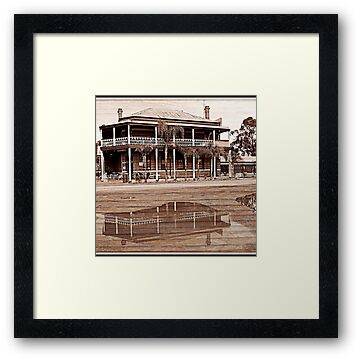
Once upon another time, I was the main barman and maitre'd at the incredible Greenhills Inn; at that time right at the peak of its glory. York is a small and very 'historic' little touristy hamlet we once lived in, not far from where we live now as it happens, an hour or so inland (East) from Perth. Population maybe 2000. If you head out further East, towards Quairading, about 20 minutes more and a deviation down a back road will take you to historic Greenhills, population 9 (at that time). We lived there too, and loved it. Once Greenhills was bigger than york, an enormous sprawling townsite with multiple drinking houses etc, the end of the railway that led to the Goldfields back when the rush was on. Then they put the main rail line through Northam. And the gold rush faded and all the small claims were gradually subsumed by big companies. The town began its decline. It eventually became somewhat of a ghost town, and was used in the early 1970s as a film set. This resulted in its becoming known more widely and soon a bunch of hippie squatters were occupying empty houses. York is a socially conservative town, very white. The first inland town of WA, and many bad things were done to the Indigenous locals to 'own' it. A little of this mentality stayed on and showed itself in the decision to eradicate the 'undesirables' from the area by bulldozing every building not currently legally occupied sometime in the late 1970s.
When we lived in Greenhills, there were in the townsite 7 houses, the wheat silos, and the pub.
The pub had enjoyed a varied career, built in Greenhills' heyday with massive 14ft ceilings, ornate plaster mouldings and all those turn-of-the-century trimmings, and it had only a couple of years before been bought by a couple moved up from Perth. John and Ashley were a self-consciously stereotypical flamboyant older guy/younger guy committed couple, having been together 20 years now and having made their money through John's elite hairdressing skills (he still did cuts one day a week in Perth for his exclusive coterie of "old Jewish ladies", and cut my hair - sometimes forcibly - as well), Ashley's former job as head of catering at Parliament House and via a succession of exquisitely tasteful renovations of Federation-era houses in the inner suburbs of Perth, during a decade when such real estate just kept going up and up. Why did they buy it? A dream. A fantasy. A vision. It was also partly ruled by the whims and diktats of our own version of a dowager empress, Shirl; 80 in the shade and chain-smoking, her exact relationship to the boys was unclear but it seems she was some sort of foster-mother figure to a younger Ashley, who once had done it very tough as a boy on the streets. They made the place absolutely shine.
When we first moved to York and I entered the hospitality scene there, Greenhiils Inn was an established and busy wedding and function venue, and as a pub already notorious both for its weekend visitors from the city - and its debauchery.
During the week, I'd open the bar for about 4 hours a day only, from 3 until 7, and there would be before me over the long, long countertop a small collection of up to half a dozen farmers. One must open for a minimum number of hours a day to maintain a hotel licence or else some days we wouldn't have bothered. I would be dressed impeccably in black-and-whites, complete with black waistcoat (green pinstripes for the 'green' in Greenhills) and black tie. Yes, for dusty old Greg Boyle from Mawson, who drove 40 kilometres to go to his local for a beer or 4. Every day. Even though he could've gone only 30 in a different direction, he liked it here. I got to know by sound all the local farmer's utes as they came across the bridge or the railway tracks. Some I saw most days, some once or twice a week. Around and behind my farmers was a collection of Marilyn Monroe art and photography - Ashley was an utter Marilyn tragic. And of course, the juke box.
During the daytime, we'd often have lunches. I would start early then and with 2 or 3 other wait staff we'd serve a couple of bus-loads of usually senior citizens first a morning tea, then they'd go off on a scenic drive around with John doing his hilarious camp banter as travel guide, then back for a slap-up lunch of old-person food (roast and vegetables) done as with everything else impeccably well. We would serve them preferably in the main dining room (we had to use the tacked-on more modern function room if there were too many), vivid deep green velveteen walls with enormous antique sideboards crammed with Royal memorabilia, especially of HRH QEII, the Queen Mother, and Diana. John was the Royal tragic We would serve tea not just in teapots using real leaf tea, but in a collection of novelty historic-house-shaped teapots that John had collected over the years. Then the folks would as if by magic disappear. The silence afterwards was beautiful. You might hear a cow. Nothing at all bar washing up would happen until we opened again later at 3.
Upstairs were nine bedrooms, all decked out in gorgeous antique furniture and which each opened on to the massive enclosing verandah through French doors. No ensuites - that much was retained of the original pub arrangement, and of course there were massive cast iron claw-foot baths in the oh-so-tasteful period bathrooms. We'd have a wedding or large function once or twice a week, with the twice-yearly Ladies' Nights when we'd get Collar And Cuffs or other male stripper troupes up would pack 300-plus country ladies in to the function venue to be served by an all-male staff. We'd have to rope in some of the regular barflies to help.
But the Friday and Saturday nights were the thing.
Juxtaposition, that was what made Greenhills the magic place it was at that time. Two overtly camp gays in a beautifully-restored Federation-era pub with Marilyn Monroe, the Queen, brilliantly presented fine food but in massive country-sized servings. In supposedly conservative homophobic backwards rural Western Australia. A lush oasis of roses and fountains and a spa surrounding the massive but airy elegant pub; just across the road from the enormous concrete grain silos, and sitting in the middle of a sheep paddock in country lucky to see 600mm of rain in a good year, and then all in 3 cold months. But it was the special mix of weekend clientele that made it hum.
York then was a weekender mecca; it used to have a Jazz Festival and a well-promoted country horse racing calendar, which kept it on the mental map of well-to-do Perthites and on the radar of tourist operators interstate as well. Many old historic buildings, B&Bs, restaurants etc. Lots of older smallholdings close to town promising an early-retirement haven in the bucolic countryside of the deceptively green, narrow confines of the Avon Valley; close enough to Perth's big-city facilities for comfort. This was the dream of York, and Greenhills sought to cash in on the visitors bigtime. Fine dining with John and Ashley's flair was the foundation and one reason I was such a good fit - I played the charming consummate professional, the unflappable maitre'd type who could be urbane and sophisticated and discuss the nuances of fine wine selection with the city cognoscenti, and equally be at one and ease with the farming types and rural college students that would blow through. York was full of boutique accommodation options and their cashed-up middle-aged guests would drive or be bussed out to us for dinner in the dining room. Exquisitely curated wine list, note-perfect service and food by a chef whose first desire was to own a McDonald's but who had an innate talent for fusing old-school Australian dining traditions with the new, in a way that was at once exciting and comforting. We had to have special large plates to accommodate the enormous rib-eye steaks (with rib) from the grass-fed specially-bred cows down the road. The city folks just adored the countryness of the whole thing, presented in an elegant, up-market, old-fashioned-service kind of way. And locals would come too for special nights out. We won awards, Australian awards too, not just local tourism stuff. So we'd have a single sitting of no more than 60 people for dinner, all the while sending out party snacks to the front bar where the locals were warming up. The Marilyn bar was long and narrow; just the bar and bar stools, with a single row of tables against the back wall. As our diners (including our upstairs guests, soooo glad they got a reservation considering how tightly booked we always were) finished dessert, they wandered out the front to ... experience it.
Dallas came in around 5 or 6 o'clock, to look after the bar solo for a bit as I increasingly spent time with the dining guests flogging the wine into them. Dallas was not a barman (at first), being by trade an architect but he came with the perfect personality. He was a good few years older than me and carried himself as if he'd been a born bar entertainer. We'd play off each other, play good guy/bad guy and switch roles. He'd play up to the women (any woman at all) being that dapper small-moustache sort of guy with a touch of camp to his demeanour but unmistakably hetero - a dandy. Hyper, friendly, conspiratorial, classic version of the bartender that drinks and only gets happier, never drunk. Actually, Dallas couldn't get drunk, but he could recite Jabberwocky in its entirety, in any state, at any time. Our game was to a) sell as much booze as was humanly possible, b) ensure the party remained in full swing as long as legally feasible and c) see a). We'd do all the usual bar tricks, push rounds of shooters, he'd pretend to snort flaming lines of booze I'd fling out across the bar, and so on. All to the juke box, of which Dallas was king, holding the remote. Thus if any patron racked up a song not to the moment's liking, he could skip it.
I am unsure when the bar dancing started, but it was just before my time (I think Dallas, who started a little while before me, probably started it). What would happen is simply this - at some point, one of several likely tunes would come on the juke box and a critical mass of ethanol intoxication and the joy of the mixed bag of dusty farmers whooping it up, likely young local lads and lasses home for the weekend or up from the Ag College and the astonished and trying-to-be-cool-and-'local' city visitors would be reached. Dallas and I would share a lightning glance with each other and two or three key regulars, and in a flash the bar mats were whisked of the long reinforced stainless-steel bar, patron's drinks were firmly pressed by Dallas and I into their hands OFF the bar and Dallas would leap up on to the bar dragging one or several lady visitors up there with him, to dance ...
...usually The Macarena. That year it was big, up there with Mambo Number Five and other chart dance hits and guaranteed to get our crowd going. Within the first verse the bar would be packed with allsorts, all 'doing the Macarena'; that ritual set of dance steps that everyone knew that year.
Except for me. I was backstop for teetering types, keeping the dance floor clear of drinks and selling, selling, selling. Plus, my schtick was the Straight Guy with the Sardonic Mouth - everyone's special friend, but not a creature of the Crowd. Ashley would by now be into his second bottle of white wine and my other job was to stop him giving away the profits in his general love for all mankind. John would appear occasionally and remove large wads of cash from the till, and maybe nod in approval if things were going especially well. Not sure if you're aware of this but in many parts of especially rural Australia people like to take their clothes off in such situations - especially the men. I'd make a nice little pile for redistribution later. It was the most fun I ever had behind the bar, those days lasted a year or so. From then on the dancing would ebb and flow in bursts as the night wore long.
Meeta could hear it from our house a mile away, and would know from the last song heard on the juke box when I would finally finish cleaning up and make it home. There are of course legalities about closing times, but we had let's say a flexible working arrangement with the locals and the law.
It was like an urban underground legend in a certain stratum of mid-1990s Perth society, the dancing on the bar at Greenhills Inn, the five-star dining, the outrageous couple you just HAD to know, and the quirky and friendly locals. Dallas thinks that the movie Coyote Ugly copied from us - with the dancing on the bar at any rate.
This of course is that other place, a whole world away from that halcyon late afternoon in Sevilla a year or so before watching the sun play on the ramparts of the ancient city walls, listening to passionate sublimity as opposed to passionate frivolity.
It's why The Macarena does not drive me to musical despair - because it comes with an instant musical antidote in my mental architecture, and the dissociative feeling you get from 'being' in two places at once. Both Golden Moments.
So what happened? The Macarena (the wall) is still standing, mute testament to the enduring aspirations of long-ago conquerors, and I suppose Ernesto is doing something cool with harpsichords. I still listen to that version of BWV 245 every now and then, when it seems a moment needs marking; a launch of something, a beginning. It's a perfect prelude to something significant.
The special brew that made Greenhills Inn's salad days could not last, of course. It was John, as it happened, that was the catalyst of the decline. He fell seriously ill, and they had to sell. Despite attempts at keeping the business busy and vital it has changed hands a number of times. It is for sale again now. Meeta and I had to move on for other reasons; the lure of better money and city jobs called and we answered - or that's what we thought we were doing at the time.
But that, as they say, is another story.
Here's that track: I saved it until last because I really want you not to listen to it with crappy computer speakers. I implore you please, please to rip it or copy it or set it up on a good stereo or headphones and immerse yourself in it at a rather loud volume. Just a little bit louder than you think it should be. It's from the album Lambarena: Back to Africa. Enjoy.
04 Track 4.m4a
http://aadhaar.opendrive.com/files/53587004_CXkV8/04%20Track%204.m4a
.
Thursday, January 12, 2012
Bad Tubie Dietitian
Over the years (yes years now, how they fly) that I've had a feeding tube I've heard some horror stories. Mainly from parents of young children with tubes and the utter baloney some of them encounter coming from the mouths of medicos who are supposed to be helping them.
Of course, it's the scandalous and salacious stories that you tend to hear, and the vast majority of doctors and dietitians are sensible, caring people trying their best and open to learning new things. But then, there are those few others......
The Bad Tubie Dietitian
by: aadhaareric
Luckily, the bad ones are getting rarer. This little video is all made up, but made up of true stories. I hope you get a chuckle at least, as you shake your head in wonderment ...
Tuesday, January 3, 2012
Safety in Letters
I was accused of being anti-intellectual today, and it was a fair call, given something I'd clumsily written (since deleted along with following comments which inadvertently hurt some others' feelings). I'm not anti- much in life, but I'm certainly not anti-intellectual. Nor am I anti-academic. One thing I am though is anti-supremacist. That was a point I tried to make, but as sometimes happens, I acted gracelessly, and did not pay due attention to my words and mood - then I got my buttons pushed by someone's bad response to my inadequacy of expression, and I got even more unconscious and habitual. Harsh exchanges occurred. It was unpleasant. Mea culpa, for my part in that.
However, it did serve to make me examine more closely the urge I had to speak in the first instance. Now perhaps I'll do a better job of making my point than could be served by a short Facebook status and comments.
What did I do? I erroneously, unintentionally, implied that having letters after one's name was something worthless. Of course it's not worthless to those who have sought them, nor to the institutions whose livelihood depend on dispensing them. But the letters are just signifiers; they do not magically impart some special or sanctified superiority on the part of the degree holder.
You know, the whole "trust me, I'm a Doctor" thing is what we're on about here.
I'll be very clear on this point - having a degree does not necessarily make someone more right or more knowledgeable than anyone else on any topic at all. What it does signify though (except in the case of many honorary degrees or the phony bought-for-cash kind) is that the degree holder is more likely to know more about the area of expertise their degree is in than someone who did not complete the education necessary to attain such a degree. Further than that, it also signifies a higher likelihood that they are more mentally disciplined, more able to meet academic standards of writing, earn more, and have had a more economically privileged upbringing than a non-degree holder. But these are all likelihoods, not facts.
A lawyer cannot know all the law. A doctor cannot know all medicine. But chances are very high indeed that they know better than you or I about some pretty good ways to investigate a legal or medical issue towards a good conclusion. This high chance though does not discount the possibility that someone without such a degree might be more knowledgable - generally or specifically - than a 'qualified' person.
A doctor (just to use one example) doesn't even know or know correctly all the things they were taught in medical school. Otherwise to get a degree they'd have to demonstrate a 100% correctness in every single exam, evaluation, practicum and dissertation to pass the course. Which would be ridiculous.
Yet there's a disconnect that happens, and it's all our own doing. We without the degrees (and before anyone brings this up I am in no way envious) and those with degrees are both in this game together. What happens all too often is that we mistake the letters after someone's name for knowledge. We use them to make ourselves feel confident in the accuracy of the information given out by the degree holder, which makes what they say more 'true' even if it isn't true at all. Who makes the authority figures anyway - those wielding the power or those ceding it?
And why do we do it? Those with the letters I think often do it unconsciously, as they become more and more competent and confident in their fields, and as they get used to the sorts of authority others accord to them. They're no different from all of us in that regard - I know I'm very confident in certain subject areas I've never had formal schooling in, and you are too. You're good at your job, as a parent, a good driver, whatever - even if you're not, you confidently believe that you are. And being in the social stratum of the 'lettered', having the cachet, indeed the intellectual responsibility such a thing can bring to bear on one, must impart a certain sense of confidence. Of course it can be a conscious put-on too, especially for example if one chooses to spuriously use one's letters after one's name, or call oneself 'Doctor' when one's PhD is in Classical Greek.
But why do others put so much burden on the shoulders of the ranks of the tertiary-qualified? I think it's because very often we just want someone to tell us what's right. We simply want to put our faith somewhere, to not live with the nagging uncertainty that dogs us and only grows when we have to make important decisions about our legal status, our financial affairs, our health. We want someone else to shoulder the responsibility and this, apart from recompense for years spent unable to work for a living while knowledge is gained, is why we tend to reward the lettered authorities more handsomely. We are paying for peace of mind.
Like you've never heard a cliche about an arrogant lawyer, the brusque aloofness of a surgeon, an academic's ivory tower, yes, I know. And for sure, the stereotypes exist for good reason, and there are plenty of those who choose to hold their noses aloft among the hoi polloi by dint of the weight of letters they proudly bear affixed to their names. But we have to realize that more than it being some thing done downwards, inflicted from a level of higher-up cognoscenti upon the poor plebs, that it's every bit as much the populace that demands such behaviour, through endless reinforcement, of those we wish to have such authority over us. We too often blindly nod and swallow.
If a doctor tells me something that makes sense given all I know already, that rings true with my existing knowledge base, then I'll tend to believe them. Because they're a doctor, not because they have the letters; this is an important distinction. I respect them no more - and no less - because of their qualification. I do however choose to make a shorthand judgement, as we all tend to - because they're qualified and experienced, I weight their advice as more highly likely to be good in certain subject areas. But believe me, if it doesn't make sense to me, if they can't explain it in a way that does or point me to where I can get some confirmation of what they're holding out as fact, then I'll make sure to do the looking on my own, if it's important.
We can't all be that way inclined all the time though, any more than all of us have the necessary innate smarts or application to do the mental cramming and contorting required to pass the bar exam. We rely on such shorthand signifiers to help us make good decisions.
All I'm really saying is that we would best be very self-aware about when we're choosing to put blind faith in another human's judgment; letters after their name or not. I hope to goodness no-one trusts me like that with anything very important. When we choose to just accept the plumber's advice on needing new pipes (they're qualified too you know) or the dietitian's orders that we must feed our child such-and-such without any questioning, because they're qualified, we are relinquishing our power. We then accept personal responsibility for what happens next. We choose to invest them with our faith, and we have no-one to blame if blaming is somewhere we subsequently want to go. I want the same sense of security that we all want, especially in times of disruption or seeming danger to myself or my loved ones. I recognize that I may not ever be able to understand all the medical or legal or financial stuff I might like to in order to satisfy this want, so in place of that I make a judgment to trust another person's advice sometimes. But that's my choice.
It's not fair to those who chose to do those hard yards of education, as signified by that scattering of ungrammatical letters they may now legally display after their name, to blindly trust and then later complain that they should have known better. No. That's not how life works. Sure, if someone sets out to deliberately deceive you, or lies to you, that's different. But if they say "trust me, I'm a doctor" and you buy it on that alone, then caveat emptor ('buyer beware'). Most professionals, if they have pride in their work, will welcome your interest, your willingness to understand the important things, and if they don't then they're not doing a good job by you; and you are well deserving of better treatment than that. Aren't you?
People deserve respect. Letters are just tools and signs.
Saturday, December 31, 2011
The Best New Post You'll Read Right Now
Don't know about you, but when I'm in the library (and this happens but to a lesser extent in a real-world book store) I do a lot of judging going by covers. You've just judged the change to this blog look right now, without even noticing, I bet. A new style trial, is all; like it?
I wander along the stacks in the local library, head canted at that special bookshelf angle that probably makes librarians and booksellers really good customers for chiropractors, and let my mind do its random-seeming thing. But inspecting my process, a whole bunch of biases at work, not the least of which these days is a simple practical one - will I be able to hold the book easily? Right up there level with that is my own design and beauty aesthetic. To big, too small, or too floppy, or too ugly means it really has to either grab my attention with the author's name (known to me somehow), a great title (unlike this post), or a particularly attention-grabbing subject matter. My secondary scanners are doing calculations to re-scan unconsciously those I weeded out on format or ugliness and connecting with deeper layers of my mind. after all, I've seen pretty much all these books before anyway. Why am I looking at this one today when I saw and rejected it previously?
Luckily, I do not know, and I choose not to interrogate myself too deeply on this one.
I just wanted to say Happy New Year to those with nostalgic or practical allegiances to the Western calendar and introduce you to this style trial.
Oh, and a big special shout-out to the roughly 1 in 365 Samoans who are missing out on a birthday this year. At least now you all get to be the first, rather than the last, to flip the calendar.
Whatever it is you do to mark the occasion, enjoy.
Friday, December 30, 2011
Golden, apparently.
Silence, so goes the saying, is golden. I'm not sure what that means.
Gold is shiny. It is very, very heavy. It is a relatively abundant element yet tends to be too widely dispersed in the environment for it to be easily accumulated in large amounts. It is extremely useful technologically, and for some reason people like it. It is even a safely edible metal - gold can do us no harm (unless a bunch of it falls on your foot or something) but its extraction from ore tends to be a very toxic process indeed.
Silence could be reminiscent of any or all of these qualities. But that's the thing about silence - silence isn't saying. In any case, those who seek gold do so mainly for what it signifies, rather than for its usefulness to a real-life purpose. Those who seek silence, on the other hand, tend to seek a deep quality of experience.
Being of a contemporaneously omenological bent (I like to pay attention to clustered events or signifiers as indicative of something worth feeling out beyond the mere use of our ordinary sensorium - that is, I 'read the signs' in life) I note well how the theme of silence surrounds me at present. As does silence itself.
Ironic, for such a wordy chap, to be speaking so of his silencing.
I posted back HERE in March 2010 on my thoughts about losing my vocal abilities. I've been toughing it out ever since, making do, adapting, using Internet Relay for the phone, doing as much bureaucratic and commercial stuff as possible online and via email, and of course having a social life almost entirely by the written word. But a day or two ago, I had no voice for an entire day.... It. Just. Didn't. Work. Even with a whole breath per syllable and being as gentle or forceful as I could be; nada. I crossed the watershed, and allowed The Realisation to seep in deeply - it is over now. Speech has gone. In that post closing in on two years ago now I spoke of my petty fears and my deeper ones. I put forth that I would try to let go with some grace. Well, if I am to judge myself on the latter, I wouldn't give a very high mark. Never mind; grace comes in good time.
So it's been a little while since I heard much of myself. Habit is dying hard (as they also say) so I've tried to speak a few times, and I have yet to work out a few little details; like how to communicate with the dogs on those important matters of "no", "sit", "go lie down", "wait", and importantly "good dog". Using the iPhone program I have (the excellent Proloquo2Go) is not an easy conversational replacement either. Typing is problematic for me at the best of times, and timing is vital to ordinary conversation so - very quickly I've settled in to a vibe of only saying what's necessary, or framing a simple line with clear intent. What I'm saying is that it's been much quieter round here, word-wise.
But you can't make an omenological observation on just this - one swallow doth not a summer make after all. (There they go saying things again, and who are these they that so fill our heads with these pithy flippant lines?). No - silence has been approaching stealthily yet in plain view, from many fronts, simultaneously. You actually can hear it coming. I am reminded of the sound of Mexico City over Christmas, when more than half the cars are off the roads or out of town and all the noisome businesses shut. The silence creeps in from the mountains around.
All the neighbours left over Christmas. Some of them have left for good, and others seem to be living there only part-time. At any rate a lot of loud kids have departed; barky dogs and shouty parents too. A series of events has led me into e-conversation with a Buddhist centre, one that specializes in assisting the dying, and of course the whole core of the practice in Buddhism is silence. Or stillness, or something. The things I'm reading all seem to feature silence as a theme. And then Facebook decides to partly silence me by making sharing things more difficult, most especially these blog posts. (I suspect it's part of a Cold War between FB and Google, like the way FB quickly killed the apps that let you post on FB and Google+ simultaneously). There are many little examples and pointers I could winkle out for you here but it's obvious to me what the theme of the moment needs to be for me. And I admit, I am as powerfully drawn as I am egoistically repelled. For the ego seems to cease to exist in real silence (the inner kind), it truly does.
The message for me is that of imbalance. It's not an extreme position or massive inversion of my worldview that's called for; the message is that I'm ignoring silence far too much for my own good. As my disease is a perfectly-tuned spur to grow through my unique karmic deals so is my final loss of speech a finely wrought - indeed golden - opportunity to experience the opposite of my erstwhile moment-to-moment habit. You know, that thing where we humans always feel the urge to speak.
The astute observer may have noticed this tendency creeping in more and more with my written communications as well. Fewer blog posts, less Facebook blathering. The focus has shifted qualitatively also. There's more room for the silence. And this increases the value of that which I do say, I think.
Silence and stillness are very closely related, aren't they? As my body continues to contract and my abilities of movement diminish, so the urge towards just sitting increases. Stillness has stalked me like silence. I need reading glasses now, but besides this reading can be physically uncomfortable. Watching TV is more difficult with the aircon on; I don't like it to be too loud and obnoxious. Writing here is painful after 20 or 30 minutes. In a beautifully self-sabotaging twist my main music repository, my iPhone, is the very device I also use to 'speak', and only a week or two prior to Christmas did we re-sell an iPod that we'd never used (because I had the phone) thus meaning I can now either listen to music OR speak. Oh hey, I'm not meaning to screed out a litany of complaint, I'm just reading to you some of the signs. And they're all pointing to conscious stillness and silence.
I wonder, right now, why it is I feel moved to say any of this. Perhaps I simply wish to see it in front of me, to 'speak' and thus validate my thoughts on the matter.
What we say becomes what we think. What we think becomes what we do. What we do becomes who we are. Or so they say.
So what happens when we say - even inside our own heads - nothing?
It's no wonder people fear silence. It's the sound of death.
Bring it on now, I say. I'm ready to listen properly.
Two last things: Please remember I am still open to receiving help with my final stillness as the me that I am; you can donate to my natural burial fund here, that I may compost nicely when the moment arrives:
http://www.gofundme.com/My-Natural-Burial
Secondly, this blog will quite likely end here soon, and be shifted over to an alternative blogging platform. It seems if I want to remain free to speak (and I do for now, in this way at least) then a freer way is to avoid the internecine strife between the Net Titans. Maybe wordpress, or something. Just a heads-up, OK?
Sunday, December 25, 2011
Luftschliffe For Christmas
Meeta teased me a bit in the run up to Xmas this year, with little dropped lines like "If something arrives in the post from Germany, don't open it, OK?" As if I'd open something addressed to her, I had replied. "I know ... just saying." Later it was "gee I realy hope this thing arrives from Germany in time for Xmas" the inference being, since I am aware of all our gift-giving (or not) arrangements that this was something for me.
"I've bought you porn for Xmas". Again, there's an important assumption here. The mutual knowledge that such things as are usually connoted by 'porn' do not float my boat and are in any case held in extreme general distaste by Meeta coupled with our casual use of 'porn' as a denoter of visually-pleasing collections of imagery of a variety of subject matters meant that I could start to begin to wonder what sort of subject area she was referring to. The double-entendre continued with the affixation of "... it's German porn."
I did indeed remove from our mailbox, on the 23rd of December, the last mail delivery day prior to Christmas, a smallish parcel, weighted and sized to suggest something possibly paperbackish, but in a larger format. And heavier. Yet it bent like side-bound paper goods do; in one axis, and not the other. Must be a book. "Excellent ... but that's only half. Weird that the other half didn't arrive the same day".
Cometh the day, today. Over the preceding weeks we've posted off a few choice hopefully well-curated little gifts and cards for friends and family, and yesterday we had a small family gathering with Meeta's youngest brother, his wife and our niece. There was much good food, and some gift-swapping, and child's play in a little inflatable pool in the shade on a perfect summer's day. This morning, with the neighbours all away, another of the very best and most amenable sorts of early summer's days ahead, it was to be just us. Special presents under the tree. 'German porn' presumably included.
About ten days ago, in a quiet relationship moment - one of those long companionable silences in a home where two people have a comfortable love - I ventured that it seemed I would make another Christmas, as I was feeling both grateful, and a tad wistful. We shared a Look. It is great, we silently decided, that life has given us this Christmas together. And that is all. Remembrance of that close shave those few months ago now, that rapid, lurching, brutal veer toward the edge of my mortality and the subsequent climb back out has lost its anxiety already; replaced with a far more ever-present sense of acceptance that at any day now, it could (and probably will) happen again, without a physical redemption, perhaps, the next time. Our Look says that we can never really know what it's like for the other, but that we're as close to knowing as two people could be. And that it's OK, because we have this one bright spot, whenever we remember it, right here, now. And we can share in it, in a way. This is a deep and abiding human comfort. Possibly the best and most honest thing a couple can ever have, I think.
Up early, Christmas greetings exchanged. The house is all lovely and shiny and clean and pregnant with delights in wrapping paper and fun with giving the dogs their new toys. But first -: have a feed, water the garden bits, put on a special loaf of bread for my beloved so it's hot and ready at lunchtime. Reflect on giving, and gratitude at our amazingly lucky lives. A hug and a Look, or two. But eventually, we run out of excuses to prolong the titillation any longer, and we gleefully disburse Santa's bounty upon our furry four-legged family members. They are most pleased. To us, then.
First, I am instructed to open a certain smallish present, as this is one that she's just a tad unsure of whether I'll love it completely or maybe think it's a bit ... I don't know, something. The least hard act to follow, I suppose, was the idea. As it turned out, I love it. You are so not getting a list.
We took turns, and I was pointed at a parcel looking very like the dimensions of the aforementioned item from the mail.
Anyway ...
..... zeppelins. It's even a satisfying word just to type. Zeppelins. There, I did it again. Try saying it. Feels nice too. If ever there were to be a word to define and encompass the Middle European aesthetic from the first few decades of the 20th century then zeppelin would be it.
I love the things, but it's a weird, selective love; one which I have not ever interrogated or given much (or any, come to think of it) thought over the years. It's just been there.
Massive sky penises? (There's that porn thing again).
Could it be that simple? Is it just some odd primal masculinity-objectification worship being projected; a tantalizing blend of the purposeful shape with utter enormity yet a refined, redeeming lightness and grace? Just a muscle-car fetish for a retro-machine geek? Maybe, but who cares. My favourites are those produced at the peak of the mania back in the mid 1930s like the Graf Zeppelin and Hindenburg. I never really went for later models, and certainly not faux-zeppelin things like the Goodyear blimps. And it was always the German ones I liked best, aesthetically. My very favourite "if you could travel back in time...." fantasy is travelling on the Graf Zeppelin; doing the South America run in particular.
Imagine my delight then, when the item from Germany turns out to be a beautifully-printed catalogue from a specialist auction house in Nuremburg with their massive annual zeppelin-related auction stuff. Amazing things like letters and postcards, posters, brochures, and of course objects. Old collectable zeppelin toys and models but then also Precious Things, like bits of the LZ 129 Hindenburg both from its early service years and salvaged after what the dual-language catalogue refers to as The Lakehurst Disaster. Pieces of other zeppelins of the era, sections of struts and spars, gears, steering wheels, wine lists, teas services, zeppelin equipment ... anything you can think of that might have been on or is in any way related to zeppelins. In this lusciously printed book.
How incredibly well my wife knows me, I think. And how creative a gift was this to find (the 'other half' is another such catalogue but from this last year, the first one I have now is from 2010's auction). I am glad (given our bank balance and the temptations) that their auctions are held in early December. Who knows, maybe I'll be here for next year's ....... but porn indeed. Glorious, fascinating looking and reading, and no-one else in the world would have known that I would totally have dug this gift. No-one.
I'm not into the crash-porn aspects of zeppelin collectordom and I admit to a certain suspicion of one who might only covet a section of torn and burned Hindenburg outer skin or a twisted piece of spar from the wreckage, you know, ghoulish folk. But then, the spars and pulleys and all that amazing manufactory is incredibly aesthetically appealing just in and of itself. I also note the very careful language used in the preface to the catalogue about anyone purchasing any object related to the "III Reich" does so only for interest and educative purposes (it is a long disclaimer to dissociate the vendors from any Nazi collectors you see). I find the swastika on the pictures of the gorgeous airships like the Graf a little sad, personally, but it doesn't ruin the thing for me. It's honest, they were forcibly leveraged by Hitler's National Socialists for propaganda of the "Germany Is Soooo Great, OK?" kind. I'm not going to analyze myself and my love for all things airshippy from 20s and 30s Germany today, anyway; perhaps another time. I'm just going to enjoy it.
But wait, it gets better. You see, next I unwrapped this t-shirt:
So all that lightness and love I invited in has come aplenty this year, and I thank you each and every one of you. Even if you're brand new to this blog and we never met before this moment, I thank you, for you are part of the world I so adore being so palpably a part of today. I hope your seasonal rituals and rites bring you even half as much depth of light and contentment as I have been brought to today, for that would be an awesome day in itself.
Happy Luftschiff Christmas. Love to you and yours. <3
Wednesday, December 7, 2011
I Am Ridiculously Wealthy
Well, I am. I'm not bragging, or claiming some social superiority, or even just OMG FAR OUT AMAZING GUESS WHAT WE WON THE LOTTERY crowing because that didn't happen either.
It's just that I need a new bookcase.
So, once upon a time when this happened, I might well have made one, being pretty handy and all. We still have a pretty funky and very solid piece I made from recycled jarrah floorboards (jarrah is a local native hardwood, lovely to work with if heavy and HARD) and oregon pine pallets that does the job very nicely. It was actually a bit of OT for while I was recovering from my back operation back in '05. Now though, depite having a shed etc my hands/arms/everything are not up to the task.
Why do I need a new bookcase anyway? Because we are fabulously wealthy. Our book collection, along with the stuff you accumulate over the years that needs to live on shelves, is growing. Even though we recycle, donate and delete crap quite regularly, there is more stuff now than we can store.
I should be very clear here - we are incredibly poor. By Australian standards, living on a Disability Support Pension, with no other source of income, and with all the added costs that chronic disease adds to a lifestyle, puts us firmly hovering just above the poverty line. We do better than those on Unemployment Assistance, but then my life costs more in some ways too. As you know, I have a funeral coming up pretty soon (or soon enough) and feel the need to plan ahead. I have gotten nearly half way to funding it too, through the kindness of friends and strangers, so that when I am gone, Meeta won't be entirely cleaned out and destitute. Well, that's the idea - we'll see what happens. Or she will.
But I need a new bookcase. You see, this is a very modestly-sized house, and Meeta's study apart (a small room already crammed with shelves and so forth) it needs to be pretty tidily kept so as not to feel cluttered and full of bad feng shui. We're already doing that horizontal stacking, tiltingly-piling on top of normally-arranged books thing and it's getting out of hand. Flat surfaces are being slowly subsumed by displaced objects and books.
Also, I've worked out two potential spots in my room where a bookcase of one or the other dimensions will go nicely, without looming or disrupting the sense of peace, balance, and functionality.
So this afternoon, I'm going to go and see if I can get one. Because I can.
This is my definition of being incredibly wealthy.
Maybe its because I've spent pretty much all my adult life (I was well catered-for as a child, but frugality was always a pointed theme from my parents) being hand-to-mouth. So many of my generation who never did (or who couldn't do) the career + mortgage = settle into wage slavery equation know the feeling. But today, I can just comfortably enough find a way to wrangle a hundred or two dollars out of the consolidated revenues, having just a teeny buffer against small fates like vet bills and plumber call-outs, because we stash away as much of the precious government dole-out as we can against such eventualities, and are real about what things bring us happiness.
A new bookcase will make me inordinately happy for days at least, and will contribute to my sense of home and the amenity and beauty of my surrounds no end. We own a nice-enough, nearly ten-year-old car that's OK on petrol and we can afford to drive down to the city every now and then on such a whim. I'll pick up some other 'city' supplies while I'm down there. And at present I can still drive safely and well, so I shall.
Choice is the thing that makes us truly wealthy. Beyond food, shelter, water, clothing, and a reasonable expectation of this continuing, having enough resources to make a choice about some stuff constitutes real wealth. Any more than that doesn't really increase your happiness much, I don't think.
Thankful, I am. That I can have such wealth, compared to the vast majority of my fellows who struggle to meet the basic needs of life, and are lucky to get the education to enable them to read a book, let alone own enough to even warrant a bookshelf. That I can substitute my own labour with the luxury of purchasing someone else's to make a piece of furniture grown from trees is a testament to the luck of my birth.
So anyone who does those FML posts who gets three (or more) meals a day, has a house to live in tonight, and internet access? Yeah. Shut up. You got it good. Let's not forget it. <3
Subscribe to:
Posts (Atom)