Me: "Definitely the left."
Male Voice: "Better than the right, or just because I'm on the left?"
Me: "The right's a bit busted up, the inside's deviated and stuff."
Female Voice: "I'll do the right then."
Time seems to pass. It's still dark.
Me: "No, that's not working. Try again."
MV: "How's that?"
Me: (thinking) "I think it's too big"
MV: "But the right's no bigger..."
Me: "Right...haha...the left is better. Try twisting to the left..." Humour? Really?
And the picture came clear for me. A moment of apparently perfect synaesthesia, where I could see what I was feeling as if from a point within my own body, so I could act as a better guide.
Me: "OK, that really hurts; you might have to go smaller" And interestingly, I knew it hurt, but was not in the least bit troubled by the pain.
MV: "Does the pain trouble you? Sorry about that"
Me: "No, it's fine, we'll just try again. Just thought you'd want to know if it hurt."
FV: "I'll have a look and make sure it's OK, .......how's that?"
Me: (flooded with this wonderful sensation of coolness and ticklishness) "That's great" I may have purred. The glidescope felt like a feather after the rough plumbing appliance of a moment earlier.
FV: "Looks fine enough, but yes, you'll have to twist to the outside."
MV: "His left?"
FV/Me: (in unison) "Yes."
MV: "OK, here we go....is that the spot?"
FV: "Not far enough for me to see yet"
Me: "Yes, now twist a bit to the left and push......unnnghh" As the painful pressure returned.
Me again: "Yes, OK, hurts, yes, left, push, hurts still, ow, no back right a bit, push, unghh....aaaaahhhh."
And the pain and pressure which had been like trying to pass a Rubik's Cube suddenly flooded away leaving in its wake a blissful cool slipperiness, sweet air and solace. It was really almost sexual.
Time seemed to pass.
MV: "OK, head back a bit, quickly now!" A bit agitated and urgent, with noises from the female voice too, and all of a sudden I realise there's this detached feeling of distress and utter panic within me, yet I'm not bothered by that at all. My airway is being blocked - some huge thing is being forced into it with only partial success, so the person on the end of it is sort of repeatedly working it in and out a bit. This time it is decidedly unsexual.
Me: "Unggh! Hnng un, trr nww....nu, unggh, nu....." Still doing my very best to be helpful.
FV: "Nearly there, have to breathe now, breathe IT in..."
Me: "Oh...."
Time definitely passed.
Funny how clearly I remembered having an anaesthetic intubation through my nose and into my lungs whilst mildly sedated. The very nice anaesthetist had reminded me they were doing it 'sort of awake' so I could help as he gave me a slightly worried, sorry look. surgeons never seem to show compassion IMO, but anaesthetists to date have been the very epitome of caring. Maybe it's the drugs, I don't know. The female voice (I never did see her) was an assistant with the fibre-optic scope going in through the other nostril. What really struck me in remembrance were two things - the clarity with which I could visualise the tube getting stuck in the couple of places it did (the reason I was 'there') and help with guidance, but even moreso the split in my personal experience. I was aware of things like pain, or that special airway-blocked drowning panic we're hardwired with, but also entirely detached from that, able to assist dispassionately. Given what I've heard from other patients under sedation, I must be fairly pleasant and helpful to work with, which is a nice feeling. Or maybe they're the only bits you remember.
Still, I'm fairly happy to have been fully under for the main show though. Somehow I feel that memories of each of ten teeth coming out would probably be a lot like World War One. A grinding sort of attrition. Kudos to the crew though, when I saw myself in the mirror 24 hours later I was shocked at the swelling (hey, look, it's Bert Newton with hair!) but also knew I'd gotten off very lightly. I've seen worse results just from the two wisdom teeth. Thanks guys.
Just thought you'd like to know what it's like being intubated - since you're not usually there :-).

Tuesday, October 26, 2010


Thursday, October 21, 2010
Welcome To Country*
A few days ago an announcement was made for which I had been waiting some months, ever since I realised that from a political and 'practical' perspective, it made so much sense as to be a virtual dead cert. My home town (the one I live in now, that is) of Northam will shortly become also home to Australia's largest mainland Immigration Detention Centre. It will be designed to accommodate 1500 single men at the old Northam Army Barracks, about 4 or so kilometres from where I sit right now.

Assuming just for the moment that placing asylum seekers in detention is a given, then why does this facility make sense?
1) The overwhelming majority of boat-propelled asylum seekers (which comprises a tiny minority of 'illegal' entrants, btw) are detected and apprehended in waters off Western Australia.
2) Northam is near enough to Western Australia's capital (and only large) city, Perth, so is close to transport hubs like the airport and also services like large hospitals etc.
3) Northam is not in Perth, with the commensurately large NIMBY pressures that would engender.
4) The State and Federal Electorates here have essentially been safe Liberal/National seats ever since mankind stood upright ('Liberal' is synonymous with 'conservative' in Australia, for anyone confused) so voter backlash to the Labor Federal government from this electorate or the Liberal State government is not really going to cause them any harm. Plus there'll be the sop to the electorate/state of tasty Federal funding for stuff. And perhaps local employment. Perhaps.
5) It was actually the Liberal State Premier's suggestion. Now he says he's worried. Tool.
6) We have this great big unused Army barracks with maybe half of the infrastructure needs for this new political prison - let's not call a spade an earth inverting horticultural implement - already in place.
7) There is just nowhere else on the planet that makes as much sense today politically or logistically as this.

And yet as late as last week, assurances that nothing would be decided or announced without a full and exhaustive community consultation were still being bandied about. Pfft. Along with the local council saying they could not get any more current information, that was the clincher.
As I tweeted or FBd or something the other night, the evening of the announcement you could feel the conversation in homes around town: The apprehension, and the seethe of hurt and anger, and the weary sigh of resignation. But there were other things you could feel too underneath all that, like simple fear of the unknown, and a strange kind of hopefulness that there might be some good come of all this. Who knows?
Then there's the compassion. Much as those who would control the public agenda - politicians and media sellers in the main - have done a wonderful job of taking the long-held Australian fear of our relative smallness and strategic defenselessness and perverting it into a seeming hysteria of angst about terrorist invasion, population pressure on infrastructure (ironic), cultural erosion and the ghettoisation of Australian cities, there is a deep and abiding sense of compassion and I believe it's there in the majority of us. Much effort has been put in to turn our culturally prescribed sense of a 'fair go' into a rant against these 'illegal queue jumpers' and away from the simple application of human decency towards someone in serious need and hope of a better life. But when I see the issue boiled down on someone's face when they consider looking into the eyes of a fearful new arrival....that's when I feel good to know I live in a fundamentally decent society. The compassion is there when the bullshit is stripped away. And I do count racism and bigotry as bullshit.
The figures differ depending on their source, but I think the lowest figure I've seen shows that 95% of these boat arrivals end up being assessed as genuine refugees. Most of those who don't are those who are classed as the 'people smugglers' who piloted the boats. Just sayin'.

A humourist recently posted the observation that : "(WA Premier) Colin is worried about all those Muslim men near Northam. Me too. Northam would have to be one of the most parochial redneck shitholes in the history of shitholes. Let us pray for those men."
He has a point, albeit comically exaggerated, but for sure there is no shortage of ugly rural bogan redneck types with their Bundy Fuelled, RM Williams emblazoned utes carrying "Fuck Off We're Full" stickers ready to mouth off ignorantly about queue jumpers and terrorists and fraudsters and "looking after Aussies first" and if pushed hard enough will even get all straightforwardly anti-Islam. These would all be white people, here. The 6 o'clock news services love 'em. And in truth they are everywhere in this country, only the uniforms change from place to place. Then there are the quieter closet racists; quieter because unlike our neighbouring more tourist-oriented towns where the unspoken apartheid has worked its magic seamlessly, Northam's population is maybe 20% Aboriginal. Moreso in my part of town. York and Toodyay would have, I'm guessing, closer to zero. But this and Northam's status as a regional hub for outlying districts is what gives us the saving grace of a genuine diversity and larger spread of demographics than many regional centres. And I think we'll thrive with this new challenge, much as Australia has the chance to if it chooses to more fully embrace, celebrate and share its good fortune with the wider region we inhabit - the world.

Our prosperity is nothing for us to fear. And the slavish adherence to protection of perceived or actual competitive advantage as the driver of all forms of commerce between the people and the peoples of the world not only has as a natural consequence the limiting of our compassion for our fellow man (and thus our own true happiness and fulfillment, I'd posit) but is in itself self-limiting and ultimately doomed to fail as a system to sustain us. This population and poverty crisis really is a greater moral and survival challenge than the climate change issue - linked though these two things are.
I lived in Fremantle when we had the influx of Kosovar refugees during the Kosovo War and subsequent NATO incursion. These folks did not arrive on boats but instead were seen to be temporary refugees taken from UNHCR processing camps in Europe and shared out amongst wealthier nations - for the duration. The local community almost as one embraced them and rallied about to help and support them in all sorts of meaningful as well as practical ways. But then again they weren't a real threat to us, being 'visitors', and of course, it was in liberal (note small 'l') Fremantle. And they were sort of white; let's not pretend that's a non-issue for plenty of Australians whether they'll admit to it or not. Of course, many were Muslim too, but that was before the whole 9/11 debacle, with its subsequent wars and irreligious animosity that continue unabated to this day. I think it's time we're getting over all that now.
Northam could actually go a similar way - look at Christmas Island. It's an even smaller community than Northam, and in a funny way less ethnically diverse, being 70% Hokkien Chinese, and another 10% or so Malay - this is not counting their asylum seekers in detention and elsewhere. They appreciate the economic benefits the processing and detention centres have brought them, but there's also an undeniable compassion. The arrivals are greeted by locals bearing gifts, alongside the Immigration officials, and some asylum seekers are eventually able to live within the community rather than behind the razor wire in the camps.

We just may find that this massive change - an extra 25% population increase in the area, all single males in detention - brings us together in more and more lasting ways than the simple negative NIMBY response. The local resignation has well and truly kicked in already anyway, a probable side-effect of having a relatively 'battling' and disenfranchised-feeling socioeconomic profile (on average) in town. I can quite easily see a creeping spread of involvement in groups dedicated to supporting the detainees, to this sort of thing becoming fairly quickly something of which the town rightly becomes proud. This is the sort of thing that genuinely changes how people think of themselves, when they see surprising changes in their neighbours, and find the courage to examine and change their own convictions also.
We could do it as a country, and I'm really glad that we're bringing the processing onshore. I'm not glad we're still locking up people and segregating the men, women and children (how come single men have a lesser human right than women or children, who are now largely going to be able to live within the community?) but it's a step forward.

I don't have the answers to the complex questions around all of this; short of a Utopian dream whereby no-one wants to be a refugee anymore because everywhere's safe to live or - almost as good - a situation where all refugees can quickly find themselves safe and decent haven, supported by a community who truly cares. We do not live in a planet of scarce resources per se, even at this late stage, but we do enshrine a system of economics, governance and polity that ensures scarcity for many. This makes wars and famines and pushes people to do all sorts of environmentally and socially destructive things. We are as a global people both increasingly world citizens and increasingly aware of the preciousness of our unique cultural differences and diversity. We wish to harmonise but we want to sing our own notes. But we can overcome these things.
It's only fear of having your stuff taken away; just like these asylum seekers have experienced. As could any of us, at any time. So let's not judge any longer, eh? That'll make our search for the answers so much easier.
* "Welcome To Country" is a relatively modern institution based on extremely ancient Indigenous Australian practices of welcoming a person into "country", which in this sense means homeland, and in a deeper sense, as the homeland is spiritually inextricable from the people, a welcome into the people's sacred place. A Welcome To Country is performed in a variety of ways (depending a lot on local culture) from a simple speech to a long presentation of dance and music and 'smoking' ceremonies to open major events and now almost all events in Australia feature an opening acknowledgement of the traditional owners of the land.

Assuming just for the moment that placing asylum seekers in detention is a given, then why does this facility make sense?
1) The overwhelming majority of boat-propelled asylum seekers (which comprises a tiny minority of 'illegal' entrants, btw) are detected and apprehended in waters off Western Australia.
2) Northam is near enough to Western Australia's capital (and only large) city, Perth, so is close to transport hubs like the airport and also services like large hospitals etc.
3) Northam is not in Perth, with the commensurately large NIMBY pressures that would engender.
4) The State and Federal Electorates here have essentially been safe Liberal/National seats ever since mankind stood upright ('Liberal' is synonymous with 'conservative' in Australia, for anyone confused) so voter backlash to the Labor Federal government from this electorate or the Liberal State government is not really going to cause them any harm. Plus there'll be the sop to the electorate/state of tasty Federal funding for stuff. And perhaps local employment. Perhaps.
5) It was actually the Liberal State Premier's suggestion. Now he says he's worried. Tool.
6) We have this great big unused Army barracks with maybe half of the infrastructure needs for this new political prison - let's not call a spade an earth inverting horticultural implement - already in place.
7) There is just nowhere else on the planet that makes as much sense today politically or logistically as this.

"You're a spade." I always call it that.
And yet as late as last week, assurances that nothing would be decided or announced without a full and exhaustive community consultation were still being bandied about. Pfft. Along with the local council saying they could not get any more current information, that was the clincher.
As I tweeted or FBd or something the other night, the evening of the announcement you could feel the conversation in homes around town: The apprehension, and the seethe of hurt and anger, and the weary sigh of resignation. But there were other things you could feel too underneath all that, like simple fear of the unknown, and a strange kind of hopefulness that there might be some good come of all this. Who knows?
Then there's the compassion. Much as those who would control the public agenda - politicians and media sellers in the main - have done a wonderful job of taking the long-held Australian fear of our relative smallness and strategic defenselessness and perverting it into a seeming hysteria of angst about terrorist invasion, population pressure on infrastructure (ironic), cultural erosion and the ghettoisation of Australian cities, there is a deep and abiding sense of compassion and I believe it's there in the majority of us. Much effort has been put in to turn our culturally prescribed sense of a 'fair go' into a rant against these 'illegal queue jumpers' and away from the simple application of human decency towards someone in serious need and hope of a better life. But when I see the issue boiled down on someone's face when they consider looking into the eyes of a fearful new arrival....that's when I feel good to know I live in a fundamentally decent society. The compassion is there when the bullshit is stripped away. And I do count racism and bigotry as bullshit.
The figures differ depending on their source, but I think the lowest figure I've seen shows that 95% of these boat arrivals end up being assessed as genuine refugees. Most of those who don't are those who are classed as the 'people smugglers' who piloted the boats. Just sayin'.

Meet your first Australian.
A humourist recently posted the observation that : "(WA Premier) Colin is worried about all those Muslim men near Northam. Me too. Northam would have to be one of the most parochial redneck shitholes in the history of shitholes. Let us pray for those men."
He has a point, albeit comically exaggerated, but for sure there is no shortage of ugly rural bogan redneck types with their Bundy Fuelled, RM Williams emblazoned utes carrying "Fuck Off We're Full" stickers ready to mouth off ignorantly about queue jumpers and terrorists and fraudsters and "looking after Aussies first" and if pushed hard enough will even get all straightforwardly anti-Islam. These would all be white people, here. The 6 o'clock news services love 'em. And in truth they are everywhere in this country, only the uniforms change from place to place. Then there are the quieter closet racists; quieter because unlike our neighbouring more tourist-oriented towns where the unspoken apartheid has worked its magic seamlessly, Northam's population is maybe 20% Aboriginal. Moreso in my part of town. York and Toodyay would have, I'm guessing, closer to zero. But this and Northam's status as a regional hub for outlying districts is what gives us the saving grace of a genuine diversity and larger spread of demographics than many regional centres. And I think we'll thrive with this new challenge, much as Australia has the chance to if it chooses to more fully embrace, celebrate and share its good fortune with the wider region we inhabit - the world.

Our little valley.
Our prosperity is nothing for us to fear. And the slavish adherence to protection of perceived or actual competitive advantage as the driver of all forms of commerce between the people and the peoples of the world not only has as a natural consequence the limiting of our compassion for our fellow man (and thus our own true happiness and fulfillment, I'd posit) but is in itself self-limiting and ultimately doomed to fail as a system to sustain us. This population and poverty crisis really is a greater moral and survival challenge than the climate change issue - linked though these two things are.
I lived in Fremantle when we had the influx of Kosovar refugees during the Kosovo War and subsequent NATO incursion. These folks did not arrive on boats but instead were seen to be temporary refugees taken from UNHCR processing camps in Europe and shared out amongst wealthier nations - for the duration. The local community almost as one embraced them and rallied about to help and support them in all sorts of meaningful as well as practical ways. But then again they weren't a real threat to us, being 'visitors', and of course, it was in liberal (note small 'l') Fremantle. And they were sort of white; let's not pretend that's a non-issue for plenty of Australians whether they'll admit to it or not. Of course, many were Muslim too, but that was before the whole 9/11 debacle, with its subsequent wars and irreligious animosity that continue unabated to this day. I think it's time we're getting over all that now.
Northam could actually go a similar way - look at Christmas Island. It's an even smaller community than Northam, and in a funny way less ethnically diverse, being 70% Hokkien Chinese, and another 10% or so Malay - this is not counting their asylum seekers in detention and elsewhere. They appreciate the economic benefits the processing and detention centres have brought them, but there's also an undeniable compassion. The arrivals are greeted by locals bearing gifts, alongside the Immigration officials, and some asylum seekers are eventually able to live within the community rather than behind the razor wire in the camps.

The Christmas Island detention centre.
We just may find that this massive change - an extra 25% population increase in the area, all single males in detention - brings us together in more and more lasting ways than the simple negative NIMBY response. The local resignation has well and truly kicked in already anyway, a probable side-effect of having a relatively 'battling' and disenfranchised-feeling socioeconomic profile (on average) in town. I can quite easily see a creeping spread of involvement in groups dedicated to supporting the detainees, to this sort of thing becoming fairly quickly something of which the town rightly becomes proud. This is the sort of thing that genuinely changes how people think of themselves, when they see surprising changes in their neighbours, and find the courage to examine and change their own convictions also.
We could do it as a country, and I'm really glad that we're bringing the processing onshore. I'm not glad we're still locking up people and segregating the men, women and children (how come single men have a lesser human right than women or children, who are now largely going to be able to live within the community?) but it's a step forward.

Note Base Safety Level today is 'bravo'. ???
I don't have the answers to the complex questions around all of this; short of a Utopian dream whereby no-one wants to be a refugee anymore because everywhere's safe to live or - almost as good - a situation where all refugees can quickly find themselves safe and decent haven, supported by a community who truly cares. We do not live in a planet of scarce resources per se, even at this late stage, but we do enshrine a system of economics, governance and polity that ensures scarcity for many. This makes wars and famines and pushes people to do all sorts of environmentally and socially destructive things. We are as a global people both increasingly world citizens and increasingly aware of the preciousness of our unique cultural differences and diversity. We wish to harmonise but we want to sing our own notes. But we can overcome these things.
It's only fear of having your stuff taken away; just like these asylum seekers have experienced. As could any of us, at any time. So let's not judge any longer, eh? That'll make our search for the answers so much easier.
* "Welcome To Country" is a relatively modern institution based on extremely ancient Indigenous Australian practices of welcoming a person into "country", which in this sense means homeland, and in a deeper sense, as the homeland is spiritually inextricable from the people, a welcome into the people's sacred place. A Welcome To Country is performed in a variety of ways (depending a lot on local culture) from a simple speech to a long presentation of dance and music and 'smoking' ceremonies to open major events and now almost all events in Australia feature an opening acknowledgement of the traditional owners of the land.
Saturday, October 16, 2010
Nothing. Good will come of it.
There's been a lot of nothing about lately.
I alluded to it in my last post, as it's been, well, something I've been doing more and more of recently. It came more fully to my attention that I need more of it too, when my regular respite stay was cancelled (no room at the inn, as it were) because I sort of save up a lot of my required nothingness time unconsciously for these respite weeks. I felt really deflated and frustrated when I got the call the morning I was due to go in. All the same, I do a fair bit of nothing anyway. Proper nothing, I mean.

Then fellow blogger (and noteworthy wordSmith) edwarddebozo says lobbed in a timely and well-wrought post on his increased taste for nothing, and just yesterday I was moved to reply to a 'question of the week' about "what you wish to do before you die" on a geeky in-crowdy web-memey site I lurk about from time to time with a post about how I want nothing. And crikey, it seemed to strike a bit of a chord over there in b3tavia. Indeed, a moment of nothing meaning something. Seinfeld, anyone?
The term they use in contemporary Ho'oponopono circles (as set forth by Ihaleakala Hew Len building on the work of his teacher Morrnah Simeona) is "setting the mind back to Zero", and that's a pretty good description of this nothing of which I speak, I reckon. With this comes a sort of freedom from rampaging emotions - the sort driven by our habitual self-talk and fearful memories - but it would be wrong to think of this state as emotionless. This is because the emotions that I do experience in the increasingly frequent but still relatively rare Zero moments I can sustain longer than a few tens of seconds are able to course through me untrammelled and untrammelling, regardless of their flavour, simply because I have no thought to attach to them. I can't even really name them now for you.

I suspect it's the sort of pre-nirvana state Gautama Buddha was on about with the freedom from desire stuff. Thinking about it, this is even more key a concept than freedom from suffering, because in my experience at least to date the biggest component of my suffering is the desire to be free from it. When I'm Zero'ed out there can still be pain or discomfort, but it's just there, it's no problem at all. It's very cool.
"But what's the point of life without the highs and lows of emotion - power and passion - isn't this just another egotistical way of trying to control life?" I hear someone ask.
My answer is simply "No."
I can see how this would work, faking it as it were, and I was sceptical of the concepts when I found them formalised in modern ho'oponopono too, yet they just sat so naturally and well with me. It's where all this 'cleaning' talk comes from. I'm not proselytizing, and I'm not proactively seeking to do healing work either these days - such work as I need to do seems to have a way of finding me anyway, which is lovely. But I'm wondering if you see what I mean, if you know what a Zero moment is like? Sure you do, you remember.

Recently I've discovered sort of a new level of awareness with this stuff, and I have more than anything else my illness to thank for it. You might have read some of the ongoing Things I Want Right Now series here, about my food cravings. These are waning somewhat btw, but have not fully abated. Other losses though, are mounting. Actually mounting is entirely the wrong word; losses can't mount, there is nothing to pile up after all. Let's imagine an anti-pile of losses. A complete opposite of mounting up. Which is not digging a hole, wiseacre. Lose that thought right now :-) The loss of abilities is slightly different from the loss of desires, in that the former tends to lead (via grief, usually) to the latter. For example the loss of my ability to physically ride a motorbike brought me back to my long-held dreams of long-distance riding, eventual reconciliation with the near certitude of it's future impossibility, and subsequent release of that desire, with all the 'memories' and habitual thought patterns around it. And when I have such a moment of realising that I have just 'let go' (for want of a less New Age term) of such a desire, in floods a wonderful moment of.....nothing. Zero. It gives me this awareness of myself as a being existing throughout time - connected to past and future as well as now, like standing in a room where now is here, past is over there, future there, and paradoxically the room is also me. Oneness with all. That stuff. And it infects (well, cleanses) all sorts of other memories and thought patterns which I never would have thought had anything to do with long-distance motorcycling for me.
Did that make any sense to anyone else? Best I can do right now.
I suppose to follow the analogy of we people being only separated from Oneness with the Divine (I'm not bothering with disclaimers for language now, just insert your favourite signifiers OK?) by the baggage of egotistical desires, fears and layers of behavioural and thought patterns accreted over time, then the more of it we clean away, the closer we may feel to this Oneness.
I used to worry that there was Nothing. Zero. Turns out I was right, but Nothing is nothing to worry about. Zero is awesome. It's just exactly like here, but better. And weirdly, you seem to get more done. Go figure!

I alluded to it in my last post, as it's been, well, something I've been doing more and more of recently. It came more fully to my attention that I need more of it too, when my regular respite stay was cancelled (no room at the inn, as it were) because I sort of save up a lot of my required nothingness time unconsciously for these respite weeks. I felt really deflated and frustrated when I got the call the morning I was due to go in. All the same, I do a fair bit of nothing anyway. Proper nothing, I mean.

Then fellow blogger (and noteworthy wordSmith) edwarddebozo says lobbed in a timely and well-wrought post on his increased taste for nothing, and just yesterday I was moved to reply to a 'question of the week' about "what you wish to do before you die" on a geeky in-crowdy web-memey site I lurk about from time to time with a post about how I want nothing. And crikey, it seemed to strike a bit of a chord over there in b3tavia. Indeed, a moment of nothing meaning something. Seinfeld, anyone?
The term they use in contemporary Ho'oponopono circles (as set forth by Ihaleakala Hew Len building on the work of his teacher Morrnah Simeona) is "setting the mind back to Zero", and that's a pretty good description of this nothing of which I speak, I reckon. With this comes a sort of freedom from rampaging emotions - the sort driven by our habitual self-talk and fearful memories - but it would be wrong to think of this state as emotionless. This is because the emotions that I do experience in the increasingly frequent but still relatively rare Zero moments I can sustain longer than a few tens of seconds are able to course through me untrammelled and untrammelling, regardless of their flavour, simply because I have no thought to attach to them. I can't even really name them now for you.
I suspect it's the sort of pre-nirvana state Gautama Buddha was on about with the freedom from desire stuff. Thinking about it, this is even more key a concept than freedom from suffering, because in my experience at least to date the biggest component of my suffering is the desire to be free from it. When I'm Zero'ed out there can still be pain or discomfort, but it's just there, it's no problem at all. It's very cool.
"But what's the point of life without the highs and lows of emotion - power and passion - isn't this just another egotistical way of trying to control life?" I hear someone ask.
My answer is simply "No."
I can see how this would work, faking it as it were, and I was sceptical of the concepts when I found them formalised in modern ho'oponopono too, yet they just sat so naturally and well with me. It's where all this 'cleaning' talk comes from. I'm not proselytizing, and I'm not proactively seeking to do healing work either these days - such work as I need to do seems to have a way of finding me anyway, which is lovely. But I'm wondering if you see what I mean, if you know what a Zero moment is like? Sure you do, you remember.

Recently I've discovered sort of a new level of awareness with this stuff, and I have more than anything else my illness to thank for it. You might have read some of the ongoing Things I Want Right Now series here, about my food cravings. These are waning somewhat btw, but have not fully abated. Other losses though, are mounting. Actually mounting is entirely the wrong word; losses can't mount, there is nothing to pile up after all. Let's imagine an anti-pile of losses. A complete opposite of mounting up. Which is not digging a hole, wiseacre. Lose that thought right now :-) The loss of abilities is slightly different from the loss of desires, in that the former tends to lead (via grief, usually) to the latter. For example the loss of my ability to physically ride a motorbike brought me back to my long-held dreams of long-distance riding, eventual reconciliation with the near certitude of it's future impossibility, and subsequent release of that desire, with all the 'memories' and habitual thought patterns around it. And when I have such a moment of realising that I have just 'let go' (for want of a less New Age term) of such a desire, in floods a wonderful moment of.....nothing. Zero. It gives me this awareness of myself as a being existing throughout time - connected to past and future as well as now, like standing in a room where now is here, past is over there, future there, and paradoxically the room is also me. Oneness with all. That stuff. And it infects (well, cleanses) all sorts of other memories and thought patterns which I never would have thought had anything to do with long-distance motorcycling for me.
Did that make any sense to anyone else? Best I can do right now.
I suppose to follow the analogy of we people being only separated from Oneness with the Divine (I'm not bothering with disclaimers for language now, just insert your favourite signifiers OK?) by the baggage of egotistical desires, fears and layers of behavioural and thought patterns accreted over time, then the more of it we clean away, the closer we may feel to this Oneness.
I used to worry that there was Nothing. Zero. Turns out I was right, but Nothing is nothing to worry about. Zero is awesome. It's just exactly like here, but better. And weirdly, you seem to get more done. Go figure!

Friday, October 15, 2010
The 7 Top Reasons This Blog Is.........what?
It's a well-known phenomenon now, the one where people start blogs and it's all "ZOMG posting every day rocks!" and then it dwindles downwards to a couple of posts a week, then maybe one....then.......
And this blog looks lately to have suffered a dose of stereotype in this regard.
So what's really happened, what have I learned from it and importantly what does the future most likely hold? Let's take a leaf from the "Top 10 Ways to Write a Blog Headline That Drives Traffic!" (gag, retch) meme and number it up:
1) Champagne Cork Syndrome; not to be confused with First Album/Novel/Film etc syndrome.
In essence, I had a backlog of stories and things to say that I felt needed an outing, and once I opened the floodgates, a whole bunch of bottled-up verbiage spewed forth with little or no conscious direction from me. Some glorious catharsis and indulgence in the oft-touted Opinion Tantra (see #3, below) ensued, and although there's still plenty of historical anecdote and current opinion there to be aired - with more forming all the time - the pressure's gone. I no longer have thoughts like "gee, I really want to say X, and also Y, and a whole bunch of other capital letters, so which is closest to hatching today? Let's go!" Nope, don't have that any more. Which is nice in a way, frankly.

2) Hands. Dodgy.
A little pout of resentiness for a bit there, sure, but mainly just bother and inconvenience. My once good typing ability - not a touch-typist, but pretty handy and very accurate using most fingers - is no more. As my fingers continue their inwards bend and lose reach and dexterity I am now down to index fingers only. this means you basically have to move your whole arm for each keystroke and watch the keyboard carefully because you're shooting each stroke further than when you can spread a hand of working digits about. This is a disincentive in itself, as it's tiring and makes for bodily soreness much faster, but it's a deeper thing than that. It's that I'd already had to slow down my thinking/word generating off-the-top-of-my-head speed to 'keep down' (as opposed to 'keep up') with my diminished pace, but now it's gotten so laborious at times that entire thoughts rush by and are forgotten while I'm still trying to remember what it was I was thinking/saying from before.

This is a blessing though, I've decided. A whole new way of thinking in words has been called for and I suppose you could say I've been having a little time off whilst developing this new way, making a cleaner break with the older more quick-fire stream-of-consciousness stuff, but a way that does not unduly censor myself. There's the rub. Still chafes a bit too.
3) Opinion Tantra.
Maybe they'll invent a drug like Verbagra for when you can't get up the verbiage to proselytize or pontificate on your point of view. But again, it's deeper. But I would say that.

The at times very public journey of Opinion Tantra - in a nutshell 'doing' opinion as much or as fully as the whim takes me, indulging it wholly without censoriousness or any limiting set of 'shoulds' - seems to be doing its trick. Helping me outgrow caring so much about things that will sort themselves out without me banging on about them anyway. But then what's followed on from that, logically in a Newtonian sort of way I guess, is that I eventually came to realise that opinionating was a starting point for me to develop my themes of caring and compassion, and I very literally woke up one day with a feeling that I'd not been caring enough of the world, of strangers, of the unseen. Because I'd not replaced the fulfilment I received and reciprocated in allowing the opinions to go to their 'right' place within me and end up more often than not as something good and kind and caring at its core - regardless of what others may at times have thought, because of course I am as imperfect a communicator as the next opinionator.
This is one of the foundation reasons I think this blog may become reborn.
4) Eyes. See #2, (Hands. Dodgy.) above.
Luckily my eyes are not curling inwards and becoming clawlike. Ooh, imagine that. But they are becoming more troublesome and for a spell there I just couldn't do the computer thing sufficiently well or without pain to write. Because suffering is, contrary to much bullshit opinion, not greatly conducive to positivist creativity.

This too is retrospectively accepted by me as a blessing. It made sure I didn't struggle through with writing when I was best not to. Perhaps if I was less conflicted by all this stuff and acting it out internally so often with the act of writing in mind then my eyes wouldn't have gotten so bad. Or maybe not, just a thought.
In any case, I seem to have effected a workaround for now and the visible world brings me not pain again, unless the light's too bright. Result!
5) Spring.
'Tis spring, and a young man's fancy lightly turns to.......well, gardening and home improvement mainly. Despite all the trials and tribulations of the last few months I've been spending quite a bit of my available time and effort on things homeish. Pictures of strawberries and artichokes will follow in due course. Especially if I can get a faster broadband speed out here - uploads go at the speed of a recalcitrant donkey, I tells ya.

6) The Social Network
I beTwittened myself, which was interesting for a bit, but then not really. Handy wide-ranging news aggregation network with added random funnies and wit, but now only worth five or ten minutes in my day.
What really changed was my engagement with Facebook. I do strongly recall saying (here, as it happened) that I would not 'become one of them' and this is true enough, I haven't really. You know 'them', the cliche of the person who would suffer contact deprivation disorder if deprived of their FB connection for more than a few hours and would possibly die from a sense of lack of relevance if it lasted a couple of days. But my interest has grown, and I am comfortable enough there now. So what once may have been simmered more slowly for a blog post now gets kernelled down to less than 420 characters and posted. Or what may have been the start of a larger inspiration then sort of loses its mojo once spoken of elsewhere perhaps.
There's another little symptom that Facebook, Twitter and their ilk can throw up too, it's what I now like to refer to as the Helen Razer Effect. She is an Australian pundit of sorts in various media, and semi-famously deleted her Twitter account not long after one of her mates, Catherine Deveny, lost her job in journalistic humorous punditry through fallout from Tweets deemed injudicious by her employer - but not for fear of that sort of reason. Ms Razer (I refer to her as 'Ms' in deference to her notorious feminismism) explained that she felt Twitter and the short-form, always-on, hyper-connectedness of Twitter she was "becoming more of a two-dimensional person". I can see what she means now from a personal, as opposed to a theoretical perspective. The flattening effect one gets from too much multitasking, too many inputs in too short (or simultaneous) succession, that can so easily prevent you from doing any one thing in depth; or being in a single flow as deeply as you might like.

It's not a bad thing at all, necessarily, just a thing that requires learning a new way of self-management so I can have the best of ways without the worst of ways. Learning it though, took me a bit further than I'd like to regularly go down that path. I'm back in the middle now, I feel.
7) Some Things Are Better Left Unsaid
And I've had quite a few of those in my life just lately. You know about my honesty policy for myself here, that's not compromised by me going a bit quiet. For in what there is that I do say, there is the whole truth - of me, that is - because it invariably leaks out and spills around the edges of my inability to shape myself in words anyway. One does not necessarily need to hear the details of the regrinding of the valves and the porting of the head to hear just by note that an engine has been undergoing an overhaul.

Seven's a good number. So what of the next bit? Of course, I can't say with any certainty, but on a few things I am clearer. The inhibiting factors I've been experiencing look now to me as a sort of set; all of a oneness, and I feel like I just passed a tipping point a little way back that's sliding these ills (/blessings) down the lever into the past now. So if there is no real change in the frequency here it won't be due to 1 through 7 above. My guess is no good for this. I can see a new rawness, right alongside a new gentleness. More inspiration to write with less care about whether I do or not.
Ah yes, freedom - just a little bit more. That's nice. Time's too short to give a shit about such frippery, yes?
So, just sayin', is all.
:-)
And this blog looks lately to have suffered a dose of stereotype in this regard.
So what's really happened, what have I learned from it and importantly what does the future most likely hold? Let's take a leaf from the "Top 10 Ways to Write a Blog Headline That Drives Traffic!" (gag, retch) meme and number it up:
1) Champagne Cork Syndrome; not to be confused with First Album/Novel/Film etc syndrome.
In essence, I had a backlog of stories and things to say that I felt needed an outing, and once I opened the floodgates, a whole bunch of bottled-up verbiage spewed forth with little or no conscious direction from me. Some glorious catharsis and indulgence in the oft-touted Opinion Tantra (see #3, below) ensued, and although there's still plenty of historical anecdote and current opinion there to be aired - with more forming all the time - the pressure's gone. I no longer have thoughts like "gee, I really want to say X, and also Y, and a whole bunch of other capital letters, so which is closest to hatching today? Let's go!" Nope, don't have that any more. Which is nice in a way, frankly.
2) Hands. Dodgy.
A little pout of resentiness for a bit there, sure, but mainly just bother and inconvenience. My once good typing ability - not a touch-typist, but pretty handy and very accurate using most fingers - is no more. As my fingers continue their inwards bend and lose reach and dexterity I am now down to index fingers only. this means you basically have to move your whole arm for each keystroke and watch the keyboard carefully because you're shooting each stroke further than when you can spread a hand of working digits about. This is a disincentive in itself, as it's tiring and makes for bodily soreness much faster, but it's a deeper thing than that. It's that I'd already had to slow down my thinking/word generating off-the-top-of-my-head speed to 'keep down' (as opposed to 'keep up') with my diminished pace, but now it's gotten so laborious at times that entire thoughts rush by and are forgotten while I'm still trying to remember what it was I was thinking/saying from before.

Awesome for hunting. Not so much for typing.
This is a blessing though, I've decided. A whole new way of thinking in words has been called for and I suppose you could say I've been having a little time off whilst developing this new way, making a cleaner break with the older more quick-fire stream-of-consciousness stuff, but a way that does not unduly censor myself. There's the rub. Still chafes a bit too.
3) Opinion Tantra.
Maybe they'll invent a drug like Verbagra for when you can't get up the verbiage to proselytize or pontificate on your point of view. But again, it's deeper. But I would say that.

The at times very public journey of Opinion Tantra - in a nutshell 'doing' opinion as much or as fully as the whim takes me, indulging it wholly without censoriousness or any limiting set of 'shoulds' - seems to be doing its trick. Helping me outgrow caring so much about things that will sort themselves out without me banging on about them anyway. But then what's followed on from that, logically in a Newtonian sort of way I guess, is that I eventually came to realise that opinionating was a starting point for me to develop my themes of caring and compassion, and I very literally woke up one day with a feeling that I'd not been caring enough of the world, of strangers, of the unseen. Because I'd not replaced the fulfilment I received and reciprocated in allowing the opinions to go to their 'right' place within me and end up more often than not as something good and kind and caring at its core - regardless of what others may at times have thought, because of course I am as imperfect a communicator as the next opinionator.
This is one of the foundation reasons I think this blog may become reborn.
4) Eyes. See #2, (Hands. Dodgy.) above.
Luckily my eyes are not curling inwards and becoming clawlike. Ooh, imagine that. But they are becoming more troublesome and for a spell there I just couldn't do the computer thing sufficiently well or without pain to write. Because suffering is, contrary to much bullshit opinion, not greatly conducive to positivist creativity.
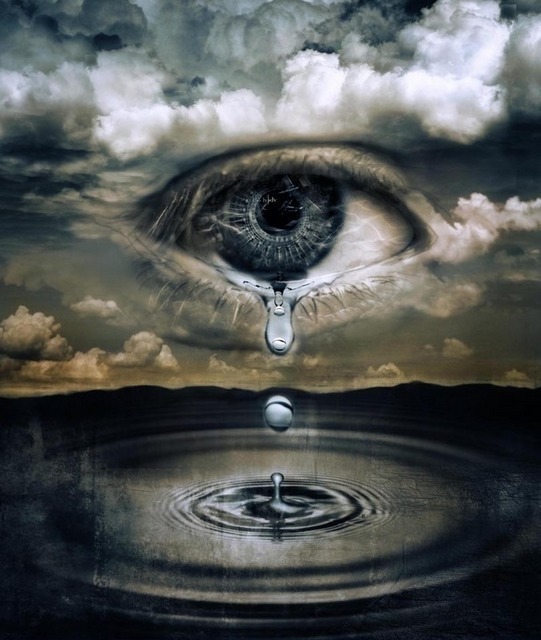
This too is retrospectively accepted by me as a blessing. It made sure I didn't struggle through with writing when I was best not to. Perhaps if I was less conflicted by all this stuff and acting it out internally so often with the act of writing in mind then my eyes wouldn't have gotten so bad. Or maybe not, just a thought.
In any case, I seem to have effected a workaround for now and the visible world brings me not pain again, unless the light's too bright. Result!
5) Spring.
'Tis spring, and a young man's fancy lightly turns to.......well, gardening and home improvement mainly. Despite all the trials and tribulations of the last few months I've been spending quite a bit of my available time and effort on things homeish. Pictures of strawberries and artichokes will follow in due course. Especially if I can get a faster broadband speed out here - uploads go at the speed of a recalcitrant donkey, I tells ya.
6) The Social Network
I beTwittened myself, which was interesting for a bit, but then not really. Handy wide-ranging news aggregation network with added random funnies and wit, but now only worth five or ten minutes in my day.
What really changed was my engagement with Facebook. I do strongly recall saying (here, as it happened) that I would not 'become one of them' and this is true enough, I haven't really. You know 'them', the cliche of the person who would suffer contact deprivation disorder if deprived of their FB connection for more than a few hours and would possibly die from a sense of lack of relevance if it lasted a couple of days. But my interest has grown, and I am comfortable enough there now. So what once may have been simmered more slowly for a blog post now gets kernelled down to less than 420 characters and posted. Or what may have been the start of a larger inspiration then sort of loses its mojo once spoken of elsewhere perhaps.
There's another little symptom that Facebook, Twitter and their ilk can throw up too, it's what I now like to refer to as the Helen Razer Effect. She is an Australian pundit of sorts in various media, and semi-famously deleted her Twitter account not long after one of her mates, Catherine Deveny, lost her job in journalistic humorous punditry through fallout from Tweets deemed injudicious by her employer - but not for fear of that sort of reason. Ms Razer (I refer to her as 'Ms' in deference to her notorious feminismism) explained that she felt Twitter and the short-form, always-on, hyper-connectedness of Twitter she was "becoming more of a two-dimensional person". I can see what she means now from a personal, as opposed to a theoretical perspective. The flattening effect one gets from too much multitasking, too many inputs in too short (or simultaneous) succession, that can so easily prevent you from doing any one thing in depth; or being in a single flow as deeply as you might like.

It's not a bad thing at all, necessarily, just a thing that requires learning a new way of self-management so I can have the best of ways without the worst of ways. Learning it though, took me a bit further than I'd like to regularly go down that path. I'm back in the middle now, I feel.
7) Some Things Are Better Left Unsaid
And I've had quite a few of those in my life just lately. You know about my honesty policy for myself here, that's not compromised by me going a bit quiet. For in what there is that I do say, there is the whole truth - of me, that is - because it invariably leaks out and spills around the edges of my inability to shape myself in words anyway. One does not necessarily need to hear the details of the regrinding of the valves and the porting of the head to hear just by note that an engine has been undergoing an overhaul.

Sleeping dogs. Let 'em lie?
Seven's a good number. So what of the next bit? Of course, I can't say with any certainty, but on a few things I am clearer. The inhibiting factors I've been experiencing look now to me as a sort of set; all of a oneness, and I feel like I just passed a tipping point a little way back that's sliding these ills (/blessings) down the lever into the past now. So if there is no real change in the frequency here it won't be due to 1 through 7 above. My guess is no good for this. I can see a new rawness, right alongside a new gentleness. More inspiration to write with less care about whether I do or not.
Ah yes, freedom - just a little bit more. That's nice. Time's too short to give a shit about such frippery, yes?
So, just sayin', is all.
:-)
Thursday, September 30, 2010
My name is Aadhaar, and I am a Tessellator...
I can't help it. And I say to you, defiantly, that I don't think I want to change.
But I wouldn't mind knowing a bit more about why it is I do this.

I have this working hypothesis that there are in this matter two types of people - those who innately understand my habit from their own similar internal experience, and those who just plain don't. So I guess from that perspective you'll either get this, or not. Something I'm interested in is whether I'll get the best insight from the 'get it' group or the 'don't get it' mob. We'll see.
What the Hello Kitty am I talking about anyway????
I'm using the term 'tessellation' pretty loosely, but it's a best-fit for this mental habit I've got going. Technically, a tessellation is basically tiling, like you see with bathroom walls, mosaics, and paving stones and so forth. It actually comes from the latin tessella, a small cubical piece of clay used to make mosaics. And I have this mental tic that surely must exist somewhere on the OCD spectrum; of imagining the aesthetic and/or functional tessellation and rearrangement of all sorts of objects in a repetitive field (like tiles, or a stack of firewood, or a tray of pens, or cups and glasses, dishes in the sink, shampoo bottles in the shower.........you know I could just go on with this forever, yes?) that I've had absolutely as long as I can remember. One thing weird about it though (oh right, only ONE weird thing here) is that I completely cannot stand Tetris.

I'll give you a really basic and prosaic example, but you'll have to come to the bathroom with me. And I mean that in the US euphemistic sense of 'bathroom'. From where I sit for my morning enthronement meditation I can see spreading out on the floor before me a field of square tiles perhaps an inch a side. They are almost all a sort of neutral grey/white flecked tone, with apparently random dark crimson tiles interspersed for accent. Say, every 20th tile or so is a red one. Of course, order does tend to spontaneously emerge from chaos, and I spend my time seeing interconnected patterns - symmetrical or otherwise aesthetically appealing constellations created by 'joining the dots' with the red tiles and then working out the smallest possible movements to shift the random pattern into something with at least two axes of symmetry, over as large a possible area as I can. I make little stupid rules for myself like "no tile can move more than 2 spaces in any direction" and "no red tiles can be within 2 spaces of another red tile" and so on. Given it's a finite field of floor that I can see, I then imagine it extrapolated out up the walls or onto an infinite flat field or if my morning is proving particularly meditative (say, from a higher-than-usual fibre content in my blend lately) I'll go 3-D.
So, it's not like a compulsive need to technically tessellate; making a bunch of things fit perfectly together because I don't find that quite as much fun - even if it is sort of what I do when I stack dishes to dry after I've washed them - but in that my aim is compactness played off against good aspect for drainage in terms of gravity, airflow for evaporation and minimisation of surface tension points from adjacent objects, which I find inevitably leads to interesting and harmonious overall constructions.
Reading back that last sentence it really does look a lot like some odd mental illness doesn't it?

But it's SO MUCH FUN! To me, it's an artistic exercise in form and often function as well. I'm wanting to make a pleasing arrangement of things, and I suspect there is some deep and ancient element of the sacred in it. That it's like a form of prayerful meditation on finding the divine in the everyday, or creating little moments of nature's own base patterns (like sacred geometry) as offerings to God, moments of gratitude, awareness, and simple being. And honouring that legendary 'one wrong thread' they leave in traditional Persian carpets, so as not to mock God's perfection. The ikebana asymmetry that is every bit as visually perfect as the most symmetrical design.
Or, of course, it could just be a meaningless and tiresome habit.
And yes, I am a bit fond of flower arranging too.

People have gone way into the study of tessellation, from both scientific and aesthetic/religious angles, and often from all the above at the same time. For example, classic 2-dimensional tesselations (where there are patterns that fit with no gaps and are infinitely repeatable in all directions) have all been arranged into 17 'Wallpaper Groups', all of which are in fact represented in the architectural details of the Alhambra palace in Granada (Spain). And there are only, and exactly 17 groups that exist in the entire universe of 2-dimensionality. You can't go beyond this, because of a whole bunch of basic and immutable universal facts about polygons. I shall spare you the details, but what I'm saying is I don't care about all these interesting but trivial details in and of themselves, I just really care about the look and feel of these patterns, and how they can spontaneously emerge in nature, or be coaxed to do so with a gentle nudge.

I find great peace and beauty in this practice. It's probably in some way related to the little counting and number games I've always done. It very difficult for me not to count the number of cars on a train that goes by, for example. And I enjoy adding digits of larger numbers and reducing them to a single digit, a-la numerology. But it can't be for numerological fetishism because I couldn't tell you what 'number' my car licence plate or mobile number is without thinking it through a fresh, even though I know I've done them each lots of times, idly. If I cared about it I'd remember, surely. Then again, I do remember my licence plate number, and most folks don't.
I used to do this little hand/body game as a child, like a soothing ritual. It would involve getting an overall left/right symmetry thing happening. I'd do it on long car trips, as an instance. I'd perhaps simultaneously clench my left toes, my right thumb and forefinger, my left buttock and the right side of my jaw, and alternate in a 2/4 beat with the opposite sides. All of this in a minute set of movements, undetectable to anyone else. I'd harmonise in with the rhythm of the road, or my parent's conversation, or something. Then I'd get complex, doing repetitive patterns with gentle finger pressure patterns, with some form of rhythmic, planar or spacial symmetry involved. Set me up beautifully for flamenco guitar! There is of course tessellation over time as well - we call it rhythm.
Doing the mental pattern play thing seems to fulfill a similar function as the childhood counting and rhythm games for me these days. I can almost instantly be very much 'present' as they say, pondering where the patterns lie in things, and perhaps becoming more at one with the patterns behind the ways of the Universe in that moment, just by letting myself go into the pattern-recognition space that this pseudo-discipline over all the years has created inside me. It's like a chant that is never the same twice.
Or what do you think, am I just tunelessly whistling?

But I wouldn't mind knowing a bit more about why it is I do this.
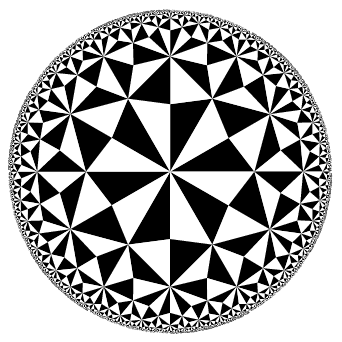
A hyperbolic tessellation.
I have this working hypothesis that there are in this matter two types of people - those who innately understand my habit from their own similar internal experience, and those who just plain don't. So I guess from that perspective you'll either get this, or not. Something I'm interested in is whether I'll get the best insight from the 'get it' group or the 'don't get it' mob. We'll see.
What the Hello Kitty am I talking about anyway????
I'm using the term 'tessellation' pretty loosely, but it's a best-fit for this mental habit I've got going. Technically, a tessellation is basically tiling, like you see with bathroom walls, mosaics, and paving stones and so forth. It actually comes from the latin tessella, a small cubical piece of clay used to make mosaics. And I have this mental tic that surely must exist somewhere on the OCD spectrum; of imagining the aesthetic and/or functional tessellation and rearrangement of all sorts of objects in a repetitive field (like tiles, or a stack of firewood, or a tray of pens, or cups and glasses, dishes in the sink, shampoo bottles in the shower.........you know I could just go on with this forever, yes?) that I've had absolutely as long as I can remember. One thing weird about it though (oh right, only ONE weird thing here) is that I completely cannot stand Tetris.

I'll give you a really basic and prosaic example, but you'll have to come to the bathroom with me. And I mean that in the US euphemistic sense of 'bathroom'. From where I sit for my morning enthronement meditation I can see spreading out on the floor before me a field of square tiles perhaps an inch a side. They are almost all a sort of neutral grey/white flecked tone, with apparently random dark crimson tiles interspersed for accent. Say, every 20th tile or so is a red one. Of course, order does tend to spontaneously emerge from chaos, and I spend my time seeing interconnected patterns - symmetrical or otherwise aesthetically appealing constellations created by 'joining the dots' with the red tiles and then working out the smallest possible movements to shift the random pattern into something with at least two axes of symmetry, over as large a possible area as I can. I make little stupid rules for myself like "no tile can move more than 2 spaces in any direction" and "no red tiles can be within 2 spaces of another red tile" and so on. Given it's a finite field of floor that I can see, I then imagine it extrapolated out up the walls or onto an infinite flat field or if my morning is proving particularly meditative (say, from a higher-than-usual fibre content in my blend lately) I'll go 3-D.
So, it's not like a compulsive need to technically tessellate; making a bunch of things fit perfectly together because I don't find that quite as much fun - even if it is sort of what I do when I stack dishes to dry after I've washed them - but in that my aim is compactness played off against good aspect for drainage in terms of gravity, airflow for evaporation and minimisation of surface tension points from adjacent objects, which I find inevitably leads to interesting and harmonious overall constructions.
Reading back that last sentence it really does look a lot like some odd mental illness doesn't it?

If it weren't for the twee tree motifs, this would very much ring my bell. I love the way that off-centre, slightly larger gap just makes the whole composition. No, the one to the right and up a b.....oh, never mind.
But it's SO MUCH FUN! To me, it's an artistic exercise in form and often function as well. I'm wanting to make a pleasing arrangement of things, and I suspect there is some deep and ancient element of the sacred in it. That it's like a form of prayerful meditation on finding the divine in the everyday, or creating little moments of nature's own base patterns (like sacred geometry) as offerings to God, moments of gratitude, awareness, and simple being. And honouring that legendary 'one wrong thread' they leave in traditional Persian carpets, so as not to mock God's perfection. The ikebana asymmetry that is every bit as visually perfect as the most symmetrical design.
Or, of course, it could just be a meaningless and tiresome habit.
And yes, I am a bit fond of flower arranging too.
People have gone way into the study of tessellation, from both scientific and aesthetic/religious angles, and often from all the above at the same time. For example, classic 2-dimensional tesselations (where there are patterns that fit with no gaps and are infinitely repeatable in all directions) have all been arranged into 17 'Wallpaper Groups', all of which are in fact represented in the architectural details of the Alhambra palace in Granada (Spain). And there are only, and exactly 17 groups that exist in the entire universe of 2-dimensionality. You can't go beyond this, because of a whole bunch of basic and immutable universal facts about polygons. I shall spare you the details, but what I'm saying is I don't care about all these interesting but trivial details in and of themselves, I just really care about the look and feel of these patterns, and how they can spontaneously emerge in nature, or be coaxed to do so with a gentle nudge.

I find great peace and beauty in this practice. It's probably in some way related to the little counting and number games I've always done. It very difficult for me not to count the number of cars on a train that goes by, for example. And I enjoy adding digits of larger numbers and reducing them to a single digit, a-la numerology. But it can't be for numerological fetishism because I couldn't tell you what 'number' my car licence plate or mobile number is without thinking it through a fresh, even though I know I've done them each lots of times, idly. If I cared about it I'd remember, surely. Then again, I do remember my licence plate number, and most folks don't.
I used to do this little hand/body game as a child, like a soothing ritual. It would involve getting an overall left/right symmetry thing happening. I'd do it on long car trips, as an instance. I'd perhaps simultaneously clench my left toes, my right thumb and forefinger, my left buttock and the right side of my jaw, and alternate in a 2/4 beat with the opposite sides. All of this in a minute set of movements, undetectable to anyone else. I'd harmonise in with the rhythm of the road, or my parent's conversation, or something. Then I'd get complex, doing repetitive patterns with gentle finger pressure patterns, with some form of rhythmic, planar or spacial symmetry involved. Set me up beautifully for flamenco guitar! There is of course tessellation over time as well - we call it rhythm.
Doing the mental pattern play thing seems to fulfill a similar function as the childhood counting and rhythm games for me these days. I can almost instantly be very much 'present' as they say, pondering where the patterns lie in things, and perhaps becoming more at one with the patterns behind the ways of the Universe in that moment, just by letting myself go into the pattern-recognition space that this pseudo-discipline over all the years has created inside me. It's like a chant that is never the same twice.
Or what do you think, am I just tunelessly whistling?
Wednesday, September 29, 2010
Things I want right now #6
I'm not actually much of a mango fan. As a child I remember this amazing new phenomenon, sparking a massive craze in fruit drinks - orange and mango. I liked it well enough, but the fruit itself - I just don't get the hype. I had a girlfriend once who was seriously into mango - like "couldn't get enough" into it. The only wee problem was that she suffered from a dire allergy to the outside of the skin of the mango, so could not handle it to get at the tasty flesh within. She taught me, hands-free of course, how to slice and segment a mango. To my credit, I never teased her by witholding mango, even for a moment, even completely in jest. Or maybe it wasn't to my credit entirely, perhaps I just read well enough those signals in her eyes that told me the seriousness of the consequences.....and I don't mean the allergic rash reaction either.

But right now I want a mango lassi. With the juice of half a lime, a dash (never use too much) of rose water, a pinch of freshly ground cardamom seed. And just the tiniest speck of black pepper. Trust me on the teeny spot of pepper thing, it really does set the whole melange off wonderfully, and gives a focal counterpoint to the slightly cloying mouthfeel of the mango/yoghurt combination, and of course - it goes so well with lime. A sprig of mint for garnish.

For those unfamiliar, a lassi is basically a drink made with yoghurt as the base, and whipped up with the fruits and water to thin it enough for drinking, if necessary. It's a refreshing, nutritious, restorative drink and because it's made with yoghurt and cardamom (a lassi always has cardamom) there is none of that dairy heaviness you might expect. The yoghurt froths up beautifully and gives the whole thing a light fluffiness that matches fruits like mango just perfectly.
True, I could make one and pour it on down the tube but......no.
Mm. Maybe it's because today we went out on a supply run down to the Medium Smoke (and saw the dental clinic, sigh) and got all townified and hot on the first really warm day of Spring. I'd imagine in India (the lassi's native home) that a cooling, lassi on a hot day in the bustle nd chaos of the city would be just the ticket to re-ground and recharge,
Anyway, I do rather want one.
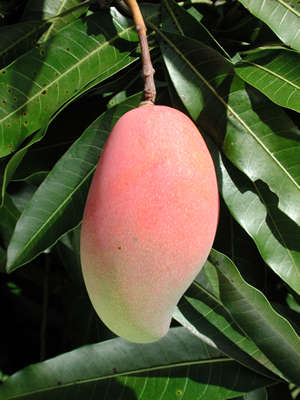
But right now I want a mango lassi. With the juice of half a lime, a dash (never use too much) of rose water, a pinch of freshly ground cardamom seed. And just the tiniest speck of black pepper. Trust me on the teeny spot of pepper thing, it really does set the whole melange off wonderfully, and gives a focal counterpoint to the slightly cloying mouthfeel of the mango/yoghurt combination, and of course - it goes so well with lime. A sprig of mint for garnish.

Here, I've made you one too.
For those unfamiliar, a lassi is basically a drink made with yoghurt as the base, and whipped up with the fruits and water to thin it enough for drinking, if necessary. It's a refreshing, nutritious, restorative drink and because it's made with yoghurt and cardamom (a lassi always has cardamom) there is none of that dairy heaviness you might expect. The yoghurt froths up beautifully and gives the whole thing a light fluffiness that matches fruits like mango just perfectly.
True, I could make one and pour it on down the tube but......no.
Mm. Maybe it's because today we went out on a supply run down to the Medium Smoke (and saw the dental clinic, sigh) and got all townified and hot on the first really warm day of Spring. I'd imagine in India (the lassi's native home) that a cooling, lassi on a hot day in the bustle nd chaos of the city would be just the ticket to re-ground and recharge,
Anyway, I do rather want one.
Tuesday, September 28, 2010
Some Learnings from my Big Night Out
Some of you know already through the modern miracle of 'social media' that I went out last Friday night - a night out for the first time in many years. I had been considering it for a couple of weeks, because (again via Facebook) I learned that my friend and former guitar partner of many years' standing, Tim, was having a gig with the new(er) iteration of his band at a venue in Fremantle that we'd actually helped to open way back when. I was gripped with a desire to attend, and a consummate desire to examine this very desire.
Anyway, I went and had myself a time, as they say in South Park. Here are some learnings I have made, as Vernon God Little (not from South Park) would say. In no particular order.
1) Girl wargamer nerds really do exist.
In one of Freo's many open-air arcades I spotted a gaming shop (actual games-type gaming, not the euphemism for gambling these days) open way past the usual time and filled beneath the harsh neon with Warhammer players (I think it was Warhammer, I'm not 100% on these things) around a few high tables, all set out with miniature figurines, citadels and the like. Serious rapid-fire chat and action with dice and tape measures was taking place, and my stereotype glands were set to stun as I noted that yes, pretty much all dozen-and-a-half or so players, and all the hangers-on, looked exactly like the Warhammer gaming nerds you expect to see in such a place. Late teens and twentysomethings on the pallid/pasty side, well-worn-in basic casual clothing and sensible shoes without a designer label or anything resembling an actual hairstyle in the place, and with the one mandatory exception of the unusually tall skinny guy in black jeans and badly skewed glasses which jangled about his face every time he opened his high-pitched and overly-articulated mouth they were all just one or two notches on the burger side of a healthy weight. Those with long hair just simply tied it..........wait, what......THAT'S UNDOUBTABLY A WOMAN!!! CRIKEY, A LIVE SIGHTING OF THE MYTHICAL FEMALE OF THE SPECIES!!! And I looked a bit closer. In fact, very nearly half the combatants were without a Y chromosome, it's just that as they dressed pretty much exactly the same as the guys you didn't notice, as you do in other subcultures with more gender-specific fashion rules. I was most pleased. It made me inexplicably happy. Because I'm pretty sure no-one was there primarily for the sex. Then again........

2) Stereotypes can bite you for good reasons.
Strolling before sundown about St John's square, enjoying the deep and dappled shades beneath the remaining ancient Moreton Bay figs, paying no particular attention to any one thing or person, a young Aboriginal woman caught my eye - she was part of a family group sort of encamped along the benches next to the play equipment, all passing around a cask of wine - and in that fleet moment she reached out towards me, arching her back as languid as any feasting Roman senator's favourite lady, opening her mouth to speak. I expected as one might naturally expect in such a moment to be asked for a cigarette and/or cash for some spurious reason, so imagine my surprise when I saw instead in her outstretched hand an open packet of Camels - once my very favouritest brand of tailor-made cigarettes (I most generally preferred to roll my own, back when I smoked) and she said "hey brother, you want a smoke or what?" accompanied by giggles from her cohort. Momentarily shocked as I was by this classic reversal I still managed to utter, exactly as if I'd been asked the more expected question "I don't smoke". She half sat up, fixed me more steadily in her gaze, and smiling in an eye-twinkling saucy way just said "Yes you fucking do..." still holding out the packet.
She was right. I was tempted, and primed for a 'big night out' in which I anticipated imbibing coffee, and had already considered a soupcon of alcoholic beverage as well; and here was this (admittedly rather attractive) young woman keyed straight in to my most sinister erstwhile vice, with the right brand and all. It's a brand in Australia that you would simply never associate with the urban Aboriginal demographic either. Maybe someone gave them to her and she didn't like them. Why was she doing this? I was being a bit teased in that "let's see if the white guy gets uncomfortable" sort of shit-giving way - not at all unfriendly mind - but there was just no apparent motive apart from the fact that she wanted me to take one.
And I did. And walked off, thanking her.

3) I cannot actually smoke - classic lols!
Scleroderma and scleredema share many typical symptoms, one of which is the 'mask-like' face that develops with hardening and induration of the skin. It removes your wrinkles (take that, ladies!!), prevents you closing your eyes properly, gives you a bit of a botox effect generally, and pulls your lips back into a bit of a grimace. And they get sort of hard and inflexible. So they don't close. As they need to if you're going to make a seal around something like a cigarette. I had bought a lighter and determined to have a smoke of this gifted Camel, meditatively and gratefully for whatever the experience might bring. Only to find that as I couldn't draw on it I couldn't light it. With my dodgy hands it takes two hands to use the lighter anyway, but in the end I did manage to get it going - noticing the deeply historic smoker's desperation surface unbidden to hurry me along - and discovered I could sort of get an inhale happening if I wedged it in a corner of my mouth and sort of squeezed my face as shut as I could get it. I have to say, it was rather good, that nostalgic taste and headspin. I enjoyed it in that moment.
The next day I could still taste cigarettes, having brushed my teeth and everything. I also discovered I had utterly no desire to repeat the experiment. Nice.
What I'll do when I next have to do a random breath test with the constabulary and can't blow through the straw I don't know.

4) Force of will still works when you engage it, but it comes at a cost.
I'd been unwell you see, with an eye infection, gastric woes caused in large part by the meds for the eye issue, and a general downturn in health indicators. I'd known this gig was on for weeks, and had 'maybe-d' myself back then. I'd looked at why it was I was so drawn to going and decided that this was a pointless exercise and that I'd just accept that the desire was not really waning. The day approached and I had been on the mend, true, but was feeling cautious. I didn't want to take a chance with my eyes and a 2-hour night drive home (in case they weren't up to it; what then?) and with my rather antisocial set of nocturnal symptoms don't particularly like the thought of inflicting them on those friends who always extend me invites to stay. Plus, I rather like my own space these days. So I resolved, cleft as my mind was, to allow for an omenological determination. I'd previously seen a reasonable-looking accommodation option for a good price in Fremantle, easy walking distance etc, and said to myself if it was still available at such short notice (it being now Friday lunchtime) that I'd go. It was. I booked. I knew I could just make myself well enough to enjoy the adventure through simple decision, and a bit of positive mental discipline.
And so it proved. In Spiritualist circles they speak of a thing called 'magnetic healing' which describes when a hands-on energy healer uses their own internal energy to heal another rather than acting as a conduit for directing the Universal or God energy or what-have-you. I had to use both, so in the end, was a little drained. But I did show to myself yet again, that where there's a will......
I made sure I consciously blinked a lot (there's that joke about putting the stethoscope on a blonde's brain and hearing :"breathe in....breathe out...") and kept my gastric biofeedback loop going fulltime, to be ahead of any imminent events and keep things feeling comfortable. Had the chi monitor going and kept my pace of everything nice and steady. Most muscular and blood-pressure effort was corralled for talking, and I did mange to remain speaking nearly well enough for much of the evening. Yay!

5) I was a better guitarist than I gave myself credit for.
There couldn't have been less of a clear idea in my head about what I'd experience at this gig. To set the stage, as it were, Tim and I played together for years and years. At first I was his student, then quickly things progressed until we culminated as the guitar nucleus of his sort-of flamenco-fusion band for many years, ending in the late-ish '90's. We were, and are, very close friends in an emotional sense, but not so much now in a day-to-day way. This doesn't matter. He was always the senior partner and main composer, and has composed some truly remarkable and outrageously original music in his time. I was effectively second guitarist, and frankly was pretty comfortable keeping things that way.
So here I was, unable to play anymore, in a very familiar venue, watching from the outside. Tim's new guitar partner Harry (whom I'd not met but whom Tim had previously praised to me) cut a really different figure than I used to, so there was a whole different vibe to some very familiar tunes. Rounding out the event were Pranjal, a clearly gifted and sensitive tabla player, and good old Tony, the last of the bass players we had together in the band days. So; different, but the same, in many ways. Naturally enough, I was focussed on the guitars and it's incredible how fast I fell instantly into wanting to get into the sound guy's ear and sort out the sound (no matter how long a sound check you do, unless you work with a real pro it takes a few songs to balance the sounds of nylon-stringed flamenco guitars in a multi-instrument setting) and then noticed that my hands remembered everything.
If I started thinking about what was coming next in a tune I'd played a thousand times and recorded to within an inch of its life I often crapped out and stumbled - which was fun because it was like hearing it anew in a way - but if I just paid attention to the very, very tiny movement my fingers were making all on their own; miniature analogs of what they'd be doing in real time if I were sitting in, then I became aware that the body was still entirely in tune.
Let me elaborate: It was not just that I bodily remembered everything, it's that I knew what was coming next. And of course, in the almost decade and a half since I last played with Tim, even the real old pieces had changed and morphed. And Tim now clearly has a looser sense of arrangement than we used to. I had two roles in the band of old, you see. One was second guitarist, so as much a part of the rhythm section as not, but also as psychic translator for Tim to the rest of the band, and fix-it-on-the-fly guy when stuff got a bit crazy. Back in the day, our on-stage connection was oft commented upon, and it was a joy to see Harry do his version of the tune-in. Because Tim was obviously proving cantankerously unruly with his arrangements. Pranjal was watching closely too, reeling Tim back gently from rhythmic brinks and laying down a few solid hits to refocus after some hair-raising excursions. Tony, bless him, remained as unflappable and bass-playerlike as always. Just watch, and adapt by ear, that's the way. Tim, though older and more carefree in his attitude to musical outcomes, showed the same particular brilliance as always.
Now Harry is a very fine guitarist, of this there can be no doubt. He has an entirely different style and approach to mine, and besides takes a lot of opportunity to solo out on his own while Tim pedals back with some rhythm. I never really wanted much of that. So comparisons, while to some degree inevitable for me, proved as always odious. Harry is Harry and is one of the finer specimens of the art going around, and it's silly to even think about who did the role better, if for no other reason than that the role has changed. But watching and listening, eyeing some old riffs Tim still knocks out that I used to do too, I saw myself as if in a time warp and finally allowed myself to really accept that I was actually rather good at what I did. I'd heard enough praise at the time for sure, but never really took it on as truthful and sincere opinion - preferring to armour myself from the commensurate responsibility to maintain such a foisted-on standard by silently deciding that the one lavishing such praise had simply not yet seen a *really* good flamencoesque guitarist. Or had ulterior motives. But you know what? I agree with those folks now. So belatedly with sincerity, thanks everyone.
After all these years. Ironic that I get more satisfaction from that thought now - well, I suppose it's safe to have now isn't it? - than I did when the musician's life was my mainspring.

6) Old friends can still surprise you with their love.
I didn't expect to see Tony, I thought it would be a trio, and I didn't speak with him until the interval. He'd heard stories and bits about my wellbeing and so on, and I'd actually seen him maybe a couple of years ago by chance in Fremantle. But unlike so many people who for whatever reasons avoid the issue, he quickly asked about my health generally, and upon my simplistic assertion - with a smile - that it was all a bit fucked, and pointed to a few one-word symptoms like hands, eyes, voice ("as you can hear") his face remained empathetic yet composed, but suddenly dropped in a moue of concern: "but are you in pain?"
I let him know cheerfully, that no, it didn't give me much pain for the most part, and I loved the look of relief on his face. I have always thought of him as a very genuine man. To show such compassion without engagement in a pity-party; to care for another's feelings first and foremost, beyond notions of longevity or inconvenience, to acknowledge the horror of pain we all share, and to be selfless and unselfconscious in this......I'm hoping this is the new Australian Male. Thanks Tony. He's a dad now, which gives me greater hope for the future of our young.

7) I still think it's fun to push people's buttons a bit. For a good cause, is my excuse.
I'm pretty unselfconscious about the whole tube thing these days, and less self-conscious about the speaking issue. I just accept that half the time when I open my mouth to a stranger they're going to have a distasteful reaction to whatever they perceive as my disability (I'm pretty sure most think I'm somehow mentally handicapped, or brain damaged, or something) and that this is entirely their problem unless it interferes with my doing what I need to do. So I'm less impatient with them and by extension with myself. Then there's the other half. They clearly wonder wtf? but carry on and just adapt to the task at hand without faux behaviours - being overly solicitous or needlessly terse for example. These are humans that make me smile more.
Using Proloquo2Go can be fun too. I am just now starting to use it more, and am easing myself into it by making it do lots of swearing and using other disarming phrases. Because its inflections are so kooky, that no malice can ever really come across, so a phrase like "Sorry, I am still getting used to this fucking thing" comes over with the humour it is designed to carry, not angry or bitter as it might perhaps be said.
But really, the tube. In combination with the whole speech thing I can enjoy messing about a bit with people's expectations. I was sitting with my old chum Horatio T Birdbath at the cafe, waiting for the gig to start, when along wanders Beatriz, wife to aforementioned Tim and friend of just as long standing. She's surprised and effusive, and has a friend in tow I've not met before, a woman of delightful vibe called Marie. They organise coffee, and return to our table. Beatriz points at the 2/3rd coffee sitting before me and asks something vagueish about "am I OK with drinking that lately?"
"No." (In stereo with Birdbath, we always did have comedy timing)....Smile.
"So you can't drink that."
"No" (again, stereo. He is a fearsome stirring partner.)
"Do you want a straw or something?'
"No." (Strike three stereophonics!..Much gigglery) Poor Beatriz is trying just to care and make sense of things and her friend is unsure about what she's witnessing too. "It'll be fine, you'll see"
Every minute or two I feel the glass, testing for temperature. Have a little smell. Every time I make a move for it both Beatriz, who's given up asking stuff, and Marie both eagle-eye me. Eventually I start removing things from my pockets: a wad of paper napkins, and a sort of phallic translucent sex-toy looking thing which serves as a syringe holder, and nonchalantly as anything, whip out ol' tubey, plug in, and pour down the coffee followed by a glass of water.
"So now it's gone......." I mean, what else could she say? Marie did not so much as bat an eyelid. Teasing Beatriz was a nostalgic pastime. Sorry Beatriz, couldn't help it.
Maybe I'll outgrow it and start being deliberately sensitive to others' possible problems with tubeing in public but for now I'm on the judgmental bandwagon and have decided on a should. That people should just treat it as being as normal as eating or drinking. Same with breastfeeding - are we over that one yet?

8) A night out is what you make it.
This is not a new learning, just a summation. I chose to follow my strong instinct, and was rewarded with some unexpected surprises and delights. And a little bit of a hangover, unpractised partier that I now am. Thanks be, eh?
Anyway, I went and had myself a time, as they say in South Park. Here are some learnings I have made, as Vernon God Little (not from South Park) would say. In no particular order.
1) Girl wargamer nerds really do exist.
In one of Freo's many open-air arcades I spotted a gaming shop (actual games-type gaming, not the euphemism for gambling these days) open way past the usual time and filled beneath the harsh neon with Warhammer players (I think it was Warhammer, I'm not 100% on these things) around a few high tables, all set out with miniature figurines, citadels and the like. Serious rapid-fire chat and action with dice and tape measures was taking place, and my stereotype glands were set to stun as I noted that yes, pretty much all dozen-and-a-half or so players, and all the hangers-on, looked exactly like the Warhammer gaming nerds you expect to see in such a place. Late teens and twentysomethings on the pallid/pasty side, well-worn-in basic casual clothing and sensible shoes without a designer label or anything resembling an actual hairstyle in the place, and with the one mandatory exception of the unusually tall skinny guy in black jeans and badly skewed glasses which jangled about his face every time he opened his high-pitched and overly-articulated mouth they were all just one or two notches on the burger side of a healthy weight. Those with long hair just simply tied it..........wait, what......THAT'S UNDOUBTABLY A WOMAN!!! CRIKEY, A LIVE SIGHTING OF THE MYTHICAL FEMALE OF THE SPECIES!!! And I looked a bit closer. In fact, very nearly half the combatants were without a Y chromosome, it's just that as they dressed pretty much exactly the same as the guys you didn't notice, as you do in other subcultures with more gender-specific fashion rules. I was most pleased. It made me inexplicably happy. Because I'm pretty sure no-one was there primarily for the sex. Then again........

2) Stereotypes can bite you for good reasons.
Strolling before sundown about St John's square, enjoying the deep and dappled shades beneath the remaining ancient Moreton Bay figs, paying no particular attention to any one thing or person, a young Aboriginal woman caught my eye - she was part of a family group sort of encamped along the benches next to the play equipment, all passing around a cask of wine - and in that fleet moment she reached out towards me, arching her back as languid as any feasting Roman senator's favourite lady, opening her mouth to speak. I expected as one might naturally expect in such a moment to be asked for a cigarette and/or cash for some spurious reason, so imagine my surprise when I saw instead in her outstretched hand an open packet of Camels - once my very favouritest brand of tailor-made cigarettes (I most generally preferred to roll my own, back when I smoked) and she said "hey brother, you want a smoke or what?" accompanied by giggles from her cohort. Momentarily shocked as I was by this classic reversal I still managed to utter, exactly as if I'd been asked the more expected question "I don't smoke". She half sat up, fixed me more steadily in her gaze, and smiling in an eye-twinkling saucy way just said "Yes you fucking do..." still holding out the packet.
She was right. I was tempted, and primed for a 'big night out' in which I anticipated imbibing coffee, and had already considered a soupcon of alcoholic beverage as well; and here was this (admittedly rather attractive) young woman keyed straight in to my most sinister erstwhile vice, with the right brand and all. It's a brand in Australia that you would simply never associate with the urban Aboriginal demographic either. Maybe someone gave them to her and she didn't like them. Why was she doing this? I was being a bit teased in that "let's see if the white guy gets uncomfortable" sort of shit-giving way - not at all unfriendly mind - but there was just no apparent motive apart from the fact that she wanted me to take one.
And I did. And walked off, thanking her.
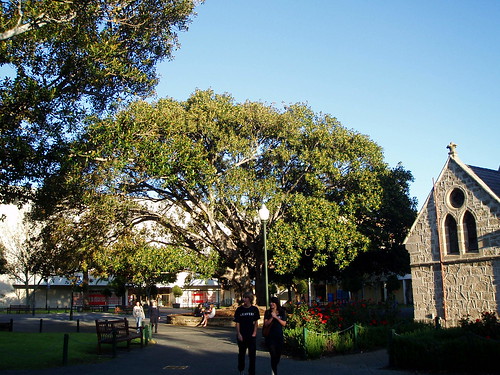
3) I cannot actually smoke - classic lols!
Scleroderma and scleredema share many typical symptoms, one of which is the 'mask-like' face that develops with hardening and induration of the skin. It removes your wrinkles (take that, ladies!!), prevents you closing your eyes properly, gives you a bit of a botox effect generally, and pulls your lips back into a bit of a grimace. And they get sort of hard and inflexible. So they don't close. As they need to if you're going to make a seal around something like a cigarette. I had bought a lighter and determined to have a smoke of this gifted Camel, meditatively and gratefully for whatever the experience might bring. Only to find that as I couldn't draw on it I couldn't light it. With my dodgy hands it takes two hands to use the lighter anyway, but in the end I did manage to get it going - noticing the deeply historic smoker's desperation surface unbidden to hurry me along - and discovered I could sort of get an inhale happening if I wedged it in a corner of my mouth and sort of squeezed my face as shut as I could get it. I have to say, it was rather good, that nostalgic taste and headspin. I enjoyed it in that moment.
The next day I could still taste cigarettes, having brushed my teeth and everything. I also discovered I had utterly no desire to repeat the experiment. Nice.
What I'll do when I next have to do a random breath test with the constabulary and can't blow through the straw I don't know.
4) Force of will still works when you engage it, but it comes at a cost.
I'd been unwell you see, with an eye infection, gastric woes caused in large part by the meds for the eye issue, and a general downturn in health indicators. I'd known this gig was on for weeks, and had 'maybe-d' myself back then. I'd looked at why it was I was so drawn to going and decided that this was a pointless exercise and that I'd just accept that the desire was not really waning. The day approached and I had been on the mend, true, but was feeling cautious. I didn't want to take a chance with my eyes and a 2-hour night drive home (in case they weren't up to it; what then?) and with my rather antisocial set of nocturnal symptoms don't particularly like the thought of inflicting them on those friends who always extend me invites to stay. Plus, I rather like my own space these days. So I resolved, cleft as my mind was, to allow for an omenological determination. I'd previously seen a reasonable-looking accommodation option for a good price in Fremantle, easy walking distance etc, and said to myself if it was still available at such short notice (it being now Friday lunchtime) that I'd go. It was. I booked. I knew I could just make myself well enough to enjoy the adventure through simple decision, and a bit of positive mental discipline.
And so it proved. In Spiritualist circles they speak of a thing called 'magnetic healing' which describes when a hands-on energy healer uses their own internal energy to heal another rather than acting as a conduit for directing the Universal or God energy or what-have-you. I had to use both, so in the end, was a little drained. But I did show to myself yet again, that where there's a will......
I made sure I consciously blinked a lot (there's that joke about putting the stethoscope on a blonde's brain and hearing :"breathe in....breathe out...") and kept my gastric biofeedback loop going fulltime, to be ahead of any imminent events and keep things feeling comfortable. Had the chi monitor going and kept my pace of everything nice and steady. Most muscular and blood-pressure effort was corralled for talking, and I did mange to remain speaking nearly well enough for much of the evening. Yay!
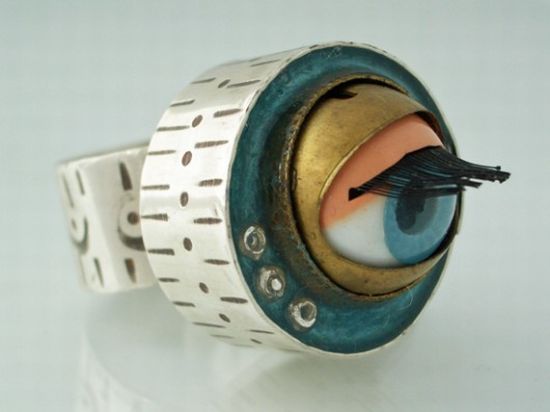
5) I was a better guitarist than I gave myself credit for.
There couldn't have been less of a clear idea in my head about what I'd experience at this gig. To set the stage, as it were, Tim and I played together for years and years. At first I was his student, then quickly things progressed until we culminated as the guitar nucleus of his sort-of flamenco-fusion band for many years, ending in the late-ish '90's. We were, and are, very close friends in an emotional sense, but not so much now in a day-to-day way. This doesn't matter. He was always the senior partner and main composer, and has composed some truly remarkable and outrageously original music in his time. I was effectively second guitarist, and frankly was pretty comfortable keeping things that way.
So here I was, unable to play anymore, in a very familiar venue, watching from the outside. Tim's new guitar partner Harry (whom I'd not met but whom Tim had previously praised to me) cut a really different figure than I used to, so there was a whole different vibe to some very familiar tunes. Rounding out the event were Pranjal, a clearly gifted and sensitive tabla player, and good old Tony, the last of the bass players we had together in the band days. So; different, but the same, in many ways. Naturally enough, I was focussed on the guitars and it's incredible how fast I fell instantly into wanting to get into the sound guy's ear and sort out the sound (no matter how long a sound check you do, unless you work with a real pro it takes a few songs to balance the sounds of nylon-stringed flamenco guitars in a multi-instrument setting) and then noticed that my hands remembered everything.
If I started thinking about what was coming next in a tune I'd played a thousand times and recorded to within an inch of its life I often crapped out and stumbled - which was fun because it was like hearing it anew in a way - but if I just paid attention to the very, very tiny movement my fingers were making all on their own; miniature analogs of what they'd be doing in real time if I were sitting in, then I became aware that the body was still entirely in tune.
Let me elaborate: It was not just that I bodily remembered everything, it's that I knew what was coming next. And of course, in the almost decade and a half since I last played with Tim, even the real old pieces had changed and morphed. And Tim now clearly has a looser sense of arrangement than we used to. I had two roles in the band of old, you see. One was second guitarist, so as much a part of the rhythm section as not, but also as psychic translator for Tim to the rest of the band, and fix-it-on-the-fly guy when stuff got a bit crazy. Back in the day, our on-stage connection was oft commented upon, and it was a joy to see Harry do his version of the tune-in. Because Tim was obviously proving cantankerously unruly with his arrangements. Pranjal was watching closely too, reeling Tim back gently from rhythmic brinks and laying down a few solid hits to refocus after some hair-raising excursions. Tony, bless him, remained as unflappable and bass-playerlike as always. Just watch, and adapt by ear, that's the way. Tim, though older and more carefree in his attitude to musical outcomes, showed the same particular brilliance as always.
Now Harry is a very fine guitarist, of this there can be no doubt. He has an entirely different style and approach to mine, and besides takes a lot of opportunity to solo out on his own while Tim pedals back with some rhythm. I never really wanted much of that. So comparisons, while to some degree inevitable for me, proved as always odious. Harry is Harry and is one of the finer specimens of the art going around, and it's silly to even think about who did the role better, if for no other reason than that the role has changed. But watching and listening, eyeing some old riffs Tim still knocks out that I used to do too, I saw myself as if in a time warp and finally allowed myself to really accept that I was actually rather good at what I did. I'd heard enough praise at the time for sure, but never really took it on as truthful and sincere opinion - preferring to armour myself from the commensurate responsibility to maintain such a foisted-on standard by silently deciding that the one lavishing such praise had simply not yet seen a *really* good flamencoesque guitarist. Or had ulterior motives. But you know what? I agree with those folks now. So belatedly with sincerity, thanks everyone.
After all these years. Ironic that I get more satisfaction from that thought now - well, I suppose it's safe to have now isn't it? - than I did when the musician's life was my mainspring.

6) Old friends can still surprise you with their love.
I didn't expect to see Tony, I thought it would be a trio, and I didn't speak with him until the interval. He'd heard stories and bits about my wellbeing and so on, and I'd actually seen him maybe a couple of years ago by chance in Fremantle. But unlike so many people who for whatever reasons avoid the issue, he quickly asked about my health generally, and upon my simplistic assertion - with a smile - that it was all a bit fucked, and pointed to a few one-word symptoms like hands, eyes, voice ("as you can hear") his face remained empathetic yet composed, but suddenly dropped in a moue of concern: "but are you in pain?"
I let him know cheerfully, that no, it didn't give me much pain for the most part, and I loved the look of relief on his face. I have always thought of him as a very genuine man. To show such compassion without engagement in a pity-party; to care for another's feelings first and foremost, beyond notions of longevity or inconvenience, to acknowledge the horror of pain we all share, and to be selfless and unselfconscious in this......I'm hoping this is the new Australian Male. Thanks Tony. He's a dad now, which gives me greater hope for the future of our young.

7) I still think it's fun to push people's buttons a bit. For a good cause, is my excuse.
I'm pretty unselfconscious about the whole tube thing these days, and less self-conscious about the speaking issue. I just accept that half the time when I open my mouth to a stranger they're going to have a distasteful reaction to whatever they perceive as my disability (I'm pretty sure most think I'm somehow mentally handicapped, or brain damaged, or something) and that this is entirely their problem unless it interferes with my doing what I need to do. So I'm less impatient with them and by extension with myself. Then there's the other half. They clearly wonder wtf? but carry on and just adapt to the task at hand without faux behaviours - being overly solicitous or needlessly terse for example. These are humans that make me smile more.
Using Proloquo2Go can be fun too. I am just now starting to use it more, and am easing myself into it by making it do lots of swearing and using other disarming phrases. Because its inflections are so kooky, that no malice can ever really come across, so a phrase like "Sorry, I am still getting used to this fucking thing" comes over with the humour it is designed to carry, not angry or bitter as it might perhaps be said.
But really, the tube. In combination with the whole speech thing I can enjoy messing about a bit with people's expectations. I was sitting with my old chum Horatio T Birdbath at the cafe, waiting for the gig to start, when along wanders Beatriz, wife to aforementioned Tim and friend of just as long standing. She's surprised and effusive, and has a friend in tow I've not met before, a woman of delightful vibe called Marie. They organise coffee, and return to our table. Beatriz points at the 2/3rd coffee sitting before me and asks something vagueish about "am I OK with drinking that lately?"
"No." (In stereo with Birdbath, we always did have comedy timing)....Smile.
"So you can't drink that."
"No" (again, stereo. He is a fearsome stirring partner.)
"Do you want a straw or something?'
"No." (Strike three stereophonics!..Much gigglery) Poor Beatriz is trying just to care and make sense of things and her friend is unsure about what she's witnessing too. "It'll be fine, you'll see"
Every minute or two I feel the glass, testing for temperature. Have a little smell. Every time I make a move for it both Beatriz, who's given up asking stuff, and Marie both eagle-eye me. Eventually I start removing things from my pockets: a wad of paper napkins, and a sort of phallic translucent sex-toy looking thing which serves as a syringe holder, and nonchalantly as anything, whip out ol' tubey, plug in, and pour down the coffee followed by a glass of water.
"So now it's gone......." I mean, what else could she say? Marie did not so much as bat an eyelid. Teasing Beatriz was a nostalgic pastime. Sorry Beatriz, couldn't help it.
Maybe I'll outgrow it and start being deliberately sensitive to others' possible problems with tubeing in public but for now I'm on the judgmental bandwagon and have decided on a should. That people should just treat it as being as normal as eating or drinking. Same with breastfeeding - are we over that one yet?

8) A night out is what you make it.
This is not a new learning, just a summation. I chose to follow my strong instinct, and was rewarded with some unexpected surprises and delights. And a little bit of a hangover, unpractised partier that I now am. Thanks be, eh?
Monday, September 13, 2010
Look, about this dream...
OK, so before I forget entirely.
I was on a river barge, you know the sort that people take on canal holidays in Europe, but this was a bit larger, with angled-out windows all around below decks, and the interior was thus very spacious and light-filled. It was on Sydney Harbour somewhere, and the dream started out as we were mooring at some small dock.
There were three of us on board (at this point anyway), British comedian David Mitchell, who was apparently sort of hiding out from paparazzi, myself of course, and my good friend with whom I'd hired this barge for a getaway, Kylie Minogue (we've not met in waking life, but in the dream she was like an old friend). There was some nervousness about the person or persons who would be boarding when we docked, and David Mitchell was sort of skulking in a corner of the main 'room', leaning against the bulkhead and glancing frettingly at the doorway every now and then. Kylie and I were tidying up, putting away books and records lying about on the couches, and I was remarking mentally that where I had to duck through doorways, Kylie had no such issues. Being, as she is, short. The feeling of nervousness rose, and it had something to do with us having our privacy invaded by this mysterious expected visitor or visitors.

It suddenly occurred that I'd not yet seen the 'master cabin' at the stern, which you reached through an ancient-looking wooden door over on the starboard side. Through the door I see that the stern is nicely rounded, with windows all about, and that the room, like the main cabin, has walls panelled with a light coloured timber and in parts is rendered in earth. There is a strange sort of half-stove/half-fireplace in earth built in to one wall (the wall adjoining the main cabin, but no bed to be seen. Then I spy on an armchair (which I suddenly know folds out to form a bed) this sort of semi-transclucent hologram ghosty image of the barge's owner, Russel Crowe, looking dejected and sad. He notices me, but doesn't make eye contact, as if to say that he wasn't really there anyway and really doesn't feel like a chat. He will disappear in a minute.
I am back in the main cabin when our visitor arrives. I either did not know then or cannot remember now who this was, but I have the impression of someone older, not an official customs-type person, but someone with links to that way of being. Very suddenly, I realise that there is a cloth bag (like my old primary school library bag, a cloth sack with a drawstring) sitting out on top of the back of one of the couches, containing a couple of large cheese-wedge shapes. Turning my back nonchalantly to the visitor I swipe it up in one hand (I am perfectly physically 'normal' in this dream, btw) and shielding it with my body move over to a sort of kitchen serving-hatch and hand it through to Kylie Minogue, who looks relieved when she takes it and stows it somewhere. I knew that it contained a couple of ounces of pot - you know, marijuana.
We leave the dock minus the visitor and David Mitchell goes up on deck. Russell is gone, and Kylie and I look at each other in a way that says 'we can relax now.'
The dream then cuts to a whole scene with my Mum and Dad in my childhood kitchen and some really easily understood stuff about family etc. There are no fabulous revelations there, but there might be some connection. The family dream stuff was all about my father's sense of guilt (he died some years ago in waking life, btw) about money and such, and my judgmental annoyance about the way my parents have handled certain affairs over the years. No problem per se, but I'm mentioning it because there might be some connection.
The Kylie/Russell/David/barge dream was so very clear and crystalline, but opaque in any meaning for me though.
Thoughts?
I was on a river barge, you know the sort that people take on canal holidays in Europe, but this was a bit larger, with angled-out windows all around below decks, and the interior was thus very spacious and light-filled. It was on Sydney Harbour somewhere, and the dream started out as we were mooring at some small dock.
There were three of us on board (at this point anyway), British comedian David Mitchell, who was apparently sort of hiding out from paparazzi, myself of course, and my good friend with whom I'd hired this barge for a getaway, Kylie Minogue (we've not met in waking life, but in the dream she was like an old friend). There was some nervousness about the person or persons who would be boarding when we docked, and David Mitchell was sort of skulking in a corner of the main 'room', leaning against the bulkhead and glancing frettingly at the doorway every now and then. Kylie and I were tidying up, putting away books and records lying about on the couches, and I was remarking mentally that where I had to duck through doorways, Kylie had no such issues. Being, as she is, short. The feeling of nervousness rose, and it had something to do with us having our privacy invaded by this mysterious expected visitor or visitors.

It suddenly occurred that I'd not yet seen the 'master cabin' at the stern, which you reached through an ancient-looking wooden door over on the starboard side. Through the door I see that the stern is nicely rounded, with windows all about, and that the room, like the main cabin, has walls panelled with a light coloured timber and in parts is rendered in earth. There is a strange sort of half-stove/half-fireplace in earth built in to one wall (the wall adjoining the main cabin, but no bed to be seen. Then I spy on an armchair (which I suddenly know folds out to form a bed) this sort of semi-transclucent hologram ghosty image of the barge's owner, Russel Crowe, looking dejected and sad. He notices me, but doesn't make eye contact, as if to say that he wasn't really there anyway and really doesn't feel like a chat. He will disappear in a minute.
I am back in the main cabin when our visitor arrives. I either did not know then or cannot remember now who this was, but I have the impression of someone older, not an official customs-type person, but someone with links to that way of being. Very suddenly, I realise that there is a cloth bag (like my old primary school library bag, a cloth sack with a drawstring) sitting out on top of the back of one of the couches, containing a couple of large cheese-wedge shapes. Turning my back nonchalantly to the visitor I swipe it up in one hand (I am perfectly physically 'normal' in this dream, btw) and shielding it with my body move over to a sort of kitchen serving-hatch and hand it through to Kylie Minogue, who looks relieved when she takes it and stows it somewhere. I knew that it contained a couple of ounces of pot - you know, marijuana.
We leave the dock minus the visitor and David Mitchell goes up on deck. Russell is gone, and Kylie and I look at each other in a way that says 'we can relax now.'
The dream then cuts to a whole scene with my Mum and Dad in my childhood kitchen and some really easily understood stuff about family etc. There are no fabulous revelations there, but there might be some connection. The family dream stuff was all about my father's sense of guilt (he died some years ago in waking life, btw) about money and such, and my judgmental annoyance about the way my parents have handled certain affairs over the years. No problem per se, but I'm mentioning it because there might be some connection.
The Kylie/Russell/David/barge dream was so very clear and crystalline, but opaque in any meaning for me though.
Thoughts?
T Shirt philosophy
OK, yes, it's true that I can be as fond of a one-liner slogan as the next guy. It's just that I typically, based perhaps on my ancient, ingrained and perverted tendencies towards elitism and snobbery when it come to fashion crowdism, do not enjoy extolling the more common or populist memes of the moment.

When the CHOOSE LIFE T-shirts came out courtesy of Wham! in I think about 1984, they were very suddenly everywhere, it seems. Along with fluorescent socks and double-length studded leather fluoro-coloured belts, which I did actually own and wear. I did not buy a T-shirt. Then my friend's older brother (naturally an icon of cool) got himself a CHOOSE DEATH T-shirt, and I saw the possibilities of shit-stirring subversion. In fact, that T-shirt probably summarily ended my flirtations with mainstreaming fashion in clothes, and in other ways too. But I did not buy the CHOOSE DEATH T-shirt. Probably because Mum would have thrown a massive hissy fit, even though she came to be fine with such quirks as heavy eyeliner and black lipstick. In fact, it was she who showed me how to apply and maintain lippy. Yay for Mums!
So I have never been too much of a bumper-sticker sort of guy really, except in supporting organisations I actually worked for at the time, like Greenpeace, or the store where we sold swords and suits of armour etc.
Speaking of bumper stickers, I do recall the urge to subversion in the early 1990s when we first encountered the rash of New Age white-on-purple calligraphic font bumper stickers saying things like "Miracles Happen", or "White Light Surrounds Me". I thought them all terribly twee, along with the "My Other Car is a Broom" Wiccan-esque frippery, and the completely cringeworthy "In Case of Rapture This Car will be Unmanned" So anyway, I tried to think of a way to alter or create a take-off that read "White Volvo Surrounds Me" to go on our newly acquired wagon. Instead, it ended up wearing a few awesome foot-long lifelike images of bullants on the rear windows, as if they were pets travelling with us.

These days though, when it comes to one-liners, I am a fan of the more obscure and ambiguous.
A few months ago in Target they had one of those big clearance racks with the remnants of the previous season's unpopular items and sizes, and I saw a T-shirt in a blue that I really liked. Then I saw it had a really dodgy solarized-white image of George Costanza and beneath that one of his legendary lines from Seinfeld; I GOT NOTHING! It was also $2.18. For the Seinfeld cognoscenti it's a fair enough little chuckle, and on a deeper level it's potentially a homily on the foible of lying (the line comes from George trying to think of a lie to cover his ass) but I love it especially for its Zen allusion to emptiness.
Then yesterday, I bought this:

For those of you reading on your Blackberrys (I am told this is the correct plural spelling in this sense), beneath the picture of Catbert it reads "Your efforts and your rewards are no longer related."
I considered also getting the one that said "It only looks like a coincidence" but I really don't need two Catbert T-shirts. Catbert is the evil human resources director in the Dilbert series of comics by Scott Adams, and interestingly enough (I have just discovered, never having seen the TV series) he is portrayed by Jason Alexander, who of course also played George Costanza in Seinfeld.
In his role, the "your rewards and efforts" statement is meant as a classic demotivator, but can also be taken as a revelation that working hard gets you nowhere, so it's far better to 'work smart' instead. I like it because to me it simply says "you are free from struggle". The whole notion of seeking reward, whether it's for effort or for some other thing, is essentially a disempowering one - a reward being something bestowed upon one by an external agency like 'the system', your boss, your partner, society, God, and so on.
I know the first reaction to the sentiment on the shirt is often the thought that it's a depressing idea. But it isn't. Delinking effort and reward, subverting the notion of reward entirely, destroying the concept of deservability through one's actions, could be the most liberating idea you could have.
Just a thought. It's coming Fedex. So, you know, hopefully in time for summer......

When the CHOOSE LIFE T-shirts came out courtesy of Wham! in I think about 1984, they were very suddenly everywhere, it seems. Along with fluorescent socks and double-length studded leather fluoro-coloured belts, which I did actually own and wear. I did not buy a T-shirt. Then my friend's older brother (naturally an icon of cool) got himself a CHOOSE DEATH T-shirt, and I saw the possibilities of shit-stirring subversion. In fact, that T-shirt probably summarily ended my flirtations with mainstreaming fashion in clothes, and in other ways too. But I did not buy the CHOOSE DEATH T-shirt. Probably because Mum would have thrown a massive hissy fit, even though she came to be fine with such quirks as heavy eyeliner and black lipstick. In fact, it was she who showed me how to apply and maintain lippy. Yay for Mums!
So I have never been too much of a bumper-sticker sort of guy really, except in supporting organisations I actually worked for at the time, like Greenpeace, or the store where we sold swords and suits of armour etc.
Speaking of bumper stickers, I do recall the urge to subversion in the early 1990s when we first encountered the rash of New Age white-on-purple calligraphic font bumper stickers saying things like "Miracles Happen", or "White Light Surrounds Me". I thought them all terribly twee, along with the "My Other Car is a Broom" Wiccan-esque frippery, and the completely cringeworthy "In Case of Rapture This Car will be Unmanned" So anyway, I tried to think of a way to alter or create a take-off that read "White Volvo Surrounds Me" to go on our newly acquired wagon. Instead, it ended up wearing a few awesome foot-long lifelike images of bullants on the rear windows, as if they were pets travelling with us.

These days though, when it comes to one-liners, I am a fan of the more obscure and ambiguous.
A few months ago in Target they had one of those big clearance racks with the remnants of the previous season's unpopular items and sizes, and I saw a T-shirt in a blue that I really liked. Then I saw it had a really dodgy solarized-white image of George Costanza and beneath that one of his legendary lines from Seinfeld; I GOT NOTHING! It was also $2.18. For the Seinfeld cognoscenti it's a fair enough little chuckle, and on a deeper level it's potentially a homily on the foible of lying (the line comes from George trying to think of a lie to cover his ass) but I love it especially for its Zen allusion to emptiness.
Then yesterday, I bought this:

For those of you reading on your Blackberrys (I am told this is the correct plural spelling in this sense), beneath the picture of Catbert it reads "Your efforts and your rewards are no longer related."
I considered also getting the one that said "It only looks like a coincidence" but I really don't need two Catbert T-shirts. Catbert is the evil human resources director in the Dilbert series of comics by Scott Adams, and interestingly enough (I have just discovered, never having seen the TV series) he is portrayed by Jason Alexander, who of course also played George Costanza in Seinfeld.
In his role, the "your rewards and efforts" statement is meant as a classic demotivator, but can also be taken as a revelation that working hard gets you nowhere, so it's far better to 'work smart' instead. I like it because to me it simply says "you are free from struggle". The whole notion of seeking reward, whether it's for effort or for some other thing, is essentially a disempowering one - a reward being something bestowed upon one by an external agency like 'the system', your boss, your partner, society, God, and so on.
I know the first reaction to the sentiment on the shirt is often the thought that it's a depressing idea. But it isn't. Delinking effort and reward, subverting the notion of reward entirely, destroying the concept of deservability through one's actions, could be the most liberating idea you could have.
Just a thought. It's coming Fedex. So, you know, hopefully in time for summer......
Monday, September 6, 2010
Crime and Punishment: unrelated concepts
Crime I understand; the transgression of an understood code of behaviour subscribed to by the majority of a group. Punishment I do not understand in this same context, beyond a very limited point, despite the fact that this is how it almost always is in our world these days.
Crime + Punishment.....= ???

For a group of individuals to enjoy the benefits of collective living (for example in a country, or village, or family or whatever) there generally needs to be some set of agreed behaviours which are either practised or not practised, or both. We usually call these things laws; sometimes morals or ethics. It is often the case in these systems that some line is drawn through those standards of behaviour expected of the group members, whereby transgression goes beyond a point acceptable to the group - defining a core principle, if you will. These selected core principles are (again, generalising) traditionally centred around those which it is generally believed that transgression of which will do harm to the group members, and/or the group structure and stability. We call such transgressions crimes, or sin, or any one of a number of names.
Not that behaviours constituting crime or sin are intrinsically, necessarily bad, or evil. They are more like weeds - plants growing where you do not wish them to grow. Behaviours occurring where the social contract does not agree they should.

Of course, it's rare indeed for a society to spring up as a fully formed perfectly arranged entity, so these codes of behaviour are mainly today what you'd call legacy systems; they have evolved and grown (or not) over time, and often contain incongruent, irrelevant or just plain stupid bits left over. This happens in natural evolution all the time. Every now and then, we get around to changing or purging the stupid bits, usually not without pain though, and things move on. I think everyone recognises this pattern.
A while back I recall reading a few studies that suggest there's a more or less fixed proportion of pathological transgressors in your average mainly-democratic, non-tyrannical society these days - and we're all probably familiar with statistics about those who repeatedly break traffic and driving laws, for example. But for now I want to zero in on some of the modern day biggies - like murder, serious assault (of all kinds), property crime and heresy. Alright, sorry, I'll back up a step and we'll start with, say, murder. Covers most bases, that one.
Murder can simply be defined as unlawful killing here, to make a distinction between the sometimes socially condoned killing done in events such as war and.....as punishment. Most cultures hold murder to be a crime. This brings us back swiftly to the nub of the issue too - why are punishment and crime so seemingly inseparable?

I will assume that we are not naturally perverse (an oxymoron?) in having rules just there to be broken, and that crime is defined as something we wish to prevent, rather than have occur and then deal with. Why is it then that in the face of all available evidence punishment is seen as a sensible and effective way to prevent crime?
Personally, I think it's a bullshit mechanism we have going to avoid having to deal with some heavier truths about ourselves and the way we live. A now-distorted legacy of a simpler, perhaps more natural time, maybe.
If you think punishment can act as a behavioural deterrent, then you're right, it can. In this sense it may be able to help in the prevention of crime, but the consequences and downsides of a punitive approach (for all parties involved) are, none of them, positive or life-affirming. Compliance becomes more important than willingness to be at one with the group. The costs (economic and emotional) of policing compliance are invariably great given pathological background levels of transgression, and as we know from things like our modern day experience with illicit drugs, entrenched social disadvantage of historical minority segments of the population and the incarceration system, things can fuck up for everyone very thoroughly indeed. Anyone who thinks they're not affected badly by the emphasis on punishing crime over harm minimisation and consensus building in managing citizen's behaviour at the grassroots peer level possibly just needs to look around a bit more. Consider also the maxim that 'energy flows where attention goes' - lately referred to as 'the law of attraction' and so on. We dedicate enormous resources into detecting and separating out transgressors through policing and like organisations, and the logical follow-on is that we are thus going out looking for trouble - and thusly finding (perhaps contributing to) it. Or am I wrong?
Now I'm no saint, as all of you surely know. I suffer punitive urges from time to time, but am coming to understand a little more honestly where these things come from. Let's look at a personal example.
A little while ago (ironically the same day I bought my new rhinoceros) I saw a news item about the death of a female rhino in a small wildlife reserve in Africa. Not many things move me to hatred of my fellow humans, but this is certainly one of them. Sure, I have a thing for rhinos, but this would feel the same with any animal. What had happened was this. A few weeks earlier the local bull rhino had already suffered the same fate, presumably courtesy of the same poachers. The news item framed our rhino momma from the back, legs stuck out in rigor mortis, and showed us where the tranquilliser dart had hit. The reporter explained that her young calf would have been very nearby, watching, of course. The camera then walked us around her body, now looking down along her enormous and beautiful face, to where a massive raw ellipse lay - the wound remaining where the poachers had very simply used a chainsaw to cut off her horn, leaving her to slowly bleed to death from the wound. The fuckers did not even have the animal decency to put her out of her pain, or spare her calf such a drawn-out ordeal.
I began to fantasize about it being nighttime, and hearing the tranq gun shot, seeing her form slow, stumble, and lay down. Now I can see outlined against the sky a pair of shadowy forms moving towards her, the first going through the motions of starting a chainsaw. I am seeing this through illuminated crosshairs. I feel my trigger finger tighten, and do not hesitate. It is a head shot, instant kill, and the other poacher runs off. I let him go.
This is obviously a revenge fantasy but for a few minutes there I was in such thrall to the moment that I felt as if I believed I would have done exactly this, given the chance. Of course, simply firing a warning shot would have saved the rhino, and foiled the poachers. But for some reason it seemed necessary to my healing and recovery process to go through an eye-for-an-eye sort of scenario. Why is that so?

You see this stuff over and over in the media, aggrieved families crying for 'justice' when what they mean is punishment. Murder, war, even natural disaster where the ruling authorities are sought for punishment for the sins of not preventing or responding to the situation in a way that they might have. Yet I have never come across an instance where anyone has been satisfied or healed with a punitive outcome. Ever. Have you? Further to that, I know of many who live with constant shame (whether they consciously realise it or not) from wishing ill of others, even those who have 'done them wrong'.

One reason I am not surprised at my fantasy is that in a very real sense I have no problem deleting such behaviour (the cruelty of such senseless animal slaughter) from our society, and in a more specific sense I have no problem deleting pathological perpetrators of heinously damaging behaviour completely from our world. I acknowledge that their death can be one way this is brought about, even though I do not support a death penalty or vigilante slaying of even certified, incontrovertibly guilty parties. But if someone is killed in the moment, to prevent say a rape or murder, then this seems to me as if it could be sometimes entirely appropriate - certainly so where it is the only possible alternative outcome. But it's not as if you could ever make a rule or lay down a code of ethics in a one-size-fits-all way that would codify whether any specific instance like this might be acceptable.
For that we have to go beyond our intellect, beyond philosophy, and into the realm of shared spirit and emotion, and to be sure we respond to each event singularly, not as a cipher for any other such past or imagined moments.
This means we can never appoint a judge, as we are all so different. And this leads us into the slippery and scary world of anarchy and chaos, where we meet real issues of trust, faith and our intrinsic place in nature, as animals and actors in the great thing we call life.
It's been said that if you find yourself hating with a passion that it's something inside yourself that you're really hating. This sort of thing has been phrased a thousand ways, and broadly it's a concept I see truth in. So why is it that most (if not all) of us have this punitive urge at least sometimes? It's an emotional rather than a rational response for sure, and concepts like deterrence or incarcerative rehabilitation are essentially intellectualised salves to this punitive response syndrome.
Maybe it's a carry-over from an earlier time in our development. Most animal societies work on fairly recognizable carrot-and-stick principles of training young in acceptable social behaviour. Basic survival behaviour does tend to sort itself out after all (you either learn how to get food and run away from predators or you don't and then die) but more sophisticated levels of survival behaviour - those that affect the wellbeing of other herd members - are typically taught in ways we can relate to. Get it right, receive encouragement. Get it wrong, get told off or whacked on the head. At a really simple level, I suspect we've taken this quick corrective slap way out of its useful zone, and intellectualised it up into the ne plus ultra of deterrence technology.

Animal societies in less dominant ecological positions than we believe ourselves to be in have a great deal of weeding out going on with regards effective basic survival behaviours, as I noted above, but also in terms of survival attributes. We don't. We have created these welfare systems whereby we usually nurture our sick, weak and elderly, and this must in some deep way grate against our older instincts to live in a healthy, dynamic herd with a greater survival probability than one laden with supported passengers offering minimal utility to the greater good, so perhaps given this development we put even larger emphasis on behavioural compliance with the other dangerous members of the clan - criminal transgressors. Those who endanger us directly or by making us more vulnerable to predation or other environmental insecurities. Then again, it seems the last decade's worth of natural and man-made disasters around the globe is increasingly showing us we do in fact accept massive losses to our human family as part and parcel of life - and perhaps even in an unspoken way some of us welcome the culling out of unsustainable numbers and behaviours that we now know pose a threat to us as a whole.
But this last does not make it less sad, less tragic, or make us less likely to have a "who is to blame and how can I make them feel this suffering too" sort of response.
Maybe the punitive response is also partly from our sheer power as a species - we now act with the judgmental authority once ascribed only to Gods. To exercise wrath and vengeance appeals to our ancient sense of celestial justice, which we appealed to (or invented) in our very early days in an attempt to influence or at least somehow explain the vicissitudes of the world around us. We did not perform the necessary rituals so the Gods did not flood the river this year, and our crops wither and die. Therefore we shall take it upon ourselves to act as proxy for the Gods and punish preventatively those who do not perform the necessary rituals for flooding so that the Gods might see we are at least trying to do 'their' will and to make ourselves feel more secure by such efforts.

It makes many people feel powerful to execute murderers. It makes many people feel safer that murderers are executed. Then again, carrying a gun seems to make many gun owners feel safe - safer than if no-one was supposed to carry one, ever. It's a feeling thing, not a logical thing.
Facts do not back up punishment as effective in any way at all as a tool for social betterment. Quite, quite the contrary. Of course, I could be wrong, and am willing to run the risk of receiving such punitive outbursts from others that I have in the past received for just such an infraction - whether real or imagined. Luckily, for the most part I do not attract too much vitriol. With so much of it polluting our whole world though, wearing a bit from time to time is pretty inevitable, yes?
Inevitable because punishment is not just how we treat heinous trangressors, it's something that bleeds over into how we feel it acceptable to react in most of our everyday lives given the 'right' stimulus, and even how we treat ourselves. The stories we tell ourselves are too often so very, very full of punishment, trangression, and self-loathing. Suicide takes more lives than car crashes and murders combined. It is in fact the largest single cause of death in modern armed conflicts. You know, I don't believe this is entirely healthy.
Punishment is what we mete out when we think it's OK to get angry at someone who has pushed our buttons by disagreeing with us, for example. It is what we are performing when we choose to hurt someone knowingly without it being an entirely necessary (ie when there is NO other option) correction to a key behaviour that directly threatens an individual's survival probability in a meaningful way. Or even when we do this unknowingly, because that too comes from within ourselves. Many, many people live their lives with punitive justice - righteousness, call it what you will - as the key moral compass or behavioural determinant of their lives. And because so many of us make the mistake of perceiving such a trait as being a powerful thing which is good for our collective safety, we tend to elect or otherwise elevate many such people to positions of power; thus further entrenching this most unfortunate cultural underpinning.

All of this is such a part of our mental, societal and emotional furniture now that deep paradigm shifts are required to change it. Happily, I feel this is happening even now.
What are the alternatives to dealing with crime/sin/transgression then? And let's just for the sake of this chat rule out such zen concepts as saying "there is no crime".
Ostracism is the oldest and maybe most naturalistic behavioural corrective there is. These days we use it as punishment and call it jail or deportation in the main. Super Nanny combines it with stimulus deprivation and calls it the naughty spot or time-out corner or somesuch. I remember hearing a possibly apocryphal tale of certain Inuit deciding by consensus when a transgressor had gone beyond the pale and that they would then just throw rocks at them until they went away. Amish call it shunning. All of this is essentially the same from a practical standpoint, removed only by degree, as capital punishment. It removes the problem person from society - either as a short-term illustrative threat as with the naughty corner, or jail - or permanently. But there are of course a couple of issues, the first being that all of this still puts the cart before the horse and does not look at prevention of unwanted behaviour (except as deterrent, perhaps) and secondly that all this stuff is still very much prone to be carried out and conducted punitively anyway. With the emotional intent to harm the transgressor and exact some retribution or redress via their suffering.
I think the matter of prevention is truly quite simple, at least in theory. I see two roads you could go down. The first is the road of no rules - anarchy, chaos, the Law Of the Jungle - and this is arguably the closer road to how we live now. To strip it to its basics, the strongest - whatever that means from one context to another- survive by enforcing their wills and ways on the environment most effectively. In fact this is exactly how we live now, it's just that so many of the rules we have adopted for harmonious living have become tools of those seeking to be the strongest; we have them as political persuasives and ideologies. We've not escaped this Darwinian standoff.
The second way actually assumes the first as a principle - the fittest survive - and then assumes that 'fittest' means 'best able to cooperate and contribute harmoniously, without wasted energy on conflict'. My life experience is that seeing compliance as a goal is far from futile in and of itself, but is an ultimately self-defeating strategy if you want things like personal happiness and contentment as outcomes, along with social harmony, creative growth, freedom of expression and economic (environmental) security. Far better is a situation where those who wish to participate are the participants, and those who do not wish to participate either leave or exist only as marginal members, not enmeshed with the group aims and not able to avail themselves fully of the group gains and benefits. Sure it's utopian, but there is nothing wrong with that.

For sure no-one really has all the answers about how to get from here to there or what there even looks like, but one thing I'm pretty certain about is that it's something no amount of legislation or top-down social engineering is going to achieve for us. We can outlaw commonly punitive behaviour and practices and that may be a good start, but if the means by which we deal with those who break those laws is with punishment then.....no, we need to remember to go back to first principles and prevent the problem in the first place.
Horse guy and genius of emotional intelligence Monty Roberts calls his way of working with horses - and people - 'join-up'. This is whereby two parties (say, a horse and you) agree to be partners in certain ways, accept one another as you really are, and agree that behavioural compromises will be made by each of you to accommodate the other's requirements. You won't harm the horse or give her mixed messages about what you are asking of her from moment to moment, and she won't hurt you either. With this setup, as opposed to a compliance-oriented scenario, not only is everybody happier and performing their roles more easily, joyfully and expressively, but if and when some shit does hit a fan locally then the bond is there that better ensures mutual co-operation in matters of survival. Compliance breaks under stress. Genuinely respectful friendship rarely, if ever, does.

For me, here is the key. The ability to recognise in a stressful moment that the transgressor who has pushed your buttons in such a way that you want them punished still deserves the basic respect for who they truly are as you wish for yourself. And to get past that feeling. Now. Certainly, action may need to be taken to set aright their behaviour for the greater good of all (or you, or them, whatever) but once we remove the emotive urge to punish then we can far more freely, creatively and effectively deal with the situation and help facilitate change. If we had this as an expectation, rather than the threat of punitive suffering, my contention is that the whole big show we refer to as civilisation would have a far brighter face - and may even offer us a greater chance of survival than we currently seem to think we have. It allows for join-up. Fear of being beaten does not.
The other key part of all this is personal responsibility. For such a partnership to form (or such a social contract) then it is implicit that each party is offering to be responsible; to behave well and with the other parties' wellbeing also always in mind. Seeking punishment for others by appealing to law, or authority, disempowers us and make us less responsible for what we do in our lives. We each need to be responsible for the assistance of our neighbour when they transgress - and not to just insist a third party or 'higher' level of authority protect us from this empowering birthright - the right to be free. For without personal responsibility, I really don't believe we can feel, or be, free.
I think it has to be one of those tipping point things though, and I see it drawing closer every day. The media are now more likely to show the forgiving families of 'victims' of harmful behaviour alongside those baying for longer and harsher punishments. More meaningful debate is being had about things like harm minimisation over criminalisation of drugs of abuse. Recognition is being more often given - albeit slowly - to systemic, historically based entrenchment of punitive disadvantage of many minorities, another great wall against the trust required for anything like 'join-up' to occur.
We don't need a majority of people who make it our aim to change themselves from habitual punishers (even if you only do it every now and then but it's unthinking, it's a habit, OK?) into those who would rather forgive and take responsibility in the moment for doing our best to respond in a life-affirmative way to transgression - real or imaginary. This also makes us feel more free to seek genuine forgiveness for our own transgressions, further freeing us from guilt - a faithful old cyclical motivator for pathological transgression. No, we don't need a majority, we just need a critical mass. I don't know what that point is, but I do know that such masses erupt spontaneously here and there, from time to time, and as often as not go entirely unrecognised.
It's one of the reasons why we're so attracted to watching natural disasters on the news - because one of the first things that happens is that all the bullshit goes out the window and most people affected shift into that space of honesty where there's no time or space for vengeance or the seeking of justice. Survival trumps all. Of course, then we so often see the pendulum swing back........
One day soon I hope, we'll see something much larger than we've seen before. But it all does start at home, doesn't it?

Crime + Punishment.....= ???

For a group of individuals to enjoy the benefits of collective living (for example in a country, or village, or family or whatever) there generally needs to be some set of agreed behaviours which are either practised or not practised, or both. We usually call these things laws; sometimes morals or ethics. It is often the case in these systems that some line is drawn through those standards of behaviour expected of the group members, whereby transgression goes beyond a point acceptable to the group - defining a core principle, if you will. These selected core principles are (again, generalising) traditionally centred around those which it is generally believed that transgression of which will do harm to the group members, and/or the group structure and stability. We call such transgressions crimes, or sin, or any one of a number of names.
Not that behaviours constituting crime or sin are intrinsically, necessarily bad, or evil. They are more like weeds - plants growing where you do not wish them to grow. Behaviours occurring where the social contract does not agree they should.

Of course, it's rare indeed for a society to spring up as a fully formed perfectly arranged entity, so these codes of behaviour are mainly today what you'd call legacy systems; they have evolved and grown (or not) over time, and often contain incongruent, irrelevant or just plain stupid bits left over. This happens in natural evolution all the time. Every now and then, we get around to changing or purging the stupid bits, usually not without pain though, and things move on. I think everyone recognises this pattern.
A while back I recall reading a few studies that suggest there's a more or less fixed proportion of pathological transgressors in your average mainly-democratic, non-tyrannical society these days - and we're all probably familiar with statistics about those who repeatedly break traffic and driving laws, for example. But for now I want to zero in on some of the modern day biggies - like murder, serious assault (of all kinds), property crime and heresy. Alright, sorry, I'll back up a step and we'll start with, say, murder. Covers most bases, that one.
Murder can simply be defined as unlawful killing here, to make a distinction between the sometimes socially condoned killing done in events such as war and.....as punishment. Most cultures hold murder to be a crime. This brings us back swiftly to the nub of the issue too - why are punishment and crime so seemingly inseparable?

(a murder)
I will assume that we are not naturally perverse (an oxymoron?) in having rules just there to be broken, and that crime is defined as something we wish to prevent, rather than have occur and then deal with. Why is it then that in the face of all available evidence punishment is seen as a sensible and effective way to prevent crime?
Personally, I think it's a bullshit mechanism we have going to avoid having to deal with some heavier truths about ourselves and the way we live. A now-distorted legacy of a simpler, perhaps more natural time, maybe.
If you think punishment can act as a behavioural deterrent, then you're right, it can. In this sense it may be able to help in the prevention of crime, but the consequences and downsides of a punitive approach (for all parties involved) are, none of them, positive or life-affirming. Compliance becomes more important than willingness to be at one with the group. The costs (economic and emotional) of policing compliance are invariably great given pathological background levels of transgression, and as we know from things like our modern day experience with illicit drugs, entrenched social disadvantage of historical minority segments of the population and the incarceration system, things can fuck up for everyone very thoroughly indeed. Anyone who thinks they're not affected badly by the emphasis on punishing crime over harm minimisation and consensus building in managing citizen's behaviour at the grassroots peer level possibly just needs to look around a bit more. Consider also the maxim that 'energy flows where attention goes' - lately referred to as 'the law of attraction' and so on. We dedicate enormous resources into detecting and separating out transgressors through policing and like organisations, and the logical follow-on is that we are thus going out looking for trouble - and thusly finding (perhaps contributing to) it. Or am I wrong?
Now I'm no saint, as all of you surely know. I suffer punitive urges from time to time, but am coming to understand a little more honestly where these things come from. Let's look at a personal example.
A little while ago (ironically the same day I bought my new rhinoceros) I saw a news item about the death of a female rhino in a small wildlife reserve in Africa. Not many things move me to hatred of my fellow humans, but this is certainly one of them. Sure, I have a thing for rhinos, but this would feel the same with any animal. What had happened was this. A few weeks earlier the local bull rhino had already suffered the same fate, presumably courtesy of the same poachers. The news item framed our rhino momma from the back, legs stuck out in rigor mortis, and showed us where the tranquilliser dart had hit. The reporter explained that her young calf would have been very nearby, watching, of course. The camera then walked us around her body, now looking down along her enormous and beautiful face, to where a massive raw ellipse lay - the wound remaining where the poachers had very simply used a chainsaw to cut off her horn, leaving her to slowly bleed to death from the wound. The fuckers did not even have the animal decency to put her out of her pain, or spare her calf such a drawn-out ordeal.
I began to fantasize about it being nighttime, and hearing the tranq gun shot, seeing her form slow, stumble, and lay down. Now I can see outlined against the sky a pair of shadowy forms moving towards her, the first going through the motions of starting a chainsaw. I am seeing this through illuminated crosshairs. I feel my trigger finger tighten, and do not hesitate. It is a head shot, instant kill, and the other poacher runs off. I let him go.
This is obviously a revenge fantasy but for a few minutes there I was in such thrall to the moment that I felt as if I believed I would have done exactly this, given the chance. Of course, simply firing a warning shot would have saved the rhino, and foiled the poachers. But for some reason it seemed necessary to my healing and recovery process to go through an eye-for-an-eye sort of scenario. Why is that so?

It's OK. This beauty's just asleep.
You see this stuff over and over in the media, aggrieved families crying for 'justice' when what they mean is punishment. Murder, war, even natural disaster where the ruling authorities are sought for punishment for the sins of not preventing or responding to the situation in a way that they might have. Yet I have never come across an instance where anyone has been satisfied or healed with a punitive outcome. Ever. Have you? Further to that, I know of many who live with constant shame (whether they consciously realise it or not) from wishing ill of others, even those who have 'done them wrong'.

One reason I am not surprised at my fantasy is that in a very real sense I have no problem deleting such behaviour (the cruelty of such senseless animal slaughter) from our society, and in a more specific sense I have no problem deleting pathological perpetrators of heinously damaging behaviour completely from our world. I acknowledge that their death can be one way this is brought about, even though I do not support a death penalty or vigilante slaying of even certified, incontrovertibly guilty parties. But if someone is killed in the moment, to prevent say a rape or murder, then this seems to me as if it could be sometimes entirely appropriate - certainly so where it is the only possible alternative outcome. But it's not as if you could ever make a rule or lay down a code of ethics in a one-size-fits-all way that would codify whether any specific instance like this might be acceptable.
For that we have to go beyond our intellect, beyond philosophy, and into the realm of shared spirit and emotion, and to be sure we respond to each event singularly, not as a cipher for any other such past or imagined moments.
This means we can never appoint a judge, as we are all so different. And this leads us into the slippery and scary world of anarchy and chaos, where we meet real issues of trust, faith and our intrinsic place in nature, as animals and actors in the great thing we call life.
It's been said that if you find yourself hating with a passion that it's something inside yourself that you're really hating. This sort of thing has been phrased a thousand ways, and broadly it's a concept I see truth in. So why is it that most (if not all) of us have this punitive urge at least sometimes? It's an emotional rather than a rational response for sure, and concepts like deterrence or incarcerative rehabilitation are essentially intellectualised salves to this punitive response syndrome.
Maybe it's a carry-over from an earlier time in our development. Most animal societies work on fairly recognizable carrot-and-stick principles of training young in acceptable social behaviour. Basic survival behaviour does tend to sort itself out after all (you either learn how to get food and run away from predators or you don't and then die) but more sophisticated levels of survival behaviour - those that affect the wellbeing of other herd members - are typically taught in ways we can relate to. Get it right, receive encouragement. Get it wrong, get told off or whacked on the head. At a really simple level, I suspect we've taken this quick corrective slap way out of its useful zone, and intellectualised it up into the ne plus ultra of deterrence technology.

Animal societies in less dominant ecological positions than we believe ourselves to be in have a great deal of weeding out going on with regards effective basic survival behaviours, as I noted above, but also in terms of survival attributes. We don't. We have created these welfare systems whereby we usually nurture our sick, weak and elderly, and this must in some deep way grate against our older instincts to live in a healthy, dynamic herd with a greater survival probability than one laden with supported passengers offering minimal utility to the greater good, so perhaps given this development we put even larger emphasis on behavioural compliance with the other dangerous members of the clan - criminal transgressors. Those who endanger us directly or by making us more vulnerable to predation or other environmental insecurities. Then again, it seems the last decade's worth of natural and man-made disasters around the globe is increasingly showing us we do in fact accept massive losses to our human family as part and parcel of life - and perhaps even in an unspoken way some of us welcome the culling out of unsustainable numbers and behaviours that we now know pose a threat to us as a whole.
But this last does not make it less sad, less tragic, or make us less likely to have a "who is to blame and how can I make them feel this suffering too" sort of response.
Maybe the punitive response is also partly from our sheer power as a species - we now act with the judgmental authority once ascribed only to Gods. To exercise wrath and vengeance appeals to our ancient sense of celestial justice, which we appealed to (or invented) in our very early days in an attempt to influence or at least somehow explain the vicissitudes of the world around us. We did not perform the necessary rituals so the Gods did not flood the river this year, and our crops wither and die. Therefore we shall take it upon ourselves to act as proxy for the Gods and punish preventatively those who do not perform the necessary rituals for flooding so that the Gods might see we are at least trying to do 'their' will and to make ourselves feel more secure by such efforts.

It makes many people feel powerful to execute murderers. It makes many people feel safer that murderers are executed. Then again, carrying a gun seems to make many gun owners feel safe - safer than if no-one was supposed to carry one, ever. It's a feeling thing, not a logical thing.
Facts do not back up punishment as effective in any way at all as a tool for social betterment. Quite, quite the contrary. Of course, I could be wrong, and am willing to run the risk of receiving such punitive outbursts from others that I have in the past received for just such an infraction - whether real or imagined. Luckily, for the most part I do not attract too much vitriol. With so much of it polluting our whole world though, wearing a bit from time to time is pretty inevitable, yes?
Inevitable because punishment is not just how we treat heinous trangressors, it's something that bleeds over into how we feel it acceptable to react in most of our everyday lives given the 'right' stimulus, and even how we treat ourselves. The stories we tell ourselves are too often so very, very full of punishment, trangression, and self-loathing. Suicide takes more lives than car crashes and murders combined. It is in fact the largest single cause of death in modern armed conflicts. You know, I don't believe this is entirely healthy.
Punishment is what we mete out when we think it's OK to get angry at someone who has pushed our buttons by disagreeing with us, for example. It is what we are performing when we choose to hurt someone knowingly without it being an entirely necessary (ie when there is NO other option) correction to a key behaviour that directly threatens an individual's survival probability in a meaningful way. Or even when we do this unknowingly, because that too comes from within ourselves. Many, many people live their lives with punitive justice - righteousness, call it what you will - as the key moral compass or behavioural determinant of their lives. And because so many of us make the mistake of perceiving such a trait as being a powerful thing which is good for our collective safety, we tend to elect or otherwise elevate many such people to positions of power; thus further entrenching this most unfortunate cultural underpinning.

All of this is such a part of our mental, societal and emotional furniture now that deep paradigm shifts are required to change it. Happily, I feel this is happening even now.
What are the alternatives to dealing with crime/sin/transgression then? And let's just for the sake of this chat rule out such zen concepts as saying "there is no crime".
Ostracism is the oldest and maybe most naturalistic behavioural corrective there is. These days we use it as punishment and call it jail or deportation in the main. Super Nanny combines it with stimulus deprivation and calls it the naughty spot or time-out corner or somesuch. I remember hearing a possibly apocryphal tale of certain Inuit deciding by consensus when a transgressor had gone beyond the pale and that they would then just throw rocks at them until they went away. Amish call it shunning. All of this is essentially the same from a practical standpoint, removed only by degree, as capital punishment. It removes the problem person from society - either as a short-term illustrative threat as with the naughty corner, or jail - or permanently. But there are of course a couple of issues, the first being that all of this still puts the cart before the horse and does not look at prevention of unwanted behaviour (except as deterrent, perhaps) and secondly that all this stuff is still very much prone to be carried out and conducted punitively anyway. With the emotional intent to harm the transgressor and exact some retribution or redress via their suffering.
I think the matter of prevention is truly quite simple, at least in theory. I see two roads you could go down. The first is the road of no rules - anarchy, chaos, the Law Of the Jungle - and this is arguably the closer road to how we live now. To strip it to its basics, the strongest - whatever that means from one context to another- survive by enforcing their wills and ways on the environment most effectively. In fact this is exactly how we live now, it's just that so many of the rules we have adopted for harmonious living have become tools of those seeking to be the strongest; we have them as political persuasives and ideologies. We've not escaped this Darwinian standoff.
The second way actually assumes the first as a principle - the fittest survive - and then assumes that 'fittest' means 'best able to cooperate and contribute harmoniously, without wasted energy on conflict'. My life experience is that seeing compliance as a goal is far from futile in and of itself, but is an ultimately self-defeating strategy if you want things like personal happiness and contentment as outcomes, along with social harmony, creative growth, freedom of expression and economic (environmental) security. Far better is a situation where those who wish to participate are the participants, and those who do not wish to participate either leave or exist only as marginal members, not enmeshed with the group aims and not able to avail themselves fully of the group gains and benefits. Sure it's utopian, but there is nothing wrong with that.
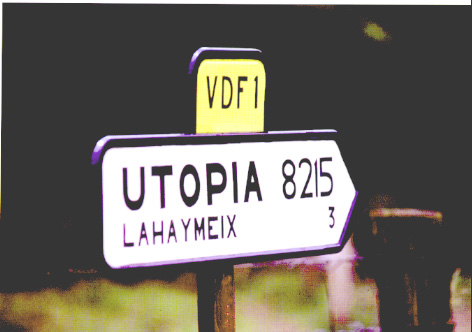
For sure no-one really has all the answers about how to get from here to there or what there even looks like, but one thing I'm pretty certain about is that it's something no amount of legislation or top-down social engineering is going to achieve for us. We can outlaw commonly punitive behaviour and practices and that may be a good start, but if the means by which we deal with those who break those laws is with punishment then.....no, we need to remember to go back to first principles and prevent the problem in the first place.
Horse guy and genius of emotional intelligence Monty Roberts calls his way of working with horses - and people - 'join-up'. This is whereby two parties (say, a horse and you) agree to be partners in certain ways, accept one another as you really are, and agree that behavioural compromises will be made by each of you to accommodate the other's requirements. You won't harm the horse or give her mixed messages about what you are asking of her from moment to moment, and she won't hurt you either. With this setup, as opposed to a compliance-oriented scenario, not only is everybody happier and performing their roles more easily, joyfully and expressively, but if and when some shit does hit a fan locally then the bond is there that better ensures mutual co-operation in matters of survival. Compliance breaks under stress. Genuinely respectful friendship rarely, if ever, does.

For me, here is the key. The ability to recognise in a stressful moment that the transgressor who has pushed your buttons in such a way that you want them punished still deserves the basic respect for who they truly are as you wish for yourself. And to get past that feeling. Now. Certainly, action may need to be taken to set aright their behaviour for the greater good of all (or you, or them, whatever) but once we remove the emotive urge to punish then we can far more freely, creatively and effectively deal with the situation and help facilitate change. If we had this as an expectation, rather than the threat of punitive suffering, my contention is that the whole big show we refer to as civilisation would have a far brighter face - and may even offer us a greater chance of survival than we currently seem to think we have. It allows for join-up. Fear of being beaten does not.
The other key part of all this is personal responsibility. For such a partnership to form (or such a social contract) then it is implicit that each party is offering to be responsible; to behave well and with the other parties' wellbeing also always in mind. Seeking punishment for others by appealing to law, or authority, disempowers us and make us less responsible for what we do in our lives. We each need to be responsible for the assistance of our neighbour when they transgress - and not to just insist a third party or 'higher' level of authority protect us from this empowering birthright - the right to be free. For without personal responsibility, I really don't believe we can feel, or be, free.
I think it has to be one of those tipping point things though, and I see it drawing closer every day. The media are now more likely to show the forgiving families of 'victims' of harmful behaviour alongside those baying for longer and harsher punishments. More meaningful debate is being had about things like harm minimisation over criminalisation of drugs of abuse. Recognition is being more often given - albeit slowly - to systemic, historically based entrenchment of punitive disadvantage of many minorities, another great wall against the trust required for anything like 'join-up' to occur.
We don't need a majority of people who make it our aim to change themselves from habitual punishers (even if you only do it every now and then but it's unthinking, it's a habit, OK?) into those who would rather forgive and take responsibility in the moment for doing our best to respond in a life-affirmative way to transgression - real or imaginary. This also makes us feel more free to seek genuine forgiveness for our own transgressions, further freeing us from guilt - a faithful old cyclical motivator for pathological transgression. No, we don't need a majority, we just need a critical mass. I don't know what that point is, but I do know that such masses erupt spontaneously here and there, from time to time, and as often as not go entirely unrecognised.
It's one of the reasons why we're so attracted to watching natural disasters on the news - because one of the first things that happens is that all the bullshit goes out the window and most people affected shift into that space of honesty where there's no time or space for vengeance or the seeking of justice. Survival trumps all. Of course, then we so often see the pendulum swing back........
One day soon I hope, we'll see something much larger than we've seen before. But it all does start at home, doesn't it?

Subscribe to:
Posts (Atom)